The spark at the register
Last spring, I watched a tiny café by the harbor quietly switch a shelf-full of prices to a single, friendly DOGE option at checkout. The barista blinked at the screen, shrugged, and said, “If it brings in more curious customers, I’ll take the risk.” It wasn’t a grand experiment, just a moment of curiosity turned practical test. A few weeks later, I kept hearing the same question echoed in different storefronts: could a meme coin become a real, spendable thing in daily commerce? In 2025, that question feels less like hype and more like a real strategic bet. Institutions are looking, platforms are enabling rails, and ordinary merchants are sniffing around for the right proof points.
What shifted between that harbor-side test and today is a quiet but orderly shift in infrastructure, governance, and appetite. Reports from mainstream outlets this year show Grayscale launching a DOGE-focused trust, signaling institutional interest that sits beyond retail speculation. At the same time, the Dogecoin Foundation’s corporate arm kicked off an Official DOGE Reserve, aiming to anchor DOGE with predictable liquidity and governance. If you want a single sentence to sum up the era, it’s this: Dogecoin is moving from meme to market infrastructure.


A growing ecosystem is also quietly stitching together the pieces that make real-world adoption plausible. On the near horizon lie a public-market pathway via a NASDAQ-listed vehicle, app-layer innovations that promise smoother wallets and DeFi utilities on Dogecoin, and broader rails with major platforms enabling crypto-payments at scale. These aren’t “DOGE-only” developments; they create shared, interoperable rails that Dogecoin-focused efforts can ride, and they matter for merchants who want to test and learn without betting the entire business on a single experiment.
What’s changing, in plain terms, is not only the capability to accept DOGE, but the governance and liquidity that make daily settlement feel as reliable as fiat. Reuters documented an institutional push around stable and regulated exposure to DOGE, while GlobeNewswire chronicled concrete treasury moves and collaborations with asset managers. Coindesk highlighted on-chain tooling and DeFi ambitions—wrapped DOGE on Base, new consumer app layer projects, and deeper cross-chain activity. And industry signals from Shopify and other platform players show a broader shift toward crypto-enabled checkout rails, creating a more forgiving backdrop for DOGE-specific implementations.
From uncertainty to a usable palette
If you’re a merchant or a fintech professional, this isn’t merely a narrative about a rising coin. It’s a sign that the payments stack around Dogecoin is becoming incrementally more practical: there are credible liquidity anchors, governance structures, and interoperable rails that can support real-world use cases—things that used to be memes and whitepapers but now appear in corporate press releases and platform roadmaps.
The official reserve and the public-market pathway
The Official DOGE Reserve is more than a PR line. It’s a deliberate attempt to anchor DOGE as spendable, with a known starting point (an initial reserve of 10 million DOGE) and ongoing expansion through partnerships. For merchants, that translates to the possibility of more predictable settlement flows and a path toward larger, institution-backed liquidity pools. In late 2025, coverage notes the growing scale of the treasury and the governance-enabled structure that could feed into merchant-facing products via regulated channels.
Additionally, a planned merger to list on NASDAQ through Brag House Holdings (TBH) signals a concerted effort to bring Dogecoin-related payments and treasury services into a publicly traded vehicle. While regulatory approvals and closing timelines matter, the strategic intent is clear: build a credible, formalized backbone for DOGE-enabled commerce and treasury activity. That kind of legitimacy lowers one of the stubborn barriers merchants weigh: whether this will be here next quarter, or whether it’s a passing trend.
On-chain and consumer-app expansion
Beyond rails and reserves, the ecosystem is pushing into consumer-friendly apps and on-chain finance. DogeOS, a Dogecoin app-layer project, aims to broaden the ways consumers and merchants interact with the coin—from wallets and micro-payments to DeFi use cases. Wrapped DOGE on Base expands cross-chain liquidity and opens opportunities for DeFi and on-chain commerce. While these features don’t replace existing payment experiences overnight, they create a multi-layer pathway that can improve the end-to-end experience for merchants who want flexible settlement, better reconciliation, and a broader ecosystem of partners.
Regulatory weather and what it means for merchant adoption
There are legitimate regulatory heat points. A 2025 Reuters piece touched on a government payments governance dispute involving DOGE-linked entities, reminding us that policy actions can reshape what is feasible in regulated retail environments. This isn’t a sign to abandon the experiment; it’s a cue to design merchant programs with clear risk disclosures, compliance checks, and contingency plans. The broader takeaway is a more mature market where governance, risk, and product teams collaborate to build payment options that can pass muster with auditors, processors, and banks.
Practical steps for merchants today
– Start with testing: if you’re curious about DOGE payments, explore gateways that already support DOGE. BitPay, for instance, has offered DOGE as a payment option through invoices, which provides a practical first concrete path for merchants who want to experiment without overhauling their stacks.
– Look for rails that align with your ecosystem: if you already run on Shopify or use Coinbase/Base-based rails, monitor how those platforms are enabling crypto-native payments and liquidity. Even if DOGE isn’t the explicit native choice everywhere, the shared infrastructure can make later integration smoother.
– Build a procurement and settlement plan: think about how you’ll handle refunds, chargebacks, and volatility. The presence of an official reserve and regulated exposure can matter if you scale, but you’ll still want policy around reconciliation timelines and fee structures.
– Engage with customers: ask your audience what they’d expect from a DOGE-enabled checkout. Would a loyalty program or limited-time DOGE discounts improve engagement or just create friction? Co-creating the experience with your customers can be as valuable as the technical rollout.
Why this matters now
The 2025 trend isn’t just about more coins moving through the network; it’s about a growing, auditable infrastructure that can support real-world adoption. It’s about a merchant’s decision to test a new payment rail with a credible governance framework behind it. For businesses weighing crypto payments, the trend offers a clear question: what if DOGE is not only a meme but also a measurable, reliable payments option—supported by reserves, public markets, and app-layer tools?
A closing prompt to carry forward
If a publicly recognized DOGE ecosystem with a treasury, regulated products, and merchant-friendly rails becomes truly accessible, how would that reshape your pricing, refunds, and customer relationships? And if the answer remains open, what’s your next small, concrete experiment to test DOGE in your own storefront or online checkout—not as a bold gamble, but as a measured step toward a broader payments future?
Should dogs pay taxes? If you’ve ever watched a small café by the harbor switch a shelf of prices to a single DOGE option at checkout, you know the answer isn’t a quick yes or no. It’s a question that lingers, then nudges you toward the edge of what you trust as money and what you trust as infrastructure. I was there that afternoon, watching a barista blink at a screen and say, almost shrugging, “If it brings in curious customers, I’ll take the risk.” The moment wasn’t flashy, but it carried a hypothesis: what if a meme coin could become a real, spendable thing in daily commerce? In 2025, that question has shifted from curiosity to a testing ground for payments infrastructure, governance, and real-world utility. And that shift — from meme to market infrastructure — is not a single leap; it’s a gradual, measurable accumulation of rails, reserves, and public intent.
From anecdote to ecosystem the quiet infrastructure behind Dogecoin merchant adoption
What began with a peripheral experiment at a harbor-side café has grown into a set of concrete, if still evolving, mechanisms that merchant teams can actually engage with. Recent developments don’t pretend to erase risk or mystery; they layer credibility on top of possibility.
- Institutional legitimacy starts to appear where money moves. In early 2025, Grayscale launched a Dogecoin-focused trust, signaling to accredited investors that DOGE is not merely a rumor but a defined exposure with governance and reporting expectations. It’s not the same as accepting DOGE at a register, but it reshapes the risk calculus for merchants who might participate indirectly through such vehicles. The signal feels practical: more formal institutions are willing to engage with DOGE in a risk-managed way. [Reuters]
- A corporate backbone for liquidity and governance takes shape. The Dogecoin Foundation’s corporate arm, House of Doge, announced the Official Dogecoin Reserve with an initial pool around 10 million DOGE, aiming to build liquidity and a governance-backed treasury program. That’s not a single press release; it’s a deliberate architecture intended to anchor DOGE as spendable, predictable currency within a broader ecosystem. For merchants, the implication is landable: there could be steadier settlement rails and a more obvious line of sight to liquidity. [GlobeNewswire]
- A pathway to scale through public markets. In late 2025, House of Doge proposed a merger with Brag House Holdings to list on NASDAQ, a move that, if completed, could anchor Dogecoin-focused payments and treasury activity in a publicly traded vehicle. That framing matters for merchants because public markets imply more formal governance, reporting, and potentially standardized product suites for businesses. [GlobeNewswire]
- On-chain expansion and consumer-facing tools. DogeOS (an app-layer project) and wrapped DOGE on Base point toward a broader appetite for on-chain utility beyond simple spend. If merchants can offer wallets, DeFi-enabled settlements, or more flexible liquidity within everyday checkout, DOGE becomes less of a curiosity and more of a usable option in a diversified payments stack. [Coindesk]
- The regulatory backdrop remains active. A 2025 Reuters report highlighted governance disputes around government access to payments systems involving DOGE-linked entities. Regulatory risk doesn’t derail the trend, but it does sharpen the planning horizon for merchants who want compliant, auditable pathways to accept DOGE at scale. [Reuters]
- The broader rails for crypto payments are stabilizing and expanding. The evolution isn’t DOGE-exclusive: Shopify and other large platforms have advanced crypto-enabled rails, stability-backed rails, and cross-chain liquidity in ways that create an ecosystem where Dogecoin-focused initiatives can ride on shared infrastructure. This is the kind of backdrop that makes it practical for merchants to test DOGE without having to reinvent the wheel. [Shopify; general coverage]
In other words: the shift from niche experiments to a credible, multi-rail ecosystem is happening through a combination of formal liquidity structures, governance signals, and interoperable platform layers. You don’t need to bet the farm on a single innovation; you need to assess where a few credible rails align with your business model.
The dominoes that could matter for merchants in 2025–2026
Three interlocking developments stand out as the most consequential for real-world merchant adoption: reserves and treasury governance; public-market integration; and on-chain tooling that makes DOGE usable in consumer apps and DeFi contexts.
- Stable, credible liquidity through reserves and governance
- The Official DOGE Reserve creates a reference point for DOGE’s spendability at scale. When a corporate arm anchors a treasury with initial allocations and aims to build through partnerships, it signals that DOGE is not a volatile rumor but a set of assets with institutional handles. For a merchant, that translates into two practical pulls: potentially more predictable settlement windows and access to regulated exposure channels that can be layered into payment strategies. [GlobeNewswire]
- A bridge to public markets and mainstream finance
- The proposed NASDAQ listing via a merger would place Dogecoin-adjacent payments inside a public, transparent governance framework and could catalyze licenseable products for merchants (payments rails, treasury services, licensing, consumer ecosystems). Even the anticipation of such a move can alter how providers design products and how merchants evaluate risk and liquidity. [GlobeNewswire]
- On-chain growth and consumer apps
- DogeOS and wrapped DOGE on Base expand the horizontal usage of DOGE beyond single-merchant checkout. This matters for merchants who want to offer customers not just a price in DOGE, but a broader set of on-chain interactions — wallets, DeFi savings, cross-chain liquidity — all part of a long-tail path toward a more resilient and flexible payments experience. [Coindesk]
This trio — reserves as credibility, a public-market backbone, and on-chain app-layer functionality — helps explain why a harbor-side test could become a longer-term business consideration for a small business and why fintech practitioners are watching DOGE more closely than in past years.
What real-world adoption could look like in practice
For a merchant, the practical questions aren’t only about whether DOGE can be accepted, but how it behaves in day-to-day operations: liquidity, settlement speed, reconciliation, customer experience, and regulatory compliance. Here are some concrete implications and examples that tie to 2025–2026 realities:
- Settlement predictability and cash flow planning
- If a merchant can receive DOGE via established rails (for example, through processors that interface with the Official DOGE Reserve and partner liquidity pools), the possibility of more predictable settlement timelines becomes real. This is not about eliminating risk entirely, but about reducing the unknowns in timing and liquidity that complicate daily cash flow planning.
- Risk-aware customer experience
- The presence of formal governance and regulated exposure means merchants can offer DOGE as a payment option with more transparent disclosures about volatility and settlement expectations. A reasonable approach is to present DOGE as a payment option alongside fiat and stablecoins, with clear information about when funds convert or settle and how refunds are handled.
- Ingredient of broader crypto rails rather than a stand-alone feature
- Merchants don’t need to adopt DOGE in isolation. The same platforms enabling DOGE (Shopify rails, Base-based DeFi opportunities, BitPay invoices) also support other crypto assets. The real payoff is a more complete payments stack that can accommodate DOGE as one of several options, depending on customer demand and risk posture.
- Customer engagement and loyalty potential
- A growing DOGE ecosystem offers unique marketing angles: limited-time discounts for DOGE payments, loyalty rewards tied to DOGE usage, or partnerships with on-chain apps that reward customers for on-chain interactions. These are not merely gimmicks; they’re ways to test whether a crypto-enabled checkout resonates with your customer base.
In short: the question isn’t simply “Can I accept DOGE?” but “How could I design a payments experience where DOGE fits alongside other rails, with clear expectations for my customers and my business?”
Practical steps for merchants today
If you’re weighing a DOGE experiment in 2025, here’s a pragmatic path you can actually walk, grounded in existing rails and credible developments:
- Start with credible gateways that already support DOGE
- BitPay, for example, has historically enabled DOGE invoices, providing a practical first testing ground without overhauling your entire stack. Verify in checkout banners or processor options that DOGE is available, and try a low-stakes test sale. [BitPay support]
- Map your ecosystem and identify rails you already use
- If your store runs on Shopify or uses Base-based rails through Coinbase, keep an eye on how these platforms evolve to support crypto-native payments and liquidity. You don’t need DOGE-specific infrastructure today to align with the broader trend — you can prepare for smoother DOGE integration as the rails mature. [Shopify; platform updates]
- Build a governance-aware risk plan
- Develop a lightweight policy for volatility, refunds, and reconciliation timelines. If an Official DOGE Reserve-like framework becomes a standard in your region, your plan should incorporate consent from stakeholders, documentation for auditors, and clear customer communication.
- Engage customers with a test-and-learn mindset
- Run a small pilot with a defined customer segment, monitor behavior, collect feedback, and iterate. Ask customers what DOGE means to them at checkout — speed, cost, or novelty — and adjust your strategy accordingly.
- Monitor the regulatory and market environment
- Stay informed about evolving governance rules and platform updates related to crypto payments. Real-world adoption often hinges on how ready regulators and processors are to accommodate more diverse rails while preserving consumer protections. [Reuters]
These steps aren’t a guarantee of rapid DOGE adoption, but they preserve your agility while the ecosystem matures. The goal is to learn what works for your business and your customers, without entering a speculative chase.
A few quick prompts you might use when researching or writing about DOGE in 2025
- How do official reserves and treasury programs change the risk profile of accepting a meme-based asset for daily transactions?
- In what ways could a NASDAQ-listed DOGE ecosystem affect merchant pricing, refunds, and customer trust?
- What concrete benefits do app-layer projects like DogeOS bring to everyday shopping experiences, beyond flashy headlines?
- How should a retailer balance DOGE exposure with other assets to maintain predictable revenue and liquidity?
The broader takeaway what this trend could mean for you
The 2025 arc isn’t about a single breakthrough; it’s about the emergence of a practical payments palette. The trend is building on multiple rails: an institutional backbone via regulated exposure, a governance framework to manage treasury and liquidity, and on-chain tools to broaden use cases. For merchants, the payoffs lie in more choices for customers, potential improvements in settlement reliability, and the gradual normalization of crypto-enabled checkout as part of an overall payments strategy.
If the ecosystem succeeds in turning these rails into reliable, auditable operations, how would that reshape your pricing, refunds, and relationship with customers? And if you still aren’t sure, what’s your smallest, most concrete experiment to test DOGE in your storefront or online checkout — not as a bold gamble, but as a measured step toward a broader payments future?
Further context and signals to watch (without assuming a prediction): institutional interest in DOGE exposure is rising; a formal DOGE treasury and potential NASDAQ-backed governance pathway are actively discussed; app-layer and cross-chain moves hint at broader on-chain spend and DeFi opportunities; major commerce platforms continue to expand crypto-enabled rails, which could intersect with DOGE adoption as infrastructure matures. These pieces don’t guarantee rapid adoption, but they collectively point to an emerging, more credible real-world use case for Dogecoin in 2025 and beyond.
What will your next small test look like in this evolving landscape? It might be as simple as offering DOGE as a payment option at a single channel, paired with clear customer communication and a straightforward refunds policy. Or it might be joining a broader pilots program aligned with the latest rails and treasury-led initiatives — either way, the opportunity is shifting from curiosity to concrete experimentation with real business implications.
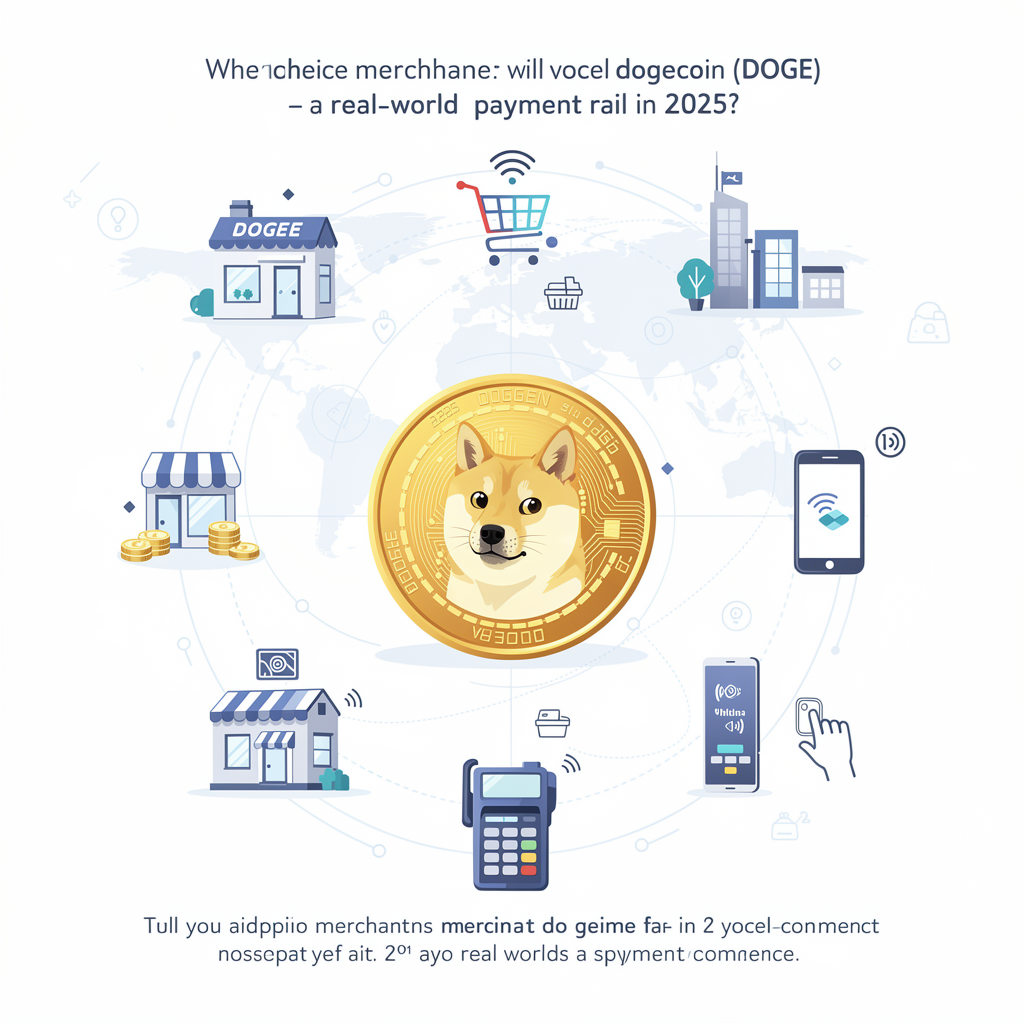
Meme at the Register: What if Dogecoin becomes real?
Key Summary and Implications
The 2025 trend isn’t about a meme coin vanishing into a novelty; it’s unfolding as a layered ecosystem built on credible rails—official reserves, governance structures, and interoperable platform infrastructure—that can support real-world merchant use. For merchants, this means more than a new checkbox at checkout: it signals potentially more predictable settlement, clearer risk controls, and learning paths that don’t hinge on hype alone. In short, meme-to-market infrastructure is quietly maturing, and that maturity matters for cash flow, reconciliation, and customer trust.
Beyond the rails themselves, the story shifts toward integration with mainstream finance and consumer apps. The Official DOGE Reserve offers a governance-backed liquidity anchor, while a NASDAQ-listed pathway could bring formal oversight and product standardization to the merchant ecosystem. On-chain tools and app-layer projects broaden what a DOGE checkout might look like—from wallets and micro-payments to DeFi-enabled settlements—without requiring a wholesale replacement of existing payments stacks. Regulators still pose questions, not certainties, but the current trajectory is toward more auditable, interoperable, and scalable options for accepting DOGE.
For merchants, the real takeaway is not “DOGE will replace fiat” but “there are now credible ways to test DOGE as part of a diversified payments palette.” The trend invites cautious experimentation, paired with governance-driven risk planning and customer-facing clarity. This isn’t a guarantee—it’s an opportunity to learn how a popular meme can become a practical, integrated part of your checkout experience.
Personal relevance
If you’re running a storefront, a restaurant, or an online shop, you’re not just weighing a novelty payment option—you’re weighing exposure to a developing ecosystem that seeks to stabilize liquidity, improve settlement predictability, and broaden customer engagement. The signals from institutions and platform providers suggest a future where DOGE can be accepted along with other assets, with clearer disclosures and better governance. That matters when you’re balancing speed, cost, and trust at the register.
I’ve watched merchants test cables and rails in small, pragmatic steps: a single DOGE price point at checkout, a limited-scope pilot through a gateway, a conversation with customers about what DOGE means for them. The question now is how to translate curiosity into a controlled experiment that informs your broader payments strategy. The future isn’t a single leap; it’s a sequence of tested moves that slowly tilt your operations toward a multi-rail, compliant, and customer-centric checkout.
Action Plans
- Start with credible gateways and small pilots
- Implement a DOGE option through gateways like BitPay or other processors that offer DOGE invoices, but keep the pilot limited to a single channel (online or in-store) and a defined product set.
- Map to your existing ecosystem
- If you already operate on Shopify or Base-based rails, track how these platforms are expanding crypto-native payments and liquidity; this will help you align your DOGE testing with broader rails instead of building from scratch.
- Build a governance-aware risk plan
- Create a lightweight policy for volatility, refunds, and reconciliation timelines. Include disclosures for customers and a clear process for handling potential volatility spikes during peak times.
- Engage with customers and measure impact
- Run a short pilot with a defined customer segment, collect feedback on speed, price perception, and trust, and track key metrics such as acceptance rate, settlement timing, and any effect on average order value.
- Prepare for regulatory and platform changes
- Stay informed about governance developments, platform updates, and potential licensing or reporting requirements. Build documentation and audit trails now so expansions don’t become compliance bottlenecks later.
These steps aren’t about guaranteed adoption; they’re about building agility. The goal is to learn what works for your customers and your business, with a transparent plan that can scale if the rails become more mature.
Closing Message
The opportunity isn’t a slam-dunk verdict on DOGE; it’s a nudge toward broader, more credible crypto-enabled checkout options. If the ecosystem succeeds in delivering reliable liquidity, governance, and user-friendly tools, your pricing, refunds, and relationship with customers could look quite different—and more resilient.
So, what’s your next small, concrete experiment to test DOGE in your storefront or online checkout—not as a bold gamble, but as a measured step toward a broader payments future?
- What are your thoughts on this trend? Wouldn’t it be worth trying a low-risk DOGE pilot to see how your customers respond?
- Now it’s time to try it yourself: identify one channel, one product line, and one policy change to test DOGE in a controlled way.
- If you found this perspective useful, consider applying these ideas to build a more flexible, multi-rail payments strategy that can adapt as the rails mature.
As the ecosystem evolves, the most resilient merchants will be the ones who treat DOGE testing as an ongoing conversation with their customers and their books—not as a one-off experiment. The question remains: how will you shape your pricing, refunds, and customer relationships when a more credible DOGE-enabled future arrives?