
What if a coin could outlive its own metal?
I remember wandering through a sunlit auction hall, the air thick with anticipation, when a Saint-Gaudens Double Eagle crossed the block. Its gold sheen gleamed, yet the crowd’s energy wasn’t about the ounce of gold it contained. It was the story—the year, the mintmark, the condition, the decades of interest that stacked, like notes in a ledger, into a single moment of decision. The hammer didn’t land on the coin’s melt value. It landed on something more elusive: a promise that this piece could narrate history in a way bullion cannot. Is that promise enough to justify a price that might dwarf the metal’s worth?


The question sits at the heart of numismatics today. In 2025, the market shows a vibrant appetite for rarities and provenance—boosted by record auction activity, international interest, and the growing role of certification in pricing. Heritage’s FUN U.S. Coins auctions, for example, showcased multiple seven-figure coins and totalus coin sales around $65.4 million in early 2025, with marquee lots like a 1927-D Saint-Gaudens Double Eagle fetching around $3.84 million and a 1798 Small Eagle $5 gold piece around $3.0 million. These numbers aren’t just fancy headlines; they map a market where rarity, grade, and pedigree co-author the value story. [Heritage/Numismedia highlights, 2025] (numismedia.com)
The larger scene confirms a shift beyond metal value alone. World and Latin American coins, plus curated collections and provenance narratives, have become meaningful drivers of demand. The NYINC 2025 show highlighted strong world material and notable Latin American pieces, signaling that buyers are looking beyond U.S. classics for nuance and diversification. [Stacks Bowers, 2025] (stacksbowers.com)
At the same time, the market is growing more discerning about authenticity and certification. CAC-approved coins—those that carry an additional layer of third-party endorsement—have commanded noticeable premia, sometimes hundreds to thousands of dollars, even within the same grade bracket. That premium isn’t just about being verified; it’s about the narrative of meticulous curation and long-term trust in a piece’s provenance. [CoinWeek, 2025] (coinweek.com)
So, what can a curious reader do with this landscape? This article aims to untangle the why and how behind investing in numismatic coins beyond their metal value, weaving together market signals, practical steps, and a glimpse into the evolving role of provenance and technology in the field. We’ll touch on real-world considerations—grading, provenance, taxation—and offer a thoughtful path forward for beginners and seasoned collectors alike.
From a market perspective, the longer arc remains favorable. Industry outlooks in 2025 point to continued expansion of the coin-collection segment, supported by scarcity, historical appeal, and a growing willingness to view coins as tangible alternatives to traditional financial assets. Long-term gains on collectibles still bear a 28% maximum rate, with other asset classes enjoying different treatment depending on income and holding periods; tax planning remains a practical cornerstone for any serious collector. [Tax considerations for collectibles] (nasdaq.com)
What follows is not a rigid checklist but an exploration of the forces at work, a map for readers who want to engage with coins more confidently—and with curiosity about what comes next.
Why this matters, in plain terms: you don’t need to chase the highest price tag to participate meaningfully in this market. You can start by understanding what makes a coin special, how the market reads those signals, and where the gaps and risks lie. This is as much about discernment as it is about investment.
Isn’t it possible that the real value of a numismatic coin lies in its capacity to tell a story you’re willing to invest in—and to pass on to future generations? That question sits at the core of every serious purchase.
Problem/Situation Presentation
- The metal in a coin is only part of the story. Scarcity, historical significance, high-grade condition, and documented provenance can dramatically elevate a coin’s value beyond its bullion content.
- Certification quality matters. Grading services (like PCGS and NGC) establish baseline trust, while pedigree services (like CAC) can unlock additional premiums even within same-grade coins.
- The market shows a robust appetite for rarities, but also a mosaic of demand for world and Latin American pieces, suggesting a broader collector base and diversification opportunities.
- Tax considerations for collectibles remain a fixed factor: long-term gains are capped at 28%, with other asset classes following standard long-term rates, and short-term gains taxed as ordinary income. Understanding tax implications is essential for planning sale timing and overall returns.
These dynamics mean that smart participation requires more than tracking bullion prices. It requires reading provenance, understanding auction signals, and weighing the incremental costs of certification against potential price premia.
Value of This Article
- You’ll learn how to separate metal value from numismatic value by looking at a coin’s rarity, grade, and provenance.
- You’ll get a practical sense of the channels and costs involved in acquiring and selling high-value pieces (auctions, marketplaces, shows), including the role of third-party authentication.
- You’ll see how market signals in 2025—record auction activity, regional growth, and provenance-driven demand—shape opportunities and risks.
- You’ll receive a grounded set of steps and considerations for a beginner, framed by real-world data and recent results, to help you decide whether to dip a toe into numismatic investing or to expand an existing collection with greater confidence.
Three Core Drivers that Elevate a Coin Above Its Metal Value
- Scarcity plus desirability: highly limited mintage, exceptional strike quality, and historical resonance create a magnet for collectors who value the story as much as the surface.
- Provenance and certification: a trusted chain of custody and a reputable certification label (and a CAC endorsement) can translate into meaningful price premia.
- Market narrative and liquidity channels: primary auction houses, dedicated coin marketplaces, and major shows continue to shape pricing with active, informed buyers. The Traveller Collection exemplifies how deep, documented holdings can sustain interest across years. [FT coverage] (ft.com); [Heritage auction results] (numismedia.com)
Practical Steps for Beginning Investors
- Start with provenance and authenticity first. Look for coins with well-documented history, legible mintages, and clear pedigrees.
- Factor grading costs against potential premia. Consider whether the anticipated uplift from CAC or other endorsements justifies the grading and handling costs for your target piece.
- Understand liquidity channels. Auctions can deliver top premiums for rarities, while marketplaces and dealers offer accessibility for a broader range of coins.
- Diversify across types and regions. In 2025, world and Latin American coins demonstrated strong performance, suggesting a broader basis for potential growth beyond U.S. classics. [NYINC 2025 coverage] (stacksbowers.com)
- Stay mindful of tax implications. Long-term gains on collectibles have a 28% ceiling; plan sales with tax timing in mind. [Tax guidance] (nasdaq.com)
Tax and Provenance as Part of the Story
- Tax policy for collectibles remains a decisive factor in after-tax returns. Long-term gains are subject to a 28% maximum rate, with other asset classes taxed according to income thresholds; short-term gains are ordinary income. This framework helps shape when you might choose to realize gains and how much to set aside for taxes. [Nasdaq reference] (nasdaq.com)
- The market increasingly rewards clear provenance. The Traveller Collection illustrated how extensive, well-documented holdings can influence auction trajectories and price realization, reinforcing the value of building a well-documented narrative around each piece. [FT coverage] (ft.com)
The Longer Horizon Technology, Tokenization, and Real-World Assets
- Tokenization and blockchain-backed provenance concepts are being explored as potential tools for authentication, traceability, and cross-border settlement in the collectibles space. While still evolving, these developments hint at a future where authenticity and ownership history can be verified with greater confidence and efficiency, potentially expanding liquidity for some categories of numismatic assets. [Reuters/2025 discussions] (reuters.com)
- In parallel, the market continues to explore how third-party certifications and digital provenance can coexist with traditional collecting communities, reinforcing trust without eroding the romance of tangible objects.
A Reflective Closing Moment
As you consider your next move, ask: what stories are you drawn to, and what price are you willing to pay to own a piece of them? When might provenance, grade, and market sentiment align for you to realize a meaningful return—if that is your aim? And what gaps remain in your understanding of a coin’s value, beyond what you can see on the surface?
If you’re willing to stay curious, the journey itself may become a richer reward than any single purchase. The market will keep whispering questions, and your role is to listen, learn, and decide how you want to answer.
Can a coin outlive its metal? Investing beyond the metal value
I walked into a sunlit auction hall once and watched a Saint-Gaudens Double Eagle gleam under glass. The hammer hadn’t fallen because of its gold content; it fell because of the story attached to it—the mint mark, the era it survived, the whispers of the generations who once held it. In that moment I realized: numismatics isn’t just about metal. It’s about memory, scarcity, and the confidence that a well-authenticated object can carry through time. Fast-forward to today, and the market is telling a similar story with louder emphasis: buyers are chasing rarities, provenance, and pedigree—and they’re willing to pay a premium beyond melt value. Is that premium just a bet on a good story, or a more durable hedge against change in the value of money itself? Let’s walk through what investing in numismatic coins really looks like in 2025–26, and how you can participate with clarity and caution.
Why some coins command more than their metal value
What makes a coin worth more than its gold or silver content isn’t a single attribute. It’s a convergence of scarcity, historical resonance, and the care with which the piece has traveled from one hand to another. Three forces are consistently at work:
- Scarcity and desirability: ultra-rare pieces, exceptional strike quality, and historically significant issues tend to rise above the everyday market. A lot of the current excitement centers on these rarities rather than common circulation coins.
- Provenance and certification: a coin’s documented pedigree and an authoritative grade certification can unlock meaningful premia. CAC endorsements, in particular, have shown to translate into higher realizations even within the same grade band—proof that buyers reward trusted chain-of-custody stories as well as surface quality.
- Market narrative and liquidity channels: the auction houses and specialized marketplaces remain the beating heart of price discovery for high-end coins. The Traveller Collection narrative—an ongoing, provenance-rich trove—demonstrates how deep historical holdings can sustain attention and value across years, not just within a single sale cycle.
These drivers aren’t just abstract ideas; they’re visible in the numbers and the catalogs of 2025. Heritage’s FUN U.S. Coins auctions, for instance, posted striking results with several seven-figure coins and total US Coins sales around $65.4 million in early 2025 (Heritage/Numismedia, 2025). A 1927-D Saint-Gaudens Double Eagle traded around $3.84 million, and a 1798 Small Eagle $5 gold piece brought roughly $3.0 million—clear signals that top-tier pieces can command prices well beyond their metal value. See more in Heritage’s 2025 reports. numismedia.com
Beyond the U.S. classics, the market has shown growing interest in world and Latin American coins. The New York International Numismatic Convention (NYINC) 2025 highlighted robust world material and notable Latin American entries, suggesting that international demand is becoming an important diversification vector for serious collectors and investors. This broadens the field beyond U.S. rarities and adds a layer of geographic nuance to pricing and strategy. Stacks Bowers, 2025 NYINC coverage
The narrative economy around provenance isn’t an accident. The Financial Times reported on the Traveller Collection—a long-running, multi-decade trove of roughly 15,000 rare coins—that began rolling through 2025 auctions. The plan to stage the collection over several years underscores how deep, well-documented holdings can shape price realization and storytelling value long after a single sale. FT coverage
The value of certification and the price uplift you can expect
Grading and third-party authentication matter more than ever. Leading services like PCGS and NGC provide a standardized baseline that helps buyers and sellers compare pieces with confidence. But the premium isn’t automatic. CAC-stickered coins—where an additional endorsement accompanies the grade—have been shown to attract higher realizations than non-CAC counterparts in similar grades. The premium can range from hundreds to thousands of dollars on a single piece, depending on rarity and desirability. This is one of those “pay to signal trust” decisions: you invest a bit upfront to improve liquidity and potential upside later. CoinWeek, 2025
From a practical standpoint, investors in 2025 weigh the cost of grading against the potential uplift. If you’re targeting a piece in the five- to six-figure realm, the incremental premium of CAC and a strong provenance can be meaningful. If you’re looking at mid-range coins, you’ll want to model whether the uplift justifies the fees and turnaround times associated with grading and encapsulation.
How to participate today: practical, beginner-friendly steps
If you’re approaching numismatic coins with finance- and crypto-minded pragmatism, here’s a path you can start taking now. It’s not a rigid checklist; it’s a guided thought process to help you avoid common missteps while pursuing tangible storytelling value.
- Start with provenance and authenticity
- Seek coins with well-documented histories, legible mintages, and clearly stated pedigrees. The value story often begins with the piece’s journey since its minting, not just its appearance in hand.
- Evaluate grading costs against potential premia
- Consider whether a CAC endorsement or other credible provenance will meaningfully lift the price in your target market. Do the math: (expected uplift) minus (grading, handling, and shipping costs) should be positive over your investment horizon.
- Understand liquidity channels
- Auctions can deliver top premiums for rarities, but marketplaces and dealers can offer more accessible entry points and ongoing opportunities to trade. A balanced approach can reduce single-channel risk.
- Diversify across types and regions
- The 2025 catalogs show strong performance in world and Latin American coins alongside U.S. classics. A diversified approach can reduce reliance on one sub-market and broaden your upside scenarios. NYINC results and related market commentary underline this international dimension. NYINC 2025 coverage
- Tax planning is essential
- Long-term gains on collectibles face a 28% maximum rate, with other asset classes taxed at rates depending on income, and short-term gains taxed as ordinary income. Planning your sale timing around tax implications can materially affect after-tax returns. See contemporary tax guidance for collectors. Nasdaq tax guidance
Practical “try this now” starter kit
- Pick a provenance-strong coin in the $5,000–$50,000 range with a clear history and minting details.
- Get it slabbed by a recognized grading service (PCGS/NGC) and request CAC if possible.
- Check recent comparable sales for the same grade and provenance to calibrate expected upside.
- Compare two supply channels: place a cautious bid in a reputable auction for the rare item, and also monitor a steady marketplace listing for easier liquidity if you’re mindful of entry costs.
- Run a quick tax projection: assume a 28% long-term rate if held, and prepare a plan for the sale timing that aligns with your liquidity needs and tax posture.
If you’re curious about the broader market narrative, you’ll notice a few additional threads shaping the landscape in 2025–26:
- Market size and growth expectations: the coin-collection market’s growth trajectory remains robust, with forecasts suggesting meaningful expansion in the next decade as the asset class gains broader acceptance as a tangible alternative to traditional financial assets. Global coin collection market forecast
- The role of provenance tech and tokenization: discussions around tokenizing real-world assets on blockchains continue, with experiments focused on authentication and cross-border settlement for tangible collectibles like coins. While early, these developments hint at a future where digital provenance complements traditional collecting. Reuters coverage, 2025
- Premiums tied to certification and “sticker” endorsements are becoming a recurring factor in 2025 auction outcomes. This signals a growing emphasis on trust and long-term integrity as a value driver. CoinWeek, 2025
The tax-and-provenance angle you can’t ignore
Tax policy for collectibles remains a crucial factor in after-tax returns. Long-term gains on collectibles are capped at 28%, while the rates for other asset classes depend on income and holding periods; short-term gains are taxed as ordinary income. For serious participation, you’ll want to build a simple tax-planning layer into your purchase and sale calendar, just as you would with any other investment. This isn’t a one-time calculation; it’s a recurring part of evaluating the fit of a coin in your broader portfolio. Nasdaq tax guidance
Provenance is more than a selling point; it’s a risk-management tool. The Traveller Collection demonstrates how a well-documented, long-term holding can drive demand well beyond a single sale, reinforcing the value of curated history in pricing and market perception. FT coverage
Looking ahead: what to watch in the evolving ecosystem
- The provenance story is here to stay. Buyers increasingly reward clear chain-of-custody narratives, and CAC-like endorsements are a meaningful part of price discovery.
- Global demand is broadening. World and Latin American coins are showing sustained strength, adding diversification options for investors who want to hedge against a domestic-focused cycle.
- Technology is not a replacement for romance; it’s a companion. Tokenization and RWA discussions are exploratory today, but they could streamline verification and liquidity without undermining the aesthetic and tactile appeal of coins.
As you consider your next move, ask yourself: What stories am I drawn to, and what price am I willing to pay to own a piece of them? And crucially, what gaps remain in my understanding of a coin’s value beyond the surface—the provenance, the journey, the trust that accompanies it?
If you stay curious, this isn’t about chasing a single blockbuster sale. It’s about building discernment, knowing when to participate, and recognizing that sometimes the true return is the narrative you become part of—one that could outlive the metal itself.
Would you rather bet on a brilliant story that’s travelled through decades, or on a more straightforward signal like metal price alone? And how will you balance cost, risk, and the potential for meaningful, provenance-driven upside in your personal plan?
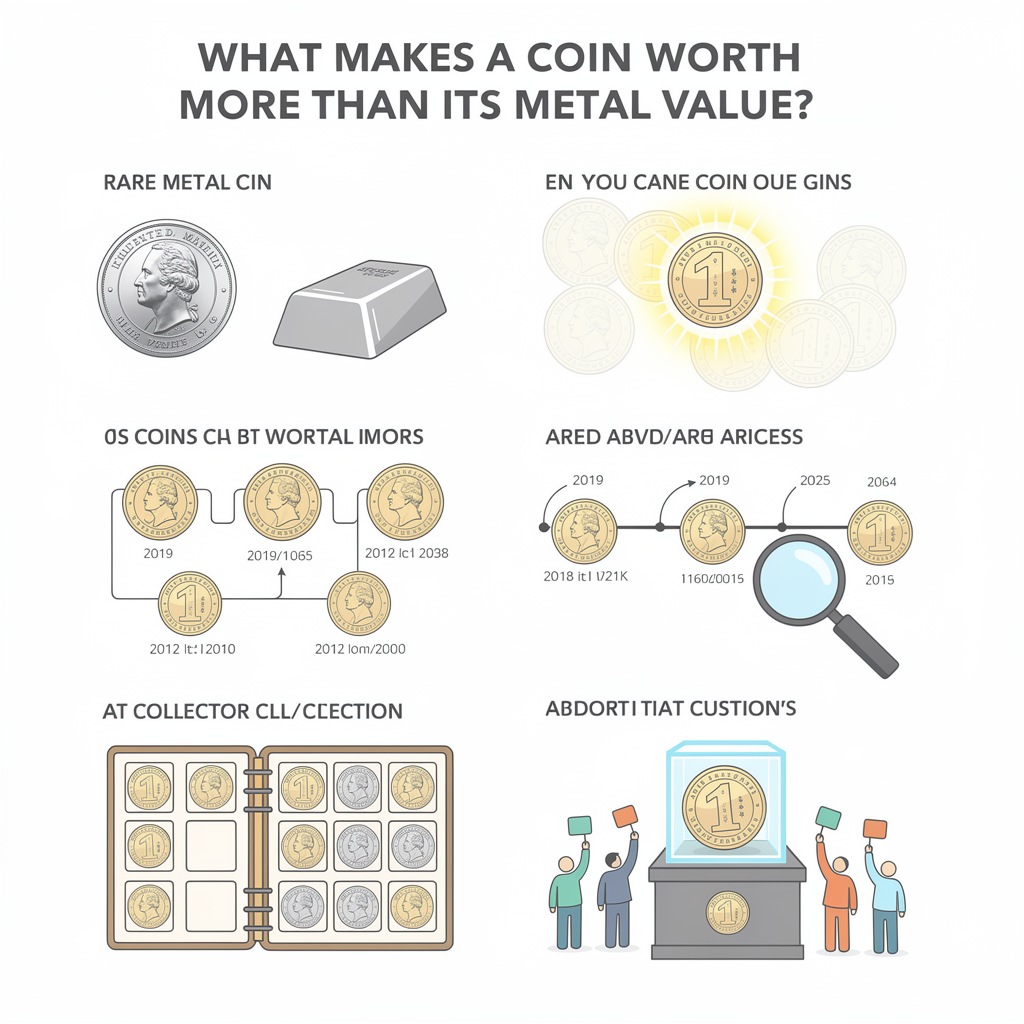
A coin’s value is rarely a fixed number on a ledger. More often, it’s a narrative that travels through time—scarcity, provenance, and the market’s belief in a piece’s story converging to outlive the metal content alone. When I think back to that sunlit auction hall, the Saint-Gaudens Double Eagle wasn’t judged by its melt value; it was judged by what it would say to a future collector who knows its history. In 2025–26, this story is louder than ever: rare pieces, documented pedigrees, and trusted authentication shape prices in ways bullion alone cannot. That doesn’t mean the metal doesn’t matter; it means the story matters more. And that distinction is where thoughtful participation begins.
Three forces consistently lift a coin above its metal value:
- Scarcity plus desirability: ultra-rare issues, exceptional strike quality, and historically resonant pieces draw collectors who value narrative as much as surface.
- Provenance and certification: a trusted chain of custody and a respected grade (with CAC endorsement when possible) can unlock meaningful premia, signaling that trust has been built into the price.
- Market narrative and liquidity channels: primary auctions, focused coin marketplaces, and long-running collections like the Traveller Narrative demonstrate that price discovery is as much about ongoing storytelling as about one-off sales.
These aren’t abstract ideas. They’re visible in auction catalogs, in the way stories are built around the piece, and in the discipline of investors who plan for the long arc rather than a single headline.
What does this mean for you as a reader today? The goal isn’t to chase the blockbuster auction but to participate with discernment: understand what makes a coin special, recognize when a story adds real liquidity, and acknowledge the risks that accompany any narrative-driven market.
Now, some practical takeaways you can carry into your own collecting or investing journey.
- Start with provenance and authenticity. Seek coins with clear histories, legible mintages, and pedigrees that can be traced across owners.
- Model grading uplift against costs. Consider whether a CAC endorsement or similar provenance can meaningfully lift the eventual price in your target market, and whether the uplift justifies grading and handling expenses.
- Understand liquidity channels. Auctions can deliver top premiums for rarities, while marketplaces and dealers provide more accessible entry points and ongoing opportunities to trade.
- Diversify across types and regions. The 2025 catalogs show world and Latin American coins performing alongside U.S. classics, broadening your potential upside and reducing single-market risk.
- Plan for tax realities. Long-term gains on collectibles carry a 28% maximum rate, with other asset classes treated according to income thresholds; short-term gains are ordinary income. Integrate tax timing into your sale calendar as a practical element of returns.
Starter ideas you can test this month:
- Pick a provenance-strong coin in the $5,000–$50,000 range with a documented history and minting details.
- Consider grading and CAC options, then compare the potential uplift to the costs involved.
- Explore two liquidity paths: participate in an auction for a rare item while monitoring a steady marketplace listing for ongoing liquidity.
- Build a small, diversified baseline: include a world or Latin American piece to broaden your exposure.
- Run a quick tax projection to gauge after-tax returns and plan the sale timing around liquidity needs and tax posture.
As you weigh your next move, stay curious about the stories you’re drawn to and the price you’re prepared to pay to own a piece of them. Think about how provenance, grade, and market sentiment might align with your personal goals—and what gaps remain in your understanding of a coin’s value beyond the surface.
A final question to carry forward: would you rather anchor your portfolio on a brilliant story that’s traveled through decades, or on a straightforward signal like metal price alone? Regardless of your choice, the path you choose is less about beating the market and more about building discernment, embracing risk wisely, and letting a genuine narrative guide your decisions.
If you’re curious to participate with clarity, the journey itself can be the richest reward. The questions will keep whispering, and your role is to listen, learn, and decide how you want to answer. Start small, stay deliberate, and let provenance do the heavy lifting of trust—and perhaps, in time, the coin will tell a longer, more enduring story than its metal ever could.”} } } } } } } } } } } } } } } } } } } } } } } } } } } } } } } } } } } } } } } } } } } } } } } } } } } } } } } } } } } } } } } } } } } } } } } } } } } } } } } } } } } } } } } } } } } } } } } } } } } } } } } } } } } } } } } } } } } } } } } } } } } } } } } } } } } } } } } } } } } } } } } } } } } } } } } } } } } } } } } } } } } } } } } } } } } } } } } } } } } } } } } } } } }}}