What If Your Car Could Price Itself? Rethinking Cyber Risk in Connected Cars


Strong Hook
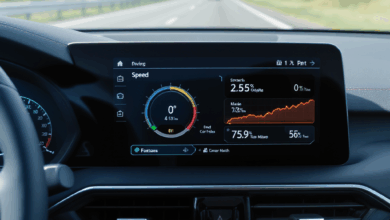
Is it fair to think a car could price its own risk? Not in the sense of a human deciding a premium, but in the way its software, updates, and supplier signals quietly influence how much you’re asked to pay for insurance. A few weeks ago, a regional fleet manager showed me a dashboard where a single OTA patch nudged a vehicle’s cyber-risk score lower, almost in real time. The moment captured a stubborn truth: in connected cars, risk isn’t a single attribute. It’s a living system that evolves as software, networks, and dependencies change. So, what’s the right way for insurers to price that evolving risk without turning pricing into a moving target you can’t trust? And how can fleets actually use this insight to reduce cost and friction over time?


That question sits at the heart of a broader shift in auto insurance—and not just among tech-forward startups. Regulators are pushing for cyber resilience across the vehicle lifecycle, from design to decommissioning. UN Regulation 155/156, including software-update governance, is becoming a baseline that links how vehicles are built with how they’re insured (UNECE and EU timelines are weaving this into real-world pricing signals) [UNECE GRVA/UN R155-R156 updates]. Berths like EU delegated regulations are gradually translating those requirements into market-wide data signals insurers can use for risk scoring (EU/UK timelines referenced in regulatory summaries). While that sounds technical, the effect is practical: more standardized signals, more predictable risk signals, and, ideally, fairer pricing for fleets that actually manage cyber risk well.
Recent industry movements echo this transition. Automakers are experimenting with in-house insurance models and platform-driven data sharing that feeds underwriting decisions in real time (Honda’s Insurance Solutions is a notable example). At the same time, large U.S. carriers are leaning into telematics-enabled pricing as a core lever for risk-based premiums, with ongoing debates about privacy and opt-in controls shaping how aggressively data can be used (insurer partnerships and telematics programs are frequently highlighted in market analyses). These shifts suggest that the price of a connected-car policy will increasingly reflect concrete cyber-hygiene signals rather than generic risk labels. In short, the market is moving from static rate cards to dynamic, data-informed pricing grounded in lifecycle cyber governance [Honda Insurance Solutions coverage; Geico telematics progress; Aon cyber-risk market insights].
Problem/Situation Presentation
The promise of connected cars is immense, but it arrives with a thorny pricing problem: cyber risk is multi-layered, interdependent, and highly context-specific. Rather than a single “risk score,” insurers must reason about:
– The governance of the product itself: secure-by-design practices, OTA update cadence, vulnerability disclosure processes, and supplier risk management. These signals create a baseline that can reduce or elevate risk across a fleet as updates roll out. This shift is reinforced by regulatory expectations around secure OTA updates and lifecycle cybersecurity engineering (ISO/SAE 21434) and the ongoing alignment of UN R155/156 with regional approvals [UNECE, ISO/SAE 21434].
– The data corridor that feeds pricing: real-time or near-real-time telemetry, software-update status, and supplier exposure, balanced against privacy protections and consumer consent. OEMs are increasingly central to this data ecosystem, which changes how pricing signals are sourced and interpreted. This trend—often labeled as “telematics-first” or OEM-driven pricing—is reshaping both product design and underwriting strategy [Honda Insurance Solutions; OEM telematics initiatives; GEICO telematics progress].
– The modeling challenge: how to capture interdependencies among vehicle subsystems (CAN bus, infotainment, telematics) and external systems (suppliers, data centers, cloud services). Advanced methods—Bayesian networks, Dynamic Bayesian Networks, and interpretable machine learning—offer pathways to reflect those dependencies in pricing, rather than treating each module in a vacuum [arXiv modeling references; industry pricing practice].
In practice, this means insurers must build risk signals that are both robust and auditable, integrate them into a pricing framework that can adapt as fleets evolve, and communicate clearly with customers about how cyber protections affect premiums. It also means staying vigilant about cross-market differences: regulatory timelines, data-access rules, and consumer expectations vary by region, yet the underlying physics of cyber risk—interconnected systems, persistent threats, and the need for strong governance—remains the same [UNECE updates; cross-border regulatory notes; RunSafe consumer studies].
Value of This Article
This article aims to translate the complex orchestra of cyber risk signals into a pragmatic playbook for insurers and fleet teams. You’ll come away with a practical sense of how to anchor pricing in credible standards, how to pick and interpret signals that actually move risk in the real world, and how to approach modeling in a way that remains transparent to clients and regulators alike. Specifically:
– Ground your pricing in established standards and regulatory signals—think lifecycle cyber engineering, secure-by-design, and OTA governance—so your models aren’t chasing fads but reflecting durable controls [ISO/SAE 21434; UN R155/156 references].
– Build robust cyber risk signals for auto portfolios, including OTA status, cyber-maturity scores, and supplier-risk indicators, while maintaining clear privacy guardrails for data use [UNECE signals; OEM data strategies].
– Explore practical modeling approaches that handle interdependent vehicle subsystems and external vendors, from Bayesian networks to interpretable ML, with a mind toward real-time pricing adjustments for fleets [arXiv papers; pricing practice].
– Understand the OEM-insurer data ecosystem and consumer expectations, including in-house insurance ventures and telematics-based pricing, to anticipate how pricing signals will evolve and what they mean for customer value and competitive positioning [Honda Insurance Solutions; Geico telematics; RunSafe sentiment].
If you’re a practitioner or blogger, this material also offers ready references for deeper dives: regulatory pages, standards bodies, and market analyses that illuminate the current state and near-future trajectory of cyber risk in connected cars. And if you’d like, I can tailor this into a publish-ready blog draft with a data-driven callout (e.g., a box titled “What UN R155 means for fleet pricing”) or a U.S.-centric angle focusing on domestic OEM programs and pricing strategies. The core question remains: as cars become smarter about their own risk signals, how will insurers ensure pricing stays fair, accurate, and capable of driving better security?
Should a Connected Car Price Its Own Cyber Risk? A Practitioner’s Walkthrough
I recently watched a regional fleet manager scroll through a dashboard where a single OTA patch nudged a vehicle’s cyber-risk score lower—almost in real time. Not because the car knew more than humans, but because its software, its updates, and the signals it fed back to insurers were becoming an at-a-glance language of risk. If that feels like science fiction, it isn’t. It’s the new reality of cybersecurity for connected cars, where risk is not a single attribute but a living system that evolves as software, networks, and suppliers change.
This article is for insurers, underwriters, and fleet managers who want to edge closer to pricing that reflects actual cyber hygiene—without turning checks into a maze. We’ll navigate the regulatory backbone, the data ecosystem, and the modeling techniques that can turn a moving target into a credible pricing signal. And we’ll do it in a way that invites collaboration, questions, and shared learning—because in this space, the journey matters almost as much as the destination.
Why this moment matters for risk modeling and pricing
The backbone of auto cyber risk is no longer a vague concern about hackers breaking in somewhere. It’s a lifecycle discipline: secure-by-design practices, secure OTA updates, software update governance, and a web of supplier and data dependencies that ripple through every mile of a fleet. Regulators and standards bodies are turning that discipline into a predictable, auditable framework, which in turn gives insurers more credible signals to price on.
-
Regulatory signals are converging around lifecycle cyber governance for vehicles. UN Regulation 155 (cybersecurity) and UN Regulation 156 (software updates) are becoming the baseline for how manufacturers manage cyber risk across the lifecycle, with ongoing GRVA/WP.29 work and interpretations for multi-stage vehicles. EU delegations align these rules with type approvals, with timelines stretching into 2027–2029 for certain categories. This creates a common language insurers can use when assessing risk across markets. (UNECE GRVA/UN R155-R156 updates; EU delegated regulation context)
-
The world is moving toward telemetry-driven, OTA-aware pricing. As OEMs embed cyber controls and offer regulated OTA updates, the signals available for underwriting become more standardized and actionable. That’s a win for modeling and for fleets that implement strong cyber hygiene. (UNECE press on cyber updates)
-
OEMs are increasingly testing in-house insurance capabilities and stitching data streams directly into underwriting platforms. Honda’s Insurance Solutions is a prominent example, signaling a broader shift toward platform-enabled pricing and consumer data-sharing arrangements—though privacy guardrails and opt-ins remain central. Telematics-first pricing continues to gain momentum in the U.S., with insurers racing to turn driver and vehicle signals into risk-informed premiums. (Honda Insurance Solutions coverage; Geico telematics progress)
-
The pricing landscape is nuanced but increasingly favorable to buyers who can demonstrate cyber hygiene. Analysts highlight continued emphasis on modeling systemic and third-party risk, scenario analysis, and better integration of cyber risk across enterprise risk. In auto, this translates into more differentiated pricing as fleets prove out stronger controls and better data sharing. Aon cyber risk insights
-
Consumers care about cyber resilience. Studies show buyers increasingly consider cybersecurity in their purchasing decisions and are willing to pay for protections and transparent software-supply-chain disclosures. This consumer demand helps justify premium credits for robust cyber safeguards. RunSafe Connected Car Security Index 2025
What’s changing under the hood signals insurers can actually use
The risk signals that matter are now embedded in a car’s lifecycle and data ecosystem. Here’s how to think about them without getting lost in jargon.
- Governance signals (the product’s own cyber health)
- Secure-by-design practices during development
- OTA update cadence and reliability
- Vulnerability disclosure and patch-management maturity
- Supplier risk management and software supply-chain controls
-
These signals, when aligned with ISO/SAE 21434, create a durable baseline for pricing and performance across fleets. They’re the anchors for credible risk scoring. (ISO/SAE 21434 overview)
-
Data signals (the corridor you actually price on)
- Real-time or near-real-time telemetry (driving behavior, fault codes, network activity)
- OTA update status and versioning, including rollout pace and failure rates
- Supplier exposure and third-party service dependencies
- Privacy guardrails and consent mechanisms that govern data use
-
OEM data streams are increasingly central to pricing, but how data is shared and consented will shape both the risk signal quality and customer trust. (UNECE cyber signals)
-
Modeling signals (the map of risk interdependencies)
- Interdependencies among CAN bus subsystems, infotainment, telematics, and external services
- Dynamic risk profiles that update as software patches roll out, incidents occur, or supplier defaults shift
-
Techniques like Dynamic Bayesian Networks, Bayesian networks for subsystem risk, and interpretable machine learning to translate complex signals into pricing bands. (arXiv modeling references)
-
Consumer and market signals (the value side)
- Willingness to pay for cyber protections and transparency about software-supply-chain origins
- Premium credits for verified cyber hygiene and opt-in data sharing
- Trade-offs between privacy and the granularity of pricing signals
- These considerations help shape product design and customer communications. (RunSafe index insights)
A practical playbook for auto cyber risk pricing today
If you’re an insurer, underwriter, or fleet manager, use this hands-on approach to turn signal signals into credible pricing. It’s designed to be actionable today, with room to grow as data quality and regulatory clarity improve.
1) Ground pricing in standards and regulatory signals
– Tie underwriting rules to ISO/SAE 21434 as the lifecycle cybersecurity engineering standard.
– Map UN R155/156 requirements into your risk scoring and audit routines, and keep an eye on EU timelines for extending these rules into type approvals. This improves comparability and auditability across markets. (ISO/SAE 21434; UNECE updates)
2) Build a credible set of cyber risk signals
– OTA status: track version, patch cadence, and update success/failure rates as a core signal.
– Cyber maturity: assess secure-by-design practices, patch-management policies, and vulnerability disclosure responsiveness.
– Supplier risk: map critical third-party software and data-service dependencies.
– Telematics/data governance: ensure consent and privacy guardrails are clear and customer-friendly.
– Use these signals as pricing modifiers, not just labels.
3) Invest in practical modeling approaches
– Start simple with a modular Bayesian model to capture interdependencies among subsystems (CAN, infotainment, telematics) and flow to a pricing tier.
– Introduce dynamic updates so prices adjust as OTA activity and cyber signals change—without producing dramatic rate swings for customers.
– Consider ZIP-like models for sparse but consequential events (e.g., rare cyber incidents) to stabilize weekly or monthly risk scoring. (arXiv references)
4) Leverage telematics and OEM data with care
– Use telematics to offer risk-based discounts, with opt-in consent and transparent data-use policies.
– Monitor OEM programs that blend in-house insurance with platform data; be ready to adapt pricing when data-sharing terms change. (Honda Insurance Solutions coverage)
5) Communicate clearly with clients
– Explain how cyber hygiene lowers risk and that pricing changes reflect demonstrated controls, not guilt-by-association.
– Provide customers with a plain-English view of what OTA updates do for their risk profile and premiums. This builds trust and reduces price sensitivity when updates roll out.
6) Prepare for cross-market complexity
– Track EU/UK alignment timelines and cross-border regulatory nuances that affect data access and audit requirements. Plan pricing bands that can be sensibly translated into multiple markets as signals converge. (EU delegated regulation context)
7) Build a practical case study library
– Case studies like Honda’s in-house insurance initiative or telematics-led pricing cases illustrate the different data-sharing models and their pricing outcomes. Use them to teach teams and inform product strategy. ( Honda Insurance Solutions)
8) Don’t forget privacy and customer rights
– Ensure you have clear consent, data minimization, and transparent governance so customers feel comfortable sharing data that improves pricing accuracy. Link privacy policies to pricing outcomes to reinforce trust. (Honda/VIU privacy context)
A quick, practical reference box you can reuse today
- What UN R155 means for your fleet pricing: secure-by-design, OTA governance, and lifecycle risk signals become standard inputs into underwriting and type-approval considerations. Expect longer lead times for new vehicle categories but clearer data signals for pricing as implementations mature. (UNECE updates)
- When to rely on telematics vs OEM data: use telematics for dynamic pricing discipline, and treat OEM data streams as a strategic data-utility that can unlock new product features and consumer trust, always with consent and privacy guardrails. (Geico telematics progress)
- How to model risk practically: start with a modular Bayesian model of vehicle subsystems, layer OTA and supplier signals, and translate outcomes into tiered pricing bands with weekly monitoring and monthly reviews. (arXiv modeling references)
Closing reflection a question to carry forward
As cars become ever smarter about their own risk signals, will insurance become a thermostat that steadies the system—or will we forever chase the next patch? The answer isn’t a single policy or a single model; it’s an ongoing collaboration among regulators, manufacturers, insurers, and fleets to keep the cyber risk story coherent, auditable, and fair. If we can align pricing with durable controls, then the price you pay tomorrow could reflect not just today’s threat, but the trajectory of a vehicle’s cyber resilience. Are we ready to learn this new language together—as an industry, and with every fleet we insure? If not now, when will we start pricing the future with the same care we give to today’s software updates?
Ready-to-publish angles for different readers
- For underwriters: a concise, signal-first briefing on how to incorporate lifecycle cyber governance into your rating plans, with a starter model blueprint and a quarterly review cadence.
- For fleet managers: a practical guide to reading your own cyber hygiene as a financial signal—how to improve OTA cadence, supplier risk, and telemetry data sharing to earn better premiums.
- For bloggers and analysts: a comparative narrative that contrasts OEM-driven pricing with traditional carrier-based approaches, highlighting customer value and regulatory implications.
If you’d like, I can tailor this into a publish-ready draft with a data-driven callout (for example, a box titled “What UN R155 means for fleet pricing”) or adapt it to a U.S.-centric angle focusing on domestic OEM programs and pricing strategies. The core question remains: how can we price connected-car risk in a way that’s accurate, fair, and actually helps cars become safer over time?

Key Summary and Implications
Pricing for connected-car cyber risk is no longer a static label attached to a policy. It is evolving into a living, lifecycle-informed discipline that rewards real-world cyber hygiene and governance. Instead of a single risk score, insurers will increasingly rely on a tapestry of signals: governance signals rooted in secure-by-design practices and OTA update governance; data signals captured from telemetry, software update status, and supplier dependencies; and modeling signals that map how subsystems and external services interact over time. When regulators promote lifecycle cybersecurity engineering and standardized update governance (think UN R155/156 and related EU developments), they are doing more than imposing rules—they are providing a shared language that makes pricing more transparent, auditable, and comparable across markets. In parallel, OEMs and insurers are experimenting with data-driven, telematics-enabled approaches. The practical upshot is that premiums begin to reflect concrete cyber-hygiene outcomes, not generic risk labels, which can lower friction for well-managed fleets and raise the bar for weaker controls. This shift is as much strategic as it is technical: pricing engines must ingest interdependent signals across vehicle subsystems, vendor ecosystems, and software updates, while fleets must invest in governance that scales beyond a single vehicle to the whole lifecycle.
- Governance becomes a pricing lever: secure-by-design, OTA governance, patch-management maturity, and supplier-risk controls move from compliance checkboxes to measurable inputs in premiums.
- Data signals require consent and transparent governance: customers can opt in to finer-grained pricing if the data exchange is clear, privacy-protective, and worth the price signal it drives.
- Modeling must reflect interdependencies: simple, siloed risk scores cannot capture cascading effects across CAN, infotainment, telematics, and external services.
- Cross-market alignment unlocks predictability: standardized signals reduce variance in multi-region pricing and simplify regulatory reporting for fleets that operate globally.
At a higher level, the industry is constructing a shared language for cyber risk that aligns incentives for safety, transparency, and fairness. When the language is coherent, pricing can become a tool that incentivizes better cyber practices, rather than a perpetual puzzle that leaves fleets guessing about what drives their premiums. The consequence is a future where pricing is not a verdict on today’s threats alone, but a reflection of a vehicle’s trajectory toward stronger cyber resilience.
Action Plans
1) Ground pricing in standards and regulatory signals: tie underwriting rules to lifecycle cybersecurity engineering (ISO/SAE 21434) and map UN R155/156 requirements into risk scoring and audit routines; monitor EU timelines for extending these rules into type approvals.
2) Build a credible set of cyber risk signals: OTA status (version, cadence, patch success), cyber-maturity scores (secure-by-design practices, patch-management responsiveness), and supplier risk indicators; ensure privacy guardrails are embedded in data handling.
3) Invest in practical modeling approaches: begin with a modular Bayesian framework to capture interdependencies among subsystems and external services, then layer dynamic updates so pricing shifts smoothly with OTA activity and signal changes.
4) Leverage telematics and OEM data with care: offer risk-based discounts via opt-in data sharing, and stay adaptive to changes in OEM data-sharing terms and platform data strategies.
5) Communicate clearly with clients: translate cyber hygiene into tangible premium implications, and provide plain-language explanations of OTA updates and their impact on risk and pricing.
6) Prepare for cross-market complexity: track EU/UK alignment timelines and design price bands that can be translated across markets as signals converge.
7) Build a practical case-study library: capture learnings from Honda’s in-house insurance initiative and telematics-led pricing examples to inform product design and internal training.
8) Prioritize privacy and customer rights: enforce clear consent, data minimization, and transparent governance so customers understand how data improves pricing and protection.
Closing Message
The promise of cyber risk pricing is not to micromanage every update, but to create a dependable feedback loop between governance, data, and pricing that actually makes fleets safer and insured more fairly. Real progress will hinge on collaborative action—regulators, manufacturers, insurers, and fleets must co-create the data standards, consent frameworks, and modeling approaches that translate complex cyber hygiene into credible premiums. If we can align pricing with durable controls, tomorrow’s premium could reflect not just today’s threat, but the trajectory of a vehicle’s cyber resilience. So the question we carry forward is: what is your first concrete step to price the future with the same care we apply to software updates today? If not now, when will we start pricing connected-car risk with intention, clarity, and shared responsibility?