
On a dusty Diwali afternoon in 2025, I wandered past a set of jewelry shops where the glint of gold felt almost ceremonial, even as the price ticker on my phone kept creeping higher. The scene wasn’t just about shiny metal; it was a quiet demonstration of how times of the year—festivals, weddings, and new-year reflections—seem to push people to buy. Yet the market wasn’t following a single script. Prices rose, dips appeared, and the rhythm differed from one country to another. That contrast sparked a simple question that keeps tugging at every data point: does gold price seasonality actually live up to the calendar, or is it just a backdrop to bigger forces that happen to line up with holidays sometimes?
What the data are saying this year is complicated in a revealing way. Gold has surged through 2025, supported by central-bank purchases and a broad safe-haven mood. But the way that calendar effects show up depends on where you look. Regional patterns are not identical, and the global story is shaped by a combination of demand luck, macro policy, and investor sentiment. Recent data from the World Gold Council (WGC) and major market observers paint a nuanced picture rather than a simple, universal rule.


A quick map of the landscape helps: in India, the festive season and wedding calendar consistently lift demand for investment products (bars/coins and ETFs) and keep imports elevated even when local prices stay high. October imports reached multi-month highs, and the November market updates point to a wedding-season tailwind and a resilient ETF inflow environment. Domestic price premiums over international levels persisted, signaling tightness in local demand and price sensitivity to seasonal cycles. These dynamics show why India remains a clear example of calendar-driven demand shaping flows, even when price environments are challenging. ([gold.org/goldhub/gold-focus/2025/11/india-gold-market-update-seasonal-strength], [gold.org/goldhub/gold-focus/2025/10/india-gold-market-update-festive-shine])
In contrast, China’s pattern in 2025 leans more toward investment demand around holidays, with jewellery demand softer when prices are high. H1 2025 data highlighted a pronounced shift: private investment in bars/coins rose sharply (roughly 23.7% to 264.242 tonnes) while jewellery purchases cooled. The bigger picture: holidays and risk-off periods amplify safe-haven buying, but the effect on retail jewellery is tempered by price sensitivity. This isn’t a pure “festival spike” story, but a shift in the composition of demand during calendar moments. ([reuters.com/markets/asia/china-h1-gold-consumption-falls-slower-pace-strong-safe-haven-demand-2025-07-24/])
Globally, the Q3 2025 Gold Demand Trends reinforce an investment-led pattern: ETF inflows and bar/coin demand remain the primary engine, while jewellery demand weakens under high-price conditions. Central-bank buying stays elevated, contributing to a strong overall demand backdrop even as regional differences persist. These patterns imply that calendar effects can act as accelerants when macro conditions support them, but they do not replace the need to read macro signals. ([gold.org/goldhub/research/gold-demand-trends/gold-demand-trends-q3-2025], [gold.org/goldhub/research/gold-demand-trends/gold-demand-trends-q3-2025?utm_source=openai])
Meanwhile, there is a longer historical frame worth keeping in view. The World Gold Council has long highlighted a January-seasonal-strength pattern for gold, with possible late-summer lift in some years. The exact magnitude ebbs and flows, but the January narrative persists as a recurring anchor in many market histories. Traders and analysts who track seasonality still cite January as a potential entry or tactical consideration, even if the macro backdrop can overwhelm the calendar in a given year. ([gold.org/goldhub/gold-focus/2023/12/you-asked-we-answered-is-there-a-january-effect-for-gold?utm_source=openai])
What all of this means for portfolio thinking is not a simple call to buy or sell on a festival. It’s a reminder to watch how demand composition shifts with the calendar and to factor in the macro environment that can lift or dampen those seasonal patterns. A few practical takeaways emerge from the year’s observations:
- Track regional demand channels, not just prices. In India, ETFs and bars/coins often lead during festive windows, while jewellery demand may lag behind price moves. In China, investment demand can lead during holidays even as jewellery volumes retreat. Observing ETF flows alongside import data can illuminate the true seasonal pulse. ([gold.org/goldhub/research/gold-demand-trends/gold-demand-trends-q3-2025], [gold.org/goldhub/gold-focus/2025/11/india-gold-market-update-seasonal-strength])
- Expect calendar effects to be conditional. January strength remains a historical guide, but macro drivers such as inflation, real interest rates, and central-bank policy can mute or magnify calendar-driven moves. The BIS commentary in December 2025 warned about the fragility of the gold rally when co-moving with equities, a reminder that seasonality does not exist in isolation. ([reuters.com/business/finance/global-markets-bis-pix-2025-12-08/])
- Use a regional lens for timing. If you manage a diversified portfolio, consider ad hoc tactical adjustments around leaders in each market: watch India’s wedding-season moment for investment demand signals; monitor China’s safe-haven cycles around important dates; and balance those with the global January-season narrative as context rather than a sole trigger. ([gold.org/goldhub/gold-focus/2025/11/india-gold-market-update-seasonal-strength], [gold.org/goldhub/research/gold-demand-trends/gold-demand-trends-q3-2025])
From a practical standpoint, the core question isn’t whether holidays move gold prices in every case—it’s where, when, and why they do so, and how those impulses interact with the broader economic backdrop. If you’re planning portfolios, consider these prompts:
- Do you see ETF inflows as the true lever behind a seasonal move, or is there a domestic premium signal that precedes it?
- How does the timing of festive demand align (or clash) with central-bank buying cycles in your regions of focus?
- Is January still a meaningful anchor in your model, or should you adjust expectations based on macro indicators that dominate the cycle?
As we look toward 2026, the calendar remains a useful lens but not the sole engine. The real driver appears to be a mosaic: programming in money flows, central-bank posture, and local consumer behavior, all tempered by price levels. And though the mosaic will vary by country, the question remains inviting and open: what calendar should you rely on next, when the macro winds change? Would you bet more on a regional seasonal pulse, or on the broader, investment-led rhythm that dominates global demand today?
Three quick avenues to start testing in your notes or dashboards:
– Regional ETF inflows vs. regional import data around major festival windows.
– Domestic price premiums relative to international benchmarks during holiday seasons.
– A simple comparison of H1 vs H2 jewellery vs bars/coins demand and how each responds to price spikes.
If you’d like, I can tailor a concise, publish-ready blog outline with regional mini-sections, a data-driven infographic plan, and 3–5 post ideas (e.g., Diwali impact 2025, January effect in gold—myth or reality, central-bank buying and gold price in 2025) to help you bring this trend to your audience. For now, the trend is clear enough to explore: holidays matter, but the real story lies in how demand shifts—and how you respond.
On a dusty Diwali afternoon in 2025, I wandered past a row of jewelry shops where the glow of gold felt almost ceremonial, even as my phone flashed a price ticker that kept inching higher. The scene wasn’t simply about a shiny metal; it felt like a quiet tableau showing how time of year—festivals, weddings, and year-end reflections—pulls people toward buying. Yet the market wasn’t obeying a single script. Prices rose, then hesitated; regional rhythms clashed and converged. That tension sparked a simple, stubborn question: do gold price seasonals really exist, or are holidays just convenient backdrops that occasionally line up with broader forces?
What follows isn’t a tidy forecast. It’s an attempt to map observable phenomena and their moods across regions, with a careful eye on macro currents, central-bank posture, and the stubborn calendar. The data from 2025 offers a nuanced portrait: calendar effects matter in certain places and certain moments, but they don’t trump the bigger tides of demand and policy.
India’s festive pulse: weddings, Diwali, and the ETF tide
– The festive season and wedding calendar are long-running engines for demand in India. In 2025, Diwali and Dhanteras again emerged as peak windows, with a robust tilt toward investment products (bars/coins and ETFs) and a strong ETF inflow environment. While outright jewellery purchases faced pressure from high prices, investment-driven demand held the line and, at times, even surged. The World Gold Council’s India market updates in late 2025 describe a market that’s increasingly comfortable with investment exposure during celebrations, and they note wedding-season tailwinds that support jewellery sales even as prices stay elevated. In October 2025, imports spiked to multi-month highs, signaling tight domestic demand and a price premium over international levels. Domestic premiums to international benchmarks persisted, underscoring the sensitivity of buyers to local price dynamics during festive windows. [World Gold Council India market updates, Nov 21, 2025; Oct 2025 notes]
– The dynamic isn’t just about volume; it’s about composition. Investor-led demand (ETFs and bars/coins) sits atop a world that still values gold as a hedge and a store of wealth during auspicious seasons. The January-to-March and wedding-season cycles reinforced the idea that households view gold as both security and celebration, a dual role that keeps imports and ETF inflows alive even when price levels are high. [WGC Gold Focus, 2025; India market updates]
China’s holiday rhythm leans toward safe-haven and investment, not just jewelry glitter
– China’s demand pattern in 2025 reflected a notable shift in composition. In the first half of the year, jewellery demand softened in response to higher price levels, but private investment in bars/coins surged—roughly a 23.7% year-on-year rise to about 264.242 tonnes. The broader takeaway is that holidays and calendar moments amplified safe-haven buying rather than triggering a pure festival spike in jewellery purchases. This is less about a traditional “festival rush” and more about risk-off momentum and price-sensitive demand during calendar triggers. Reuters’ mid-2025 coverage captures this core shift. [Reuters, July 2025]
– The pattern isn’t uniform across time or product: investments and central-bank dynamics can lead during holidays, while jewellery volumes respond to cost, income, and consumer confidence. The China story in 2025 sits at the intersection of calendar moments and macro sentiment, not at the surface level of ornamentation. [Reuters, 2025]
Global backdrop in Q3 2025: investment-led strength with regional nuance
– Across the world, demand trends in Q3 2025 leaned toward investment as the engine. ETF and other investment demand remained the primary driver, with approximately 222 tonnes flowing into gold ETFs during the quarter, and the bar/coin segment staging a robust performance (well above 300 tonnes). Central-bank buying stayed elevated (around 220 tonnes for the quarter), contributing to a strong quarterly value footprint (roughly US$146 billion) despite divergent regional patterns. This is a reminder that the market’s pulse is increasingly linked to money flows and reserve management, not simply consumer jewelry purchases. [World Gold Council, Gold Demand Trends Q3 2025]
– In India specifically, the market’s seasonal strength carried through in a high-price environment, with ETF inflows and festive demand shaping the overall demand mix. Domestic price premiums over international benchmarks persisted, signaling continued domestic tightness and price sensitivity during seasonal windows. [WGC India market updates]
– The broader calendar frame remains relevant but nuanced. The World Gold Council has long highlighted a January-seasonal-strength pattern for gold, with occasional late-summer lift in some years. The magnitude varies, but the January narrative continues to inform market thinking, providing a context against which other drivers operate. [WGC January effect note]
What these patterns imply for you—two truths and a caveat
– Truth 1: Holidays do move (some) prices, but region matters. In India, festive-season demand and wedding cycles reliably push demand toward investment products, ETF flows, and even smaller-weight jewellery, often keeping imports elevated and premiums in play. In China, holidays can amplify safe-haven buying rather than spark traditional festival jewelry booms. Global demand remains heavily shaped by ETF and central-bank activity. The calendar is a seasonal cue, not a universal trigger. [WGC India updates; Reuters China coverage; WGC Gold Demand Trends Q3 2025]
– Truth 2: The macro wind can override calendar beats. A strong January effect can offer a tactical window, but inflation, real rates, geopolitical risk, and central-bank policy can amplify or mute calendar-driven moves. The BIS warning in December 2025 about the co-movement of gold and stocks adds a sober layer of risk for those who rely too casually on seasonality as a sole signal. [WGC reports; BIS commentary via Reuters]
– Caveat: Expect regional timing, not a one-size-fits-all rule. If you manage portfolios or run a jewelry business, calibrate expectations to local demand channels and macro conditions, and treat calendars as signals to watch—not guarantees to act on. The strongest calls come from listening to ETF flows, import data, and central-bank dialogue in your regions of focus, alongside the historical January anchor as a long-run reference point. [Gold Demand Trends; India/Japan/Global updates; BIS commentary]
Practical takeaways for planning and storytelling
– Build a regional seasonal calendar, not a single global one. For India, track Navratri–Diwali–Dhanteras, wedding-season spikes, ETF inflows, and import data. For China, watch safe-haven timing around holidays and regulatory or insurer-driven activity that might alter demand composition. For global coverage, use January-season patterns as a historical anchor while prioritizing macro signals. [WGC India updates; Reuters China coverage; WGC Q3 2025 data]
– Pair charts with narrative moments. A few simple visuals can illuminate the story:
– Gold price versus domestic premium in India during Oct–Nov 2025
– ETF inflows by region (Q3 2025) alongside central-bank purchases
– Jewellery vs. bars/coins demand in China (H1 vs H2 2025)
– Use data points as storytelling anchors, not as prescriptive rules. Mention the exact context and timing (e.g., “imports spiked in October 2025,” “ETF inflows reached X in Q3 2025”); this keeps readers anchored in reality even as you explore broader themes. [WGC data; India market updates; Q3 2025 trends]
– End with a question, not a closing verdict. A trend that’s driven by multiple factors will always invite further inquiry. Consider ending with prompts like: “If 2026 brings a different macro wind, which calendar will you listen to next? Will regional pulses outrun the global rhythm, or will the global stream reassert itself?”
Three practical ways to start testing seasonality in your notes or dashboards
– Regional ETF inflows versus regional import data around major festival windows. See ETF data alongside import volumes for a windowed view of demand drivers. [WGC Q3 2025; India market updates]
– Domestic price premiums versus international benchmarks during holiday seasons. Track NCDEX/LBMA spreads and import data to understand price pressure and consumer behavior during peak periods. [WGC India updates; Global price data]
– Jewellery vs bars/coins demand by region, and how each responds to price spikes. Compare H1 vs H2 patterns in China and India to see how substitution and product design respond to price sensitivity. [WGC Gold Demand Trends Q3 2025]
If you’d like, I can format this into a publish-ready blog outline with:
– A crisp intro on “Seasonality in gold price: holidays vs demand cycles”
– Side-by-side regional mini-sections (India, China, Global)
– A data-driven infographic plan (with suggested captions and data sources)
– Three to five post ideas (e.g., Diwali impact 2025, January effect in gold—myth or reality, central-bank buying and gold price in 2025)
Notes on sources and current date context
– India-focused trends and seasonal patterns in 2025 are documented by World Gold Council’s India market updates (Nov 21, 2025) and earlier festive-season notes (Oct 17, 2025). They show robust festive/investment demand, a rising domestic price premium, and wedding-season momentum. [World Gold Council India market updates]
– China’s demand dynamics in 2025 show a tilt toward investment demand (bars/coins) and relatively softer jewellery demand in H1 2025, per Reuters reporting (July 2025). [Reuters]
– Global demand patterns in Q3 2025 confirm investment-led strength with ETF inflows and elevated central-bank buying, alongside jewellery demand weakness due to high prices. [World Gold Council; Gold Demand Trends Q3 2025]
– January-seasonal patterns for gold are historically noted by the World Gold Council, providing a frame for calendar-driven moves, even if magnitudes vary year to year. [WGC January effect]
– The December 2025 BIS note via Reuters highlights macro risks around simultaneous strength in gold and equities, reminding us that seasonality does not operate in a vacuum. [Reuters/BIS]
Would you like me to convert this into a publish-ready blog post with charts and image captions, or tailor the sections to a specific audience (retail investors, jewelry retailers, or macro analysts)?
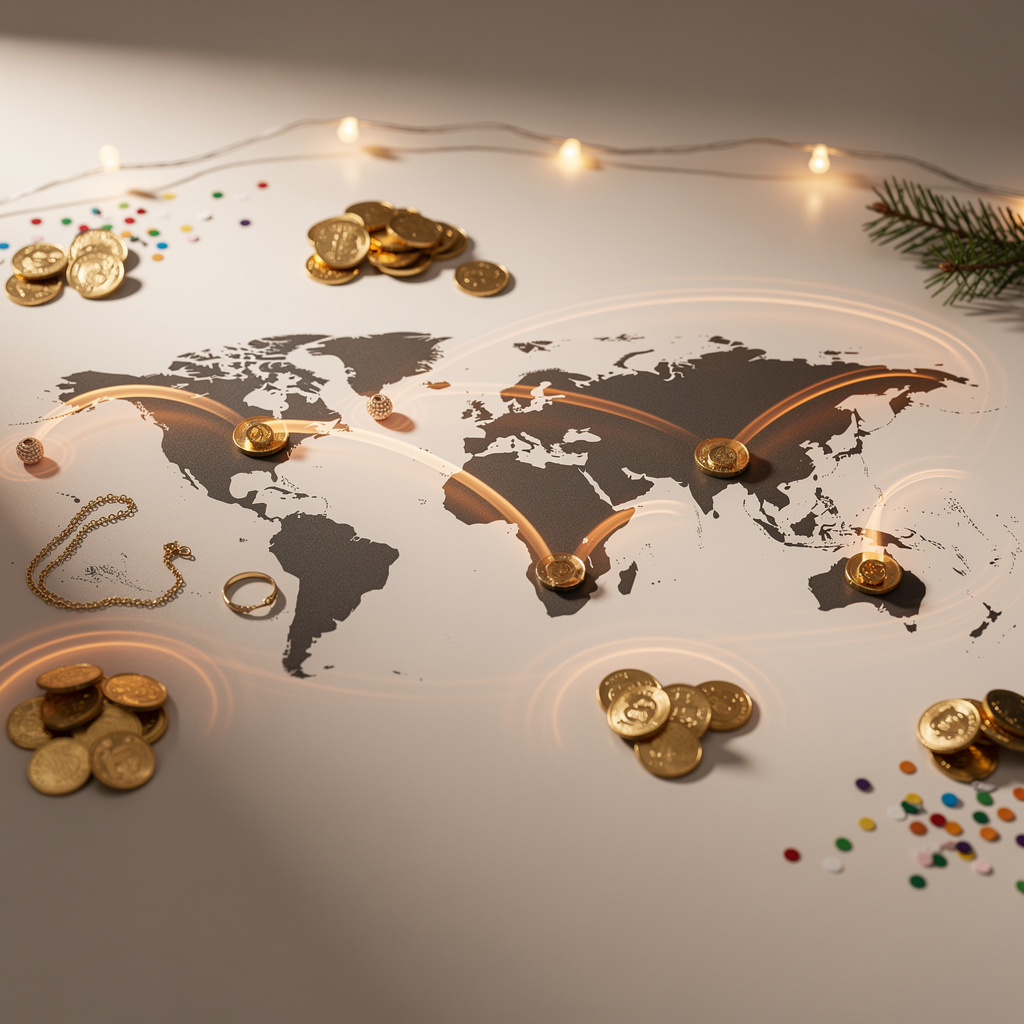
Holidays matter, but the real story sits in the demand mosaic
Seasonality in gold price is not a single drumbeat you can reliably march to every year. In 2025, holidays nudged markets in some places and less so in others, and the bigger forces—central-bank buying, macro policy, and risk sentiment—still did most of the heavy lifting. The takeaway isn’t a magic calendar; it’s a nuanced rhythm where regional demand patterns meet global money flows, and where calendar cues act as accelerants or dampeners depending on the backdrop.
What we learned in 2025
- Regionally nuanced seasonality: India showed a persistent festive-and-wedding pulse that uplifts investment demand (ETFs, bars/coins) and keeps imports elevated, even with higher domestic prices. China displayed a shift in demand composition: holidays boosted investment demand while jewellery purchases softened when prices rose. This isn’t a simple “festival spike” everywhere; it’s a reweighting of demand around calendar moments. Global patterns in Q3 2025 leaned toward investment-led strength—ETF inflows and bar/coin demand remained the primary engine, with central-bank buying staying elevated. [Sources: WGC India market updates, Q3 2025 Gold Demand Trends; Reuters China coverage; BIS context via December 2025 notes]
- January as a historical anchor, not a universal rule: The January-strength narrative persists in market memory, but magnitudes shift with macro conditions like inflation, real rates, and policy signals. In 2025, the calendar provided context, not a sole driver.
- Macro forces still steer the ship: When the macro environment is supportive (or when risk-off flows rise), the seasonal pulse can become more pronounced; when macro drivers clash with calendar cues, the calendar’s signal can weaken or even invert.
What this means for your portfolio and planning
- Look through a regional lens, not a global lens. Track ETF flows, import data, and domestic price premia to see which channel is leading in a given market. In India, ETFs and bars/coins often lead during festival windows; in China, investment demand can lead around holidays even as jewellery responds to price levels. The global story remains investment-driven and highly sensitive to central-bank posture. [WGC India updates; Q3 2025 data; Reuters China coverage]
- Read the calendar as a map, not a map for all seasons. Use January-season patterns as a long-run reference point, but ground your timing in macro indicators (inflation, real rates, policy outlook) and cross-asset signals (equities, bonds, FX). A BIS reminder in late 2025 cautioned against relying on gold’s strength as a pure companion to equities. Treat seasonality as a useful signal, not a stand-alone trigger. [WGC January effect; BIS commentary via Reuters]
- Watch the composition, not just the level. An evident holiday spike in one region might look different when you split by product (jewellery vs. bars/coins) or by buyer (retail consumer vs. private investor). Disentangling demand channels helps you time risk and opportunity more intelligently. [Q3 2025 Gold Demand Trends; India vs China breakdowns]
Action plans you can apply now
- Build a regional pulse: For each major market, track ETF inflows, import volumes, and domestic price premia during festival windows (e.g., Diwali in India; Lunar New Year in China). Use simple dashboards to compare demand channels side by side rather than chasing a single price signal. [WGC updates; India market data]
- Test calendar plus macro scenarios: Maintain multiple playbooks—one where January-season strength dominates, another where macro indicators point to a muted calendar, and a third where a risk-off regime amplifies safe-haven demand. Run scenario analyses to see how each pathway affects portfolio risk and return in your base case and in stress cases. [Global context from Q3 2025 data; BIS risk note]
- Focus on timing signals that actually move markets: ETF flows and regional import activity often reveal the true pulse more clearly than price ticks alone. Pair these with central-bank commentary to avoid mistaking a seasonal lure for a sustainable trend. [ETF data; central-bank signals]
- Create a simple, repeatable routine for 2026: quarterly refreshes of regional demand splits, a January anchor check, and a macro overlay. Keep the routine lean so you can adjust quickly when winds shift.
Looking ahead to 2026
- The calendar will remain a useful lens, but it won’t outpace macro tides. Expect regional seasonal pulses to continue shaping flows, with the balance tipping toward investment-led demand when macro conditions look favorable and toward price-sensitive demand in risk-off or inflationary environments. The biggest opportunity lies in learning which region’s seasonal window aligns with your risk tolerance and portfolio goals, and in staying nimble enough to adjust when the macro backdrop changes.
- Prepare to adapt: central-bank signals, inflation trajectories, and real interest-rate paths will continue to interact with calendar effects. Your planning should assume a mosaic where regional signals interact with global financial conditions rather than a single, universal calendar rule.
Closing reflection
If 2026 brings a different breeze, which calendar will you listen to first—your regional rhythm, or the global melody of macro signals? And if the macro winds shift, how quickly can you reweight your expectations and adjust your risk accordingly? These questions aren’t merely academic; they’re practical prompts to keep your portfolio resilient in a world where holidays offer context, not certainty.
Would you like this conclusion adapted into a publish-ready blog post with accompanying charts and captions tailored to your audience (retail investors, jewelry retailers, or macro analysts)? I can also translate it into a regional mini-section plan and outline 3–5 post ideas that ride on the nuances of 2025’s seasonality in gold.
Notes on the data context (for readers who want to dig deeper): In 2025, India’s festive/investment demand was sustained by wedding cycles and ETF inflows, with a persistent domestic premium over international prices. China’s 2025 pattern skewed toward investment demand with softer jewellery purchases in high-price environments. Globally, ETF inflows and central-bank purchases supported a strong demand backdrop, even as jewellery demand waned when prices rose. The January seasonal narrative remains part of market folklore, but macro factors often steer the actual outcomes. These patterns come with the caveat that calendar effects are conditional and region-specific. [World Gold Council India updates; Reuters China coverage; Gold Demand Trends Q3 2025; BIS note via Reuters]