Locking Dogecoin in – 7 practical steps to secure your wallet today

In a quiet café last winter, I watched a friend nervously toggle between his laptop and a security clipboard. He trusted his Dogecoin to a single device, a habit that felt almost casual until a simple power cut became a reminder: security is a practice, not a feature. If you’ve ever thought, “My DOGE is just fine on this wallet,” you’re not alone. Yet the landscape is shifting—threats evolve, and so do the tools we have to protect what we own.
What makes this moment worth talking about is not a single hack but a series of small choices that compound into real resilience. The crypto world has shifted toward hardware-backed security, multisig arrangements, and smarter defaults in wallets. For Dogecoin users, the message is clear: control of keys should feel deliberate, not incidental.

What you’ll gain from this piece is a practical blueprint—how to reduce risk without turning your life into a fortress. We’ll connect concrete steps to the latest developments in the Dogecoin ecosystem, so you’re not just reacting to news, but building a routine around your security.
A quick snapshot of the current security landscape
This year, core wallet updates and foundation-led innovations point toward safer defaults and stronger key management. For Dogecoin Core users, minor releases in the 1.14.x line have focused on hardening the client, improving RPC and network behavior, and reducing unnecessary exposure. The aim is to make safer operation the easiest option for everyday users. For developers and advanced users, Libdogecoin 0.1.4 brings secure enclaves and hardware-backed storage options, signaling a broader shift toward hardware-assisted security. These moves align with industry trends that favor resilience, not just software promises. (github.com; foundation.dogecoin.com)
Alongside these, the ecosystem has reaffirmed the value of multisig governance structures—sharing control to reduce single points of failure. And as always, phishing and social-engineering remain persistent threats in 2025, which makes user-level hygiene even more critical. Independent security coverage emphasizes seed-phrase hygiene, offline backups, and hardware wallets for larger holdings. A growing set of tools is also helping users spot scams in real time as we browse. (dogecoin.org; coindesk.com; tomsguide.com)
Why these practices matter, in plain terms
- Non-custodial wallets give you real ownership of your keys. The core rule is simple: if you don’t control the seed, you don’t control the funds. This is underscored by official guidance and industry best practices. (dogecoin.com)
- Your seed phrase is the master key. A 12–24 word recovery phrase should be offline, durable, and duplicated in multiple secure locations. Digital copies, cloud storage, or photos of seeds are high-risk habits that invite theft. Hardware wallets are widely recommended for meaningful holdings. (dogecoin.com)
- For daily-use wallets, encrypting the wallet file adds a meaningful layer of protection against a compromised machine. Backups should be encrypted as well and stored offline. The official guidance covers these steps clearly. (dogecoin.com)
- If your holdings warrant extra security, multisig and hardware-backed keys distribute trust and make single-key compromise much harder. This approach is part of the Dogecoin Foundation’s security narrative and aligns with broader crypto-security wisdom. (dogecoin.org)
- Finally, stay alert to scams and use lightweight, privacy-preserving tools to check addresses before you interact with them. Tools and best practices are expanding, offering practical defenses you can adopt today. (coindesk.com; tomsguide.com)
Step-by-step turning theory into practice
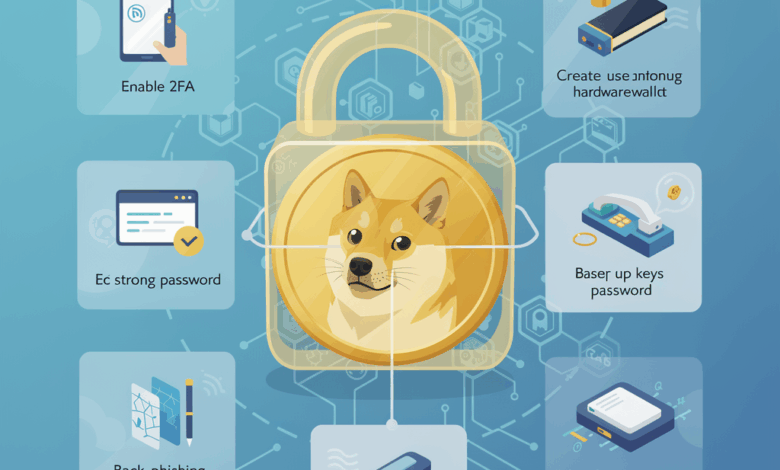
Step 1 — Create offline backups of your Dogecoin wallet
- Encrypt your wallet first, then use the wallet backup feature to generate a wallet.dat file if you’re on Dogecoin Core. Store this backup offline and copy it to multiple secure locations. This is the core guidance offered by official Dogecoin resources. (dogecoin.com)
Step 2 — Back up seed phrases securely
- If you use seed-phrase–based wallets, write down the 12 or 24 words and store them offline in at least two secure places. Do not store seeds digitally or on cloud services. Physical backups are essential for longevity. (dogecoin.com)
Step 3 — Encrypt and protect the wallet file
- Encryption protects against a compromised device. Enable wallet encryption and ensure backups are encrypted as well, with offline storage for resilience. (dogecoin.com)
Step 4 — Use hardware wallets for long-term holdings
- For anyone with meaningful DOGE, hardware wallets offer cold storage that never touches the active device. Consider multisig with hardware-backed keys if you manage funds for others or across teams. This is supported by reputable wallet analyses and aligns with Dogecoin Foundation’s security orientation. (coinbureau.com)
Step 5 — Consider multisig for added security
- Multisig (for example, 2-of-3 or 3-of-5) distributes control and protects against single-key compromise. It’s a practical fit for groups and organizations involved in Dogecoin governance and development. (dogecoin.org)
Step 6 — Stay current with official software updates
- Regularly updating Dogecoin Core and related wallet software is a simple yet powerful habit. Release notes and official blogs emphasize upgrading for security and reliability. Check the Dogecoin GitHub releases and Dogecoin Foundation updates for the latest on 1.14.x and beyond. (github.com; foundation.dogecoin.com)
Step 7 — Be vigilant about scams
- Do not interact with unsolicited seed requests, giveaways, or unknown URLs. Use trusted sources and consider lightweight tools that flag known scam addresses while you browse. These practical measures are increasingly common in 2025 security discourse. (coindesk.com; tomsguide.com)
Final reflections: what might I still be underestimating?
Security is a moving target. Even as the ecosystem adopts stronger defaults and hardware-backed approaches, new threats emerge—especially around human behavior. If you’re building your own Dogecoin security routine, what other layers could you add? Are there edge cases in your setup you haven’t tested, like backups across devices or a recovery process that your family could follow? The aim isn’t a perfect shield, but a living practice that grows with your holdings—and with your understanding of risk. As you implement these steps, keep asking: what would happen if one link in this chain failed, and how can I make that link stronger?
Is Your DOGE Really Yours? A Thoughtful Guide to Wallet Security in 2025
In a quiet café last winter, I watched a friend nervously toggle between his laptop and a security clipboard. He trusted his Dogecoin to a single device, a habit that felt almost casual until a simple power cut became a reminder: security is a practice, not a feature. If you have ever thought that your DOGE is fine on this wallet, you are not alone. Yet the landscape is shifting—threats evolve, and so do the tools we have to protect what we own.
What makes this moment worth talking about is not a single hack but a series of small choices that compound into real resilience. The crypto world has shifted toward hardware-backed security, multisig arrangements, and smarter defaults in wallets. For Dogecoin users, the message is clear: control of keys should feel deliberate, not incidental.
Think of this as a practical guide for Dogecoin Wallet Security Best Practices. What you will gain from this piece is a practical blueprint—how to reduce risk without turning your life into a fortress. We will connect concrete steps to the latest developments in the Dogecoin ecosystem, so you are not just reacting to news, but building a routine around your security.
A quick snapshot of the current security landscape
- Dogecoin Core security updates in the 1.14.x line show a steady push toward safer defaults and robust surface hardening. For example, 1.14.7 adds security updates and disables the BIP-70 payment server by default, while 1.14.8 and 1.14.9 focus on performance, network chatter reduction, and edge-case hardening. These updates aim to make safer operation the easiest option for everyday users. (Dogecoin Core releases: https://github.com/dogecoin/dogecoin/releases/)
- Libdogecoin 0.1.4 brings secure enclaves and hardware-backed key management, signaling a shift toward hardware-assisted security for developers and advanced users. (Foundation devblog: https://foundation.dogecoin.com/pt/blog/2025-04-10-devblog/)
- The Dogecoin Foundation has also explored multisig governance (a 3-of-5 setup) to distribute control and reduce single points of failure in core funding and governance. (Corefund announcement: https://dogecoin.org/announcements/2022-12-31-corefund/)
- Phishing and social-engineering remain top threats in 2025. The landscape emphasizes seed-phrase hygiene, offline backups, hardware wallets for larger holdings, and software updates as core best practices. (Coindesk security roundup: https://www.coindesk.com/web3/2025/10/30/social-engineering-scams-top-crypto-threats-in-2025-whitebit?utm_source=openai; Coin Bureau: https://coinbureau.com/analysis/best-dogecoin-wallets/)
- Scam-detection tools are expanding; for example, wallet-address checkers integrated into browsing tools provide an extra safety net without compromising privacy. (NordVPN wallet checker via Tom’s Guide: https://www.tomsguide.com/computing/vpns/nordvpn-adds-crypto-wallet-checker-to-stop-scams-in-their-tracks?utm_source=openai)
Why these practices matter, in plain terms
- Non-custodial wallets give you real ownership of your keys. If you do not control the seed, you do not control the funds. This is the core rule echoed by Dogecoin guidance and crypto-security wisdom. (Dogecoin Dogepedia: https://dogecoin.com/dogepedia/articles/how-to-backup-a-wallet/)
- Your seed phrase is the master key. A 12–24 word recovery phrase should live offline in multiple secure locations. Digital copies or photos invite theft. Hardware wallets are widely recommended for meaningful holdings. (Dogecoin Dogepedia: https://dogecoin.com/dogepedia/articles/how-to-backup-a-wallet/)
- Encrypting the wallet file adds a protective layer for daily-use devices; backups should be encrypted and kept offline. (Dogecoin Dogepedia: https://dogecoin.com/dogepedia/articles/how-to-backup-a-wallet/)
- For larger holdings, multisig and hardware-backed keys distribute trust and reduce the risk of a single key being compromised. This aligns with Dogecoin Foundation security narrative. (Corefund announcement: https://dogecoin.org/announcements/2022-12-31-corefund/)
- Stay alert to scams and use lightweight tools to check addresses before engaging with them. (Coindesk 2025 scam threats and NordVPN checker reference; Coin Bureau wallet guidance: https://coinbureau.com/analysis/best-dogecoin-wallets/)
Step-by-step turning theory into practice
Step 1 — Create offline backups of your Dogecoin wallet
- Encrypt your wallet first, then use the wallet backup feature to generate a wallet.dat file if you are on Dogecoin Core. Store this backup offline and copy it to multiple secure locations. This is the core guidance from official Dogecoin resources. (Dogecoin Dogepedia: https://dogecoin.com/dogepedia/articles/how-to-backup-a-wallet/)
Step 2 — Back up seed phrases securely
- If you use seed-phrase–based wallets, write down the 12 or 24 words and store them offline in at least two secure places. Do not store seeds digitally or on cloud services. Physical backups are essential for longevity. (Dogecoin Dogepedia: https://dogecoin.com/dogepedia/articles/how-to-backup-a-wallet/)
Step 3 — Encrypt and protect the wallet file
- Encryption protects against a compromised device. Enable wallet encryption and ensure backups are encrypted as well, with offline storage for resilience. (Dogecoin Dogepedia: https://dogecoin.com/dogepedia/articles/how-to-backup-a-wallet/)
Step 4 — Use hardware wallets for long-term holdings
- For anyone with meaningful DOGE, hardware wallets offer cold storage that never touches the active device. Consider multisig with hardware-backed keys if you manage funds for others or across teams. This is supported by reputable wallet analyses and aligns with Dogecoin Foundation security orientation. (Coin Bureau: https://coinbureau.com/analysis/best-dogecoin-wallets/)
Step 5 — Consider multisig for added security
- Multisig (for example, 2-of-3 or 3-of-5) distributes control and protects against single-key compromise. It is a practical fit for groups and organizations involved in Dogecoin governance and development. (Dogecoin Foundation governance examples: https://dogecoin.org/announcements/2022-12-31-corefund/)
Step 6 — Stay current with official software updates
- Regularly updating Dogecoin Core and related wallet software is a simple yet powerful habit. Release notes and official blogs emphasize upgrading for security and reliability. Check the Dogecoin GitHub releases and the Dogecoin Foundation updates for the latest on 1.14.x and beyond. (GitHub releases: https://github.com/dogecoin/dogecoin/releases/; Foundation blog: https://foundation.dogecoin.com/pt/blog/2025-04-10-devblog/)
Step 7 — Be vigilant about scams
- Do not interact with unsolicited seed requests, giveaways, or unknown URLs. Use trusted sources and consider lightweight tools that flag known scam addresses while you browse. (Coindesk 2025 scam threats: https://www.coindesk.com/web3/2025/10/30/social-engineering-scams-top-crypto-threats-in-2025-whitebit?utm_source=openai; NordVPN wallet checker: https://www.tomsguide.com/computing/vpns/nordvpn-adds-crypto-wallet-checker-to-stop-scams-in-their-tracks?utm_source=openai)
Final reflections what might I still be underestimating?
Security is a moving target. Even as the ecosystem adopts stronger defaults and hardware-backed approaches, new threats emerge—particularly around human behavior. If you are building your own Dogecoin security routine, what other layers could you add? Are there edge cases in your setup you have not tested, like backups across devices or a recovery process that your family could follow? The aim is not a perfect shield, but a living practice that grows with your holdings—and with your understanding of risk. As you implement these steps, keep asking: what would happen if one link in this chain failed, and how can I make that link stronger?
- Are there additional safeguards you could introduce right now—air-gapped backups, hardware-wallet partitioning, or family-based recovery plans?
Try this directly now (quick-start checklist)
- [ ] Encrypt your Dogecoin Core wallet and back up wallet.dat offline to at least two locations.
- [ ] If you use a seed phrase, write it down on durable material and store offline in two secure places.
- [ ] If you hold meaningful DOGE, acquire a hardware wallet and plan a migration path for cold storage.
- [ ] Explore multisig options if you manage funds with others.
- [ ] Subscribe to official Dogecoin releases and devblogs to stay updated on security defaults.
- [ ] Add a lightweight scam-checker tool to your browsing routine and verify URLs before interacting with any service.
If you have read this far, you might already feel a shift from a casual stance on this device to deliberate, tested safeguards. That feeling is not a finish line; it is a new starting point. What other layers can you add this week, and who should share the responsibility with you?
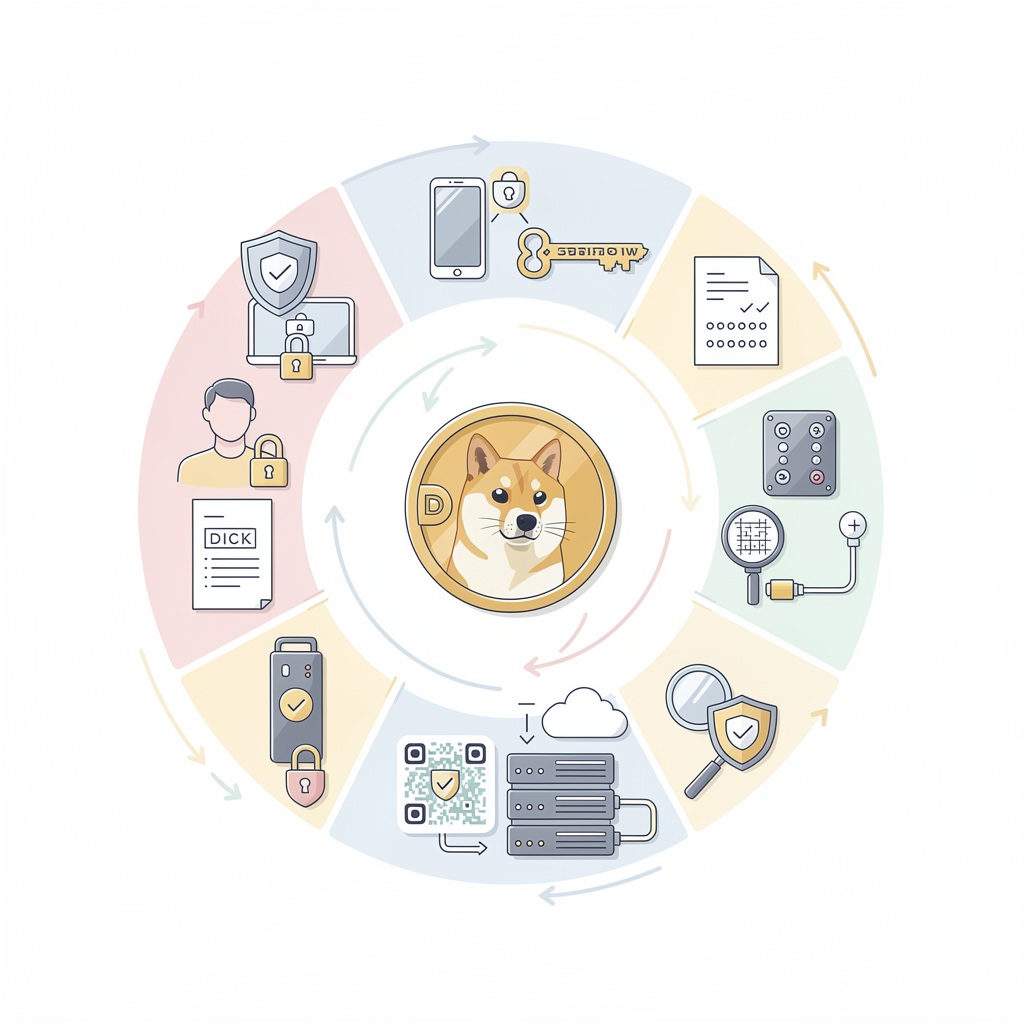
Key Summary and Implications
This conclusion reframes wallet security as a living practice rather than a one-off setup. The most enduring idea is simple: true ownership isn’t just about owning keys today, but about creating a resilient habit that scales with your holdings and your risk tolerance. The ecosystem is quietly moving toward hardware-backed storage, multi-signature governance, and smarter defaults, which means your security posture should migrate from “a device I trust” to “a layered system I actively manage.” The deeper implication is communal as well as personal: secure ownership is strengthened when groups share responsibility and when individuals build routines that resist human error. In short, the question shifts from “Do I have a safe wallet?” to “What ongoing choices keep my funds safer tomorrow than they are today?” And that shift matters because threats evolve, while good habits compound.
- The rise of hardware-backed keys and multisig makes risk reduction less about chasing perfect software and more about distributing trust and enforcing deliberate controls.
- Phishing and social-engineering persist; the strongest defenses remain daily hygiene, offline backups, and trusted verification steps—habits you can practice even with modest tech.
- Building a practical security routine connects you to broader crypto-security trends without requiring you to become an expert overnight—it’s about steady improvements you can sustain.
These ideas point to a broader takeaway: security is a moving target you can outpace by layering defenses, auditing your setup, and inviting accountability—both for yourself and any collaborators you work with.
Action Plans
Here’s a concrete path to translate the ideas above into everyday practice. Start small, then grow the layers as your holdings and comfort level increase.
Step-by-step turning theory into practice
- Step 1 — Create offline backups of your Dogecoin wallet
- Encrypt your wallet first, then generate a wallet.dat backup (for Dogecoin Core) and store it offline in at least two secure locations.
- Step 2 — Back up seed phrases securely
- For seed-based wallets, write down the 12 or 24 words and keep them offline in two durable places. Do not store seeds digitally or in cloud services.
- Step 3 — Encrypt and protect the wallet file
- Enable wallet encryption and ensure all backups are encrypted and stored offline.
- Step 4 — Use hardware wallets for long-term holdings
- For meaningful DOGE, migrate to a hardware wallet for cold storage. If you manage funds for others, consider multisig with hardware-backed keys.
- Step 5 — Consider multisig for added security
- Explore 2-of-3 or 3-of-5 setups to distribute control and reduce single-key risk, especially for groups or governance teams.
- Step 6 — Stay current with official software updates
- Regularly update Dogecoin Core and related wallet software; follow official release notes and dev blogs for security enhancements.
- Step 7 — Be vigilant about scams
- Avoid unsolicited seed requests, giveaways, or unknown links. Use lightweight scam-checking tools and verify addresses before interacting with services.
Quick-start checklist
- [ ] Encrypt your Dogecoin Core wallet and back up wallet.dat to offline locations (at least two).
- [ ] If you use seed phrases, write them on durable material and store offline in two secure places.
- [ ] If you hold meaningful DOGE, acquire a hardware wallet and plan a cold-storage migration.
- [ ] Explore multisig options if you manage funds with others.
- [ ] Subscribe to official Dogecoin releases and devblogs to stay updated on security defaults.
- [ ] Add a lightweight scam-checker tool to your browsing routine and verify URLs before interacting with services.
Closing Message
Security is a moving target, and the best results come from a mindset as much as a toolkit. You’re not expected to have it all figured out today, but you can take one concrete step this week toward a more resilient setup. As you experiment, you’ll discover which layers fit your life, your risk tolerance, and your community. If you’ve read this far, you’ve already begun shifting from casual trust to deliberate control. So, what’s the first extra layer you’ll add this week—and who will share the responsibility with you?