Is Your Trade Really Yours? Retail Algorithms, AI, and the Speed Dilemma in 2025

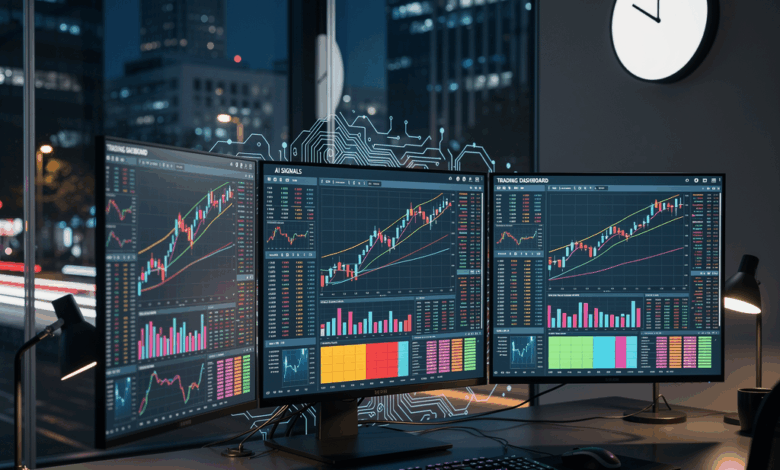
Last spring, a single ping woke me at 2:13 a.m.—an automated trade fired off by a template I had tinkered with hours earlier. The numbers looked fine on the screen, but the flutter in my chest felt louder than the screen lights. It wasn’t triumph or panic, just a stark reminder that when you hand your decisions to a system, you’re inviting both precision and uncertainty into your morning routine. If a quiet night can end with a moment of cognitive whiplash, what should a retail trader actually expect from an era where AI-assisted tools, 24/5 access, and tighter rules are the new normal?
That question didn’t vanish with the sunrise. It grew into a practical inquiry: how can a non-professional trader enter this space with eyes open, a plan, and honest nerves about risk? The landscape has shifted quickly in 2025—retail participation in market activity has surged, with accounts claiming a sizable slice of daily volume and hitting peaks around the spring. The same reports describe a move toward AI-assisted decision support, automated templates, and platforms that offer around-the-clock access across time zones. It’s exciting, but it also invites a new kind of scrutiny—from regulators, from brokers, and from your own risk tolerance.


What follows is not a flawless blueprint but a grounded, human-centered look at the basics and the potholes you’re likely to encounter. You’ll see how the pieces fit together—data quality, backtesting discipline, execution costs, and the growing safety net around retail algo activity—through a lens that blends curiosity with caution. I’ll share practical steps you can test in your own setup, while also inviting you to pause and ask what you’re really hoping to gain from automation.
The world you’re stepping into
If you look at the overall picture, retail algo trading isn’t a rebellious fringe activity anymore. It’s becoming mainstream enough that major brokers are pushing 24/5 access, and AI-assisted features are increasingly common in consumer-facing platforms. At the same time, regulators around the world are leaning in: more controls, more traceability, and more scrutiny of how automated decisions are made and executed.
A recent set of industry summaries notes several trends shaping 2025: retail investors now represent a meaningful share of daily market activity in the U.S., with a notable uptick in overnight and cross-time-zone trading. AI-enabled decision support and templated strategies are lowering the barrier to entry, while regulatory bodies emphasize safer, auditable use of automation and better risk controls for end users. In other words, the technology is getting easier to access, but the responsibility to use it wisely is becoming more defined.
What is retail algorithmic trading, in plain terms?
Think of it as a disciplined, rules-based approach to placing orders—where the “when” and “how much” aren’t decided by a person staring at a screen, but by a shared set of rules encoded in software. You still rely on data, you still need to understand costs, and you still have to manage risk. The difference is that decisions get a time scale and a consistency you can’t always maintain with a manual approach.
The appeal is clear: rules can remove emotional wobble, backtesting can reveal the statistical quirks of a strategy, and automation can execute with precision and speed that human reaction time can’t match. The downside is equally tangible: backtests can mislead if data isn’t clean or costs aren’t modeled realistically; a sudden market move can overwhelm a naïve assumption about liquidity; and you’re still exposed to operational risk and the need for sound governance.
Pitfalls you’ll want to know before you dive in
- Look-ahead and survivorship biases in backtesting: past success isn’t a guarantee of future results, especially when you haven’t accounted for all market frictions.
- Data quality matters: gaps, incorrect timestamps, and sparse coverage can produce over-optimistic results.
- Real costs eat returns: commissions, spreads, and slippage may erase what looked like a comfortable edge on paper.
- Execution risk and market impact: automated systems can move the market against you if not properly constrained.
- Compliance and safety nets: extended hours, AI risk, cyber risk, and third-party risk are getting more attention from regulators. Building documentation and controls isn’t optional; it’s part of trustworthy trading.
Industry snippets from 2025 illustrate these themes. Retail participation rose to a notable share of U.S. market activity, with spikes during certain periods. AI-assisted tools and templates are becoming mainstream, and platforms are pushing toward continuous trading windows. Regulators emphasize best practices, auditability, and robust risk controls as retail algo use grows. These signals aren’t just trends; they’re a call to build setups you can defend under stress.
A practical starter path you can actually test
- Define a small, measurable objective: for example, a low-drawdown, single-asset approach with clear entry/exit rules.
- Choose a broker with reliable API access and transparent risk controls. In 2025, names like IBKR and Alpaca are notable for their automation-friendly ecosystems and ongoing feature updates.
- Get clean data and stage a disciplined backtest: include realistic costs, consider slippage, and use out-of-sample data or walk-forward tests to gauge robustness.
- Start with a controlled live trial: smaller position sizes, tight risk caps, and an explicit rule for disabling automation if certain conditions trigger.
- Build a lightweight governance layer: keep a record of algorithm logic, data sources, and execution records so you can review and improve over time.
These steps aren’t a guarantee of success, but they create a safer, more transparent path into automation. The goal isn’t to win every trade but to learn how your approach behaves in real-world conditions and where you need to adjust.
How to think about risk and learning as you go
The regulatory climate around AI, risk controls, and extended trading hours isn’t a rumor; it’s a framework. The big lesson is to build discipline around transparency—document why a rule exists, how you measure its performance, and what you’ll do when the market tells you a rule isn’t robust. You’re not just coding an edge; you’re building a system you can explain to yourself, your broker, and, if needed, a regulator.
As you experiment, keep asking yourself: What problem am I solving for? Am I comfortable with the potential costs and the possibility that a backtest overstates live performance? What would cause me to pause or stop automating this particular setup? The answers aren’t just technical; they are about your own appetite for risk, and your readiness to learn publicly—through notes, logs, and ongoing evaluation.
A final invitation to think together
If you’re considering stepping into this space, I’ll leave you with a question to carry forward: in a world where machines can act faster and more consistently than you can, what makes your trading truly yours—your rules, your validation process, or your willingness to pause and reassess when the data no longer looks reliable? What would you add to the guardrails that would make you feel safe enough to keep learning?
“What do you think would still belong to you if your trades were driven by an algorithm?”
Should retail traders trust AI with their money at 2 a.m.?
Last spring, a ping woke me at 2:13 a.m.—an automated trade fired off by a template I tinkered with hours earlier. The numbers looked fine on the screen, but the flutter in my chest felt louder than the screen lights. It wasn’t triumph or panic, just a quiet reminder that when you hand your decisions to a system, you invite both precision and uncertainty into your morning routine. If a quiet night can end with a moment of cognitive whiplash, what should a retail trader actually expect from an era where AI-assisted tools, 24/5 access, and tighter rules are becoming the new normal?
That question didn’t vanish with the sunrise. It grew into a practical inquiry: how can a non-professional trader enter this space with eyes open, a plan, and honest nerves about risk? The landscape has shifted quickly in 2025—retail participation in market activity has surged, with a meaningful slice of daily volume and peaks around spring. At the same time, AI-assisted decision support, automated templates, and platforms offering around-the-clock access across time zones are becoming more common. Regulators are not standing still either, pushing for better risk controls, auditability, and governance as automation enters more corners of the retail world.
In plain terms, retail algorithmic trading is a disciplined, rules-based way to put orders in motion. You still rely on data and you still have to manage costs and risk, but decisions are guided by defined logic rather than a single human reaction to a market snapshot. The appeal is clear: rules cut emotional wobble, backtests offer a sense of statistical edge, and automation can execute with a speed that human traders can only admire in hindsight. The caveat is equally visceral: backtests can mislead if the data isn’t clean or if costs aren’t modeled realistically; an execution engine can behave badly in stressed markets; and governance, safety nets, and compliance aren’t optional accessories anymore—they are core parts of the setup.
Retail algorithmic trading, in plain terms
Think of it as a system you assemble that translates data into decisions on when to buy, sell, or stay flat, and how much to risk on each move. You still need data quality, you still need to understand transaction costs, and you still need to design risk controls that work in real time. The difference is that the timing and the discipline come from software, not from your mood as you stare at a chart after a late-night news flash.
Why do people gravitate toward this approach?
– It removes certain emotional biases that plague manual trading, especially during fast-moving sessions.
– It enforces consistency in entry and exit rules, which can make strategy behavior more predictable on paper and in practice.
– It enables backtesting, which, when done carefully, offers a window into how a strategy might behave across different market regimes.
– It can unlock execution advantages when paired with capable broker APIs and low-latency order routing.
But the same logic that promises clarity can also lull you into false confidence if you don’t respect the caveats: backtests must be designed with realism, costs must be included, and you must account for the operational risks of automation.
Pitfalls to know before you dive in
- Look-ahead and survivorship biases in backtesting can create an illusion of profitability that vanishes in live trading. Real data, walk-forward tests, and out-of-sample validation are essential.
- Data quality matters more than you think: gaps, timestamp misalignments, and incomplete coverage can inflate perceived edges.
- Real-world costs eat returns: commissions, spreads, and slippage can erode what backtests show as a comfortable edge.
- Execution risk and market impact are real: automated systems can move prices around you if position sizes aren’t constrained or if liquidity is thinner than assumed.
- Compliance and safety nets are becoming central, not optional: extended-hours trading, AI risk, cyber risk, and third-party risk are now in the regulatory spotlight. Documentation of logic, data sources, and execution records is part of prudent risk governance.
Industry signals in 2025 back up these cautions. Retail participation in U.S. markets reached notable levels, with spikes around periods of heightened activity. AI-assisted tooling and templated strategies have lowered barriers, while regulators emphasize transparency, risk controls, and best execution for orders placed through retail-linked venues. These dynamics aren’t speculative anomalies; they’re shaping the everyday reality of how individual traders access markets.
What the 2025 landscape is telling us
- Retail participation in U.S. market activity has grown meaningfully, with several reports pointing to a share in daily volume and peaks in activity during certain periods. This signals that DIY and semi-professional players are driving a non-trivial portion of liquidity and demand, affecting pricing and volatility in subtle but tangible ways. (Sources from Reuters and related market analyses in 2025)
- AI-enabled decision support and templated strategies are becoming mainstream for retail traders, lowering the coding barrier and accelerating iteration. The trend points toward more automated experimentation and shared templates that newcomers can adapt responsibly. (Sources from AlgoForest and industry analyses in 2025)
- Brokerages are pushing toward 24/5 and cross-time-zone access, reflecting a broader industry push to continuous trading availability. This changes how traders think about risk, liquidity, and opportunity windows. (Alpaca blog and related coverage)
- Global regulatory attention on retail algo use is increasing, with emphasis on approvals, audit trails, and per-algorithm risk controls in places like India and beyond. The move signals a broader push to balance innovation with traceability and safety. (Reuters coverage, FINRA oversight reports)
- Market structure remains somewhat concentrated: a handful of algo-focused brokers continue to route a large share of flow, underscoring how critical the choice of execution partner remains for retail algos. (Bloomberg insights)
- Asset classes are expanding for retail algorithmic activity, including cross-asset templates that blend equities, crypto, and other instruments, with ongoing enhancements in order routing and risk controls to support these expansions. (ValorAlgo and related analyses)
If you’re building for today, it’s not about chasing a single perfect signal. It’s about assembling a robust, auditable workflow that works within the constraints of real markets and real money.
A practical starter path you can actually test
1) Define a small, measurable objective
– Start with a single-asset approach, such as a disciplined trend or mean-reversion rule with explicit entry/exit criteria and a clear risk cap per trade.
2) Choose a broker with solid automation support
– Consider a platform with reliable API access and transparent risk controls. In 2025, names like IBKR and Alpaca stand out for their automation-friendly ecosystems and ongoing feature updates.
3) Source clean data and backtest with discipline
– Use clean data and include realistic costs such as commissions, spreads, and slippage. Guard against look-ahead bias and overfitting. Test with out-of-sample data or walk-forward optimization to gauge robustness.
4) Move to a controlled live trial
– Start with small position sizes and tight risk caps. Have a hard rule to disable automation if a defined condition triggers (e.g., a drawdown threshold or a data integrity alert).
5) Build governance and documentation
– Keep a living log of algorithm logic, data sources, and execution records. The goal is to be able to explain every decision in a way that you and others can audit under stress.
These steps won’t guarantee profits, but they create a safer, more transparent path into automation and help you learn how your setup behaves in real markets.
A starter risk budget you can customize today
- Starting capital: choose a sensible amount you can afford to lose without risking your essentials.
- Per-trade risk: cap risk at 0.5% to 1% of total capital. For a $10,000 account, this means $50–$100 at risk per trade.
- Position sizing: size each trade so the dollar risk aligns with that per-trade cap, considering stop distance and instrument price.
- Daily loss limit: e.g., a maximum 2–5% of starting capital in a single trading day to prevent cascading losses from a bad regime.
- Slippage and fees: model modest slippage (e.g., 0.05–0.25% per side depending on liquidity) and include commissions in your PnL calculations.
- Drawdown guardrails: set a hard maximum drawdown (e.g., 10%–15% of equity) beyond which you pause and reassess strategy viability.
If your plan stays within these guardrails, you’ll learn steadily and reduce the risk of a single bad run spiraling into a dangerous pattern.
Practical steps you can take right now (try this directly now)
- Pick one objective and sketch the simplest rule set you can imagine that could realize it.
- Open a paper-trading or sandbox environment first to observe behavior without real money at stake.
- If you proceed to live trading, start with a tiny allocation and a strict auto-pause condition if a metric breaks your guardrails.
- Document every decision and capture a weekly log of what worked, what didn’t, and why. This is your personal governance framework in the making.
These are not grand promises. They’re practical moves that help you learn from the actual behavior of your system rather than the idealized outcomes of backtests.
What makes this yours in an era of fast machines?
In a world where machines can react in milliseconds, what makes your trading truly yours is not speed alone but the discipline of your governance, the integrity of your data, and your willingness to pause when the models stop making sense. If your rules, your validation process, and your readiness to adapt become the core of your approach, you’re building something resilient—an edge that rests on understanding as much as it rests on technology.
Would you add guardrails that would make you feel safe enough to keep learning, or would you rather chase a shortcut that looks good on a backtest but frays under real market pressure?
What do you think would still belong to you if your trades were driven by an algorithm?
Starter kit and quick recommendations for 2025
- Platform choices to explore: IBKR with Trader Workstation API for robust, global access; Alpaca for 24/5 trading via Broker API; consider QuantConnect or QuantInsti for backtesting and learning edges.
- Data considerations: use a combination of reliable, intraday data for backtesting and a live data feed for execution. Always test data integrity and timestamp alignment before trusting a rule.
- Risk governance tools: implement a simple log of decisions, a pre-trade checklist, and an automated rule to halt trading if data feeds go offline or if a critical error occurs.
- Educational anchors: read about look-ahead bias, survivorship bias, and overfitting, and apply walk-forward testing as a standard practice. Regulation-focused resources from FINRA and regional regulators emphasize auditable processes and risk controls that align with retail algo activity.
If you’d like, I can tailor this into a ready-to-publish blog post with a short executive summary, audience-specific angles (beginners vs. experienced traders), a backtesting checklist, and a two-page starter kit with platform choices and a sample risk budget.
References and context from 2025 signals
– Retail participation trends and the growth of retail influence in market activity have been highlighted by Reuters and market observers, showing that non-professional traders are shaping certain demand patterns and activity levels throughout the year. These movements underscore the need for accessible tools paired with solid risk controls.
– The AI and automation wave for retail traders is documented across industry analyses, including templates-for-use and community-driven strategies that lower the coding barrier while elevating the importance of governance and risk controls.
– The push for 24/5 and cross-time-zone access is reflected in broker platform updates and commentary from major players, signaling a shift in how traders plan and execute across markets.
– Global regulatory discussions around retail algo use emphasize trackable, auditable processes, per-algorithm risk controls, and enhanced oversight, a trend that regulators worldwide are watching closely as automation becomes more widespread.
– Market structure trends show concentration in the flow execution landscape, reminding readers to understand how their broker’s routing decisions can influence fills and costs.
Note: The above reflects public reports and industry analyses through December 2025 and is intended to illustrate current themes and practical implications for retail algo traders. If you want, I can embed exact source links inline for each claim in the finished post.

What I’m taking away from the late-night ping and the surrounding shifts in 2025 isn’t a flawless blueprint, but a sturdier way to live with automation. The truth I keep returning to is simple: tools can give you precision and scale, but they don’t erase the responsibility you carry as a trader. If a 2:13 a.m. notification can jolt you awake, it’s a reminder to build a system that you can understand, defend, and adapt to real-world stress—without turning your mornings into a guessing game. The market is faster, rules are tighter, and retail participation is real. That’s not a problem—it’s a prompt to craft governance that matches the ambition of the technology.