Crypto Risk Certification in 2025 – Compliance or Underwriting—Which Path Should You Take?


Should you bet your career on a single credential that proves you understand crypto risk today? A tough question, but one worth asking as we’re watching a rapid shift in how professionals validate expertise. After a late conversation with a risk director who was choosing between several online certifications, it became clear: in 2025 the credential you carry can influence hiring, promotions, and even the way teams frame risk. The market has exploded with online certifications focused on crypto risk, AML/KYC, due diligence, and DeFi underwriting. Portable badges and modular paths are turning what used to be a collection of courses into a verifiable career ladder.


The landscape you’re navigating
What’s new, exactly? The range of programs has widened, and they’re not just “courses” anymore. They’re multi-level paths designed to prove progressively deeper mastery, with portable recognition you can share on LinkedIn or in resumes. Think Credly badges alongside traditional certificates, so your achievements travel with you across firms and geographies. For example, Digital Assets Compliance Specialization (DACS) from ACFCS offers Foundations, Intermediate, and Advanced tracks, with a Credly badge upon completion. You can see the structure and badge option here: https://www.acfcs.org/digital-assets-compliance-specialization?utm_source=openai. Meanwhile, CipherTrace’s CCRS program emphasizes a verifiable certification of cryptocurrency risk expertise (and also uses a badge system on Credly). https://www.credly.com/org/ciphertrace/badge/certified-cryptocurrency-risk-specialist-ccrs.
Recent research and industry notes also show a notable emphasis on DeFi risk and on-chain underwriting concepts. A 2025 arXiv piece discusses how decentralized credit underwriting is evolving with curator layers and modular vaults, signaling that risk education is increasingly about transparency and governance-aware metrics rather than purely protocol-level risk. For readers following the cutting edge, see: https://arxiv.org/abs/2512.11976. In parallel, regulatory-driven programs are stitching FATF guidance and regional frameworks into their curricula, helping professionals stay aligned as rules evolve (EU MiCA, US, UK, Singapore, etc.). See the DACS page for ongoing regulatory updates: https://www.acfcs.org/digital-assets-compliance-specialization?utm_source=openai.
Why these credentials matter (and what they promise)
- Portable proof of capability: Digital badges and certificates designed to travel with you as you move between roles, teams, or regions. Credly is increasingly a default badge repository across crypto risk programs. Details on badge-based recognition appear in programs like CCRS and DACS: https://www.credly.com/org/ciphertrace/badge/certified-cryptocurrency-risk-specialist-ccrs and https://www.acfcs.org/digital-assets-compliance-specialization?utm_source=openai.
- Practical focus on risk disciplines: Programs increasingly cover customer due diligence (CDD), Know Your Customer (KYC), and AML within crypto contexts. They also extend into crypto risk management and regulatory compliance applicable to both centralized platforms and DeFi. Notable examples include the FCA’s Crypto Risk Management modules and the CDD-CRY specialization (for crypto-specific due diligence). See https://financialcrimeacademy.org/course/certificate-in-risk-management-and-audit-for-crypto-businesses/ and https://americancbm.org/courses/cdd-for-cryptocurrency-cdd-cry/.
- DeFi and underwriting readiness: As DeFi lending grows, so does the demand for underwrite-ready risk frameworks that balance on-chain disclosures with governance signals. This is an emerging theme in 2025 certifications and academic research. For the academic perspective, explore https://arxiv.org/abs/2512.11976 and for practical industry updates see the DeFi-focused risk discussions tied to these programs.
How to choose what to look for in a program
- Alignment with your target role: If you’re leaning toward crypto compliance, AML/KYC, and regulatory risk within traditional or crypto firms, aim for multi-level certifications (foundations to advanced) that include regulatory modules and badge credentials. The DACS path is a prominent example, with Credly badges and a clear progression. (https://www.acfcs.org/digital-assets-compliance-specialization?utm_source=openai)
- Focus on your risk domain: If your interest is lending risk, underwriting, or DeFi risk, look for programs that include CDD/KYC/AML in crypto contexts plus dedicated risk management tracks. The CDD-CRY module and the FCA’s Crypto Risk Management content are frequently cited options: https://americancbm.org/courses/cdd-for-cryptocurrency-cdd-cry/ and https://financialcrimeacademy.org/course/certificate-in-risk-management-and-audit-for-crypto-businesses/.
- Certification format and portability: Prioritize programs offering a verifiable badge (Credly) and modular completion, so you can demonstrate ongoing learning to employers. CCRS and DACS provide badge-worthy outcomes: https://www.credly.com/org/ciphertrace/badge/certified-cryptocurrency-risk-specialist-ccrs and https://www.acfcs.org/digital-assets-compliance-specialization?utm_source=openai.
- Regulatory currency: Look for curricula updated with FATF guidance and regional rules. This alignment isn’t incidental; it’s now a core differentiator in 2025 program catalogs. See DACS and related pages for regulatory emphasis: https://www.acfcs.org/digital-assets-compliance-specialization?utm_source=openai.
- Exam format and time-to-completion: If you need quick credibility, pick programs with shorter modules and clear exams (e.g., CDD-CRY’s 40-minute online exam with two attempts). Details here: https://americancbm.org/courses/cdd-for-cryptocurrency-cdd-cry/.
Practical paths you can consider (two example trajectories)
- Path A — Crypto Compliance & Risk (traditional finance or crypto firm focus)
1) Foundations of Crypto Risk: Enroll in Digital Assets Compliance Specialization Foundations (ACFCS) to anchor yourself in crypto-specific controls and FATF-aligned frameworks. Badge upon completion. https://www.acfcs.org/digital-assets-compliance-specialization?utm_source=openai
2) Build a KYC/CDD competency: Add the CDD-CRY specialization to deepen crypto due diligence capabilities. https://americancbm.org/courses/cdd-for-cryptocurrency-cdd-cry/
3) Master crypto risk management & controls: Complete Crypto Risk Management track (ACFCS) or FCA’s Crypto Risk Management course to tie risk identification to governance and audits. https://www.acfcs.org/crypto-risk-management?utm_source=openai and https://financialcrimeacademy.org/course/certificate-in-risk-management-and-audit-for-crypto-businesses/
4) Validate with a portable badge: Earn the Credly badge for the completion path (DACS/CCRS). https://www.credly.com/org/ciphertrace/badge/certified-cryptocurrency-risk-specialist-ccrs - Path B — DeFi underwriting & on-chain risk literacy
1) Foundations to get grounded: DACS Foundations to learn core compliance and risk concepts across on- and off-chain contexts. https://www.acfcs.org/digital-assets-compliance-specialization?utm_source=openai
2) Focused due diligence in crypto contexts: CDD-CRY for crypto-specific due diligence skills. https://americancbm.org/courses/cdd-for-cryptocurrency-cdd-cry/
3) Add a dedicated risk/underwriting track: Crypto Risk Management (ACFCS) or a DeFi-focused risk module, aimed at on-chain risk and governance signals. https://www.acfcs.org/crypto-risk-management?utm_source=openai
4) Certify with a badge and share your progress: CCRS or DACS badge paths. https://www.credly.com/org/ciphertrace/badge/certified-cryptocurrency-risk-specialist-ccrs
A quick decision checklist (to take with you)
- Do I need regulatory depth (AML/KYC, due diligence) or underwriting-focused risk (DeFi, on-chain governance)?
- Do I value a badge that travels with me across employers? If yes, prioritize Credly-enabled tracks (CCRS, DACS, etc.). https://www.credly.com/org/ciphertrace/badge/certified-cryptocurrency-risk-specialist-ccrs
- How much time can I commit? Some programs are modular and can be completed faster, while others are multi-course journeys. Look for clear module counts and exam formats (e.g., CDD-CRY: 50 questions, 40 minutes, two attempts). https://americancbm.org/courses/cdd-for-cryptocurrency-cdd-cry/
- Is the curriculum current with FATF and regional rules? Programs that explicitly update with FATF guidance and regional snapshots are better bets for long-term relevance. https://www.acfcs.org/digital-assets-compliance-specialization?utm_source=openai
A closing thought
As crypto risk becomes a shared language across on-chain and off-chain markets, the true value of a credential may lie not in a single certificate but in your evolving toolkit and the conversations you can sustain with it. If you had to design your own learning path for the next 12 months, what combination of regulation, risk, and DeFi modules would you weave together to tell a coherent story about your readiness? What would your badge say about your approach to risk in a changing crypto world?
Should you bet your career on a single crypto risk certification in 2025?
I’ve been in rooms where risk directors debated this exact question. A quick, private chat after a long board meeting reshaped my thinking: the credential you carry today can influence hiring, promotion, and even how teams frame risk tomorrow. The crypto world is moving fast—not just in technology, but in how we prove competence. If you’re a finance professional, risk analyst, or crypto lender, you’re navigating a market where online certifications in crypto lending risk assessment and underwriting are mutating from a box-check to a ladder of mastery. Here’s how to read that landscape, pick a path, and start acting on it today.
What makes 2025 different a landscape you can actually work with
The big shift isn’t just more courses; it’s a shift toward portable credentials that travel with you across employers and geographies. Think Credly badges alongside traditional certificates, turning a pile of modules into a verifiable career narrative. For instance, Digital Assets Compliance Specialization (DACS) from ACFCS offers Foundations, Intermediate, and Advanced tracks, with a Credly badge upon completion. You can explore the structure here: https://www.acfcs.org/digital-assets-compliance-specialization?utm_source=openai. On the credentialing side, CipherTrace’s CCRS highlights a verifiable cryptocurrency-risk certificate with a digital badge via Credly: https://www.credly.com/org/ciphertrace/badge/certified-cryptocurrency-risk-specialist-ccrs.
Regulatory alignment has become a core feature of curricula. FATF guidance and regional frameworks (EU MiCA, US, UK, Singapore, etc.) are now threaded through most reputable programs, helping professionals stay current as rules evolve. The DACS page emphasizes this regulatory immersion: https://www.acfcs.org/digital-assets-compliance-specialization?utm_source=openai.
DeFi lending risk and underwriting are entering formal education as a distinct focus. A 2025 arXiv piece explores how decentralized credit underwriting is evolving with curator layers and modular vaults, signaling a shift toward on-chain transparency and governance-aware risk metrics. If you’re tracking the cutting edge, read: https://arxiv.org/abs/2512.11976.
In practical terms, expect multi-level paths, exam-driven outcomes, and portable badges rather than a single one-off course. Programs like CCRS and DACS illustrate this trend, while others—such as the FCA’s Crypto Risk Management track and the CDD-CRY specialization—tilt toward risk controls, due diligence, and regulatory compliance in crypto contexts. See examples here: https://www.acfcs.org/crypto-risk-management?utm_source=openai and https://americancbm.org/courses/cdd-for-cryptocurrency-cdd-cry/.
Quick guide to the main programs (what they cover and who they’re for)
- Digital Assets Compliance Specialization (DACS) — ACFCS
- Focus: Broad crypto risk and compliance with FATF-aligned controls; Foundations → Intermediate → Advanced; a Credly badge on completion.
- Why it matters: Great for compliance- and regulation-focused roles in both traditional finance-adjacent and crypto firms. Typical path is multi-level, with practical controls and case-work.
-
What you get: Certificate of completion and Credly badge per track. Details: https://www.acfcs.org/digital-assets-compliance-specialization?utm_source=openai
-
Crypto Compliance Specialization — ACFCS
- Focus: Crypto regulation, typologies, and compliance program design; tiered pricing for members/non-members; badge on completion.
-
Target: Professionals building or validating crypto compliance capabilities and AML/KYC expertise. See program page: https://www.acfcs.org/crypto-specialization-certificate/?utm_source=openai
-
Crypto Risk Management (ACFCS) — Chainalysis-powered specialization
- Focus: Practical crypto risk management and regulatory responsibilities, with a stronger risk-control orientation.
-
Credential: Certificate plus potential badge. See: https://www.acfcs.org/crypto-risk-management?utm_source=openai
-
FCA Certificate in Risk Management and Audit for Crypto Businesses — Financial Crime Academy
- Focus: Risk management, internal controls, AML/KYC, and crypto auditing within a regulatory lens.
-
Format: Four online modules; certificate on completion. See: https://financialcrimeacademy.org/course/certificate-in-risk-management-and-audit-for-crypto-businesses/
-
Certified Due Diligence Specialist in Cryptocurrency (CDD-CRY) — American CBM
- Focus: Crypto-specific CDD/KYC/AML and due diligence, with an online exam (50 MCQs, 40 minutes) and two attempts included.
- Outcome: Certificate upon passing; strong emphasis on due diligence in crypto.
-
See: https://americancbm.org/courses/cdd-for-cryptocurrency-cdd-cry/
-
Elliptic Certify — Crypto education and certifications
- Focus: Crypto basics and risk-context training; tied to Elliptic solutions and on-demand modules. See: https://www.elliptic.co/learn/virtual-classrooms
How to choose a practical decision framework
- Alignment with your target role
- If you’re aiming for crypto compliance, AML/KYC, and regulatory risk within banks, exchanges, or crypto firms, look for multi-level certifications (Foundations → Advanced) that weave FATF guidance into practical controls. DACS is a strong example, especially with Credly badges signaling credibility across employers: https://www.acfcs.org/digital-assets-compliance-specialization?utm_source=openai.
-
If your focus is lending risk, underwriting, and DeFi contexts, combine modules that cover CDD/KYC/AML in crypto with risk-management tracks. Consider pairing CDD-CRY with Crypto Risk Management or FCA content to cover both due diligence and on-the-ground risk controls. Examples: CDD-CRY: https://americancbm.org/courses/cdd-for-cryptocurrency-cdd-cry/ and Crypto Risk Management: https://www.acfcs.org/crypto-risk-management?utm_source=openai
-
Certification format and portability
-
Prefer programs offering verifiable digital badges (Credly) alongside certificates. This makes your credentials portable for LinkedIn profiles and resumes across firms and regions. CCRS and DACS provide badge options: https://www.credly.com/org/ciphertrace/badge/certified-cryptocurrency-risk-specialist-ccrs and https://www.acfcs.org/digital-assets-compliance-specialization?utm_source=openai
-
Regulatory currency
-
Look for curricula that explicitly update with FATF guidance and cross-regional rules. This is a clear differentiator in 2025 programs and helps future-proof your learning. The DACS page highlights ongoing regulatory updates: https://www.acfcs.org/digital-assets-compliance-specialization?utm_source=openai
-
Time-to-competence
-
If you need quick credibility, prioritize modules with clear exam formats and shorter completion times (e.g., CDD-CRY’s 40-minute exam with two attempts). Details here: https://americancbm.org/courses/cdd-for-cryptocurrency-cdd-cry/
-
DeFi and on-chain underwriting readiness
- The DeFi underwriting shift is real. The December 2025 arXiv paper on risk curation in decentralized credit signals that future certifications will increasingly cover on-chain disclosures and governance-informed metrics. This is a valuable context for blog writers and practitioners alike: https://arxiv.org/abs/2512.11976
A two-path practical plan you can start today
Path A — Crypto Compliance & Risk (traditional finance or crypto firm focus)
– Step 1: Foundations of Crypto Risk (DACS Foundations) to ground yourself in crypto-specific controls and FATF-aligned frameworks. Completion earns a Credly badge: https://www.acfcs.org/digital-assets-compliance-specialization?utm_source=openai
– Step 2: Add CDD-CRY specialization to deepen crypto due diligence skills: https://americancbm.org/courses/cdd-for-cryptocurrency-cdd-cry/
– Step 3: Master crypto risk management and controls via Crypto Risk Management (ACFCS) or FCA’s Crypto Risk Management content: https://www.acfcs.org/crypto-risk-management?utm_source=openai and https://financialcrimeacademy.org/course/certificate-in-risk-management-and-audit-for-crypto-businesses/
– Step 4: Validate with a portable badge (CCRS or DACS): https://www.credly.com/org/ciphertrace/badge/certified-cryptocurrency-risk-specialist-ccrs and https://www.acfcs.org/digital-assets-compliance-specialization?utm_source=openai
Path B — DeFi underwriting & on-chain risk literacy
– Step 1: Start with DACS Foundations to build cross-cutting compliance and risk language: https://www.acfcs.org/digital-assets-compliance-specialization?utm_source=openai
– Step 2: Deepen crypto due diligence with CDD-CRY: https://americancbm.org/courses/cdd-for-cryptocurrency-cdd-cry/
– Step 3: Add a risk-management layer focused on on-chain risk or DeFi contexts (ACFCS Crypto Risk Management or related modules): https://www.acfcs.org/crypto-risk-management?utm_source=openai
– Step 4: Earn a portable badge and showcase your DeFi risk thinking: CCRS or DACS badge: https://www.credly.com/org/ciphertrace/badge/certified-cryptocurrency-risk-specialist-ccrs
The quick decision checklist to carry with you
- Do I need regulatory depth (AML/KYC, due diligence) or underwriting-focused risk (DeFi, on-chain governance)?
- Do I value a badge that travels with me? If yes, prioritize Credly-enabled tracks (CCRS, DACS, etc.). https://www.credly.com/org/ciphertrace/badge/certified-cryptocurrency-risk-specialist-ccrs
- How much time can I commit? Some programs are modular and can be completed in weeks; others are multi-course journeys. Look for clear module counts and exam formats (e.g., CDD-CRY: 50 questions, 40 minutes, two attempts). https://americancbm.org/courses/cdd-for-cryptocurrency-cdd-cry/
- Is the curriculum current with FATF and regional rules? Programs that explicitly cite FATF guidance and regional rules tend to stay relevant longer. https://www.acfcs.org/digital-assets-compliance-specialization?utm_source=openai
A closing thought that invites your next step
As crypto risk becomes a shared language across on-chain and off-chain markets, the right credential is less about a single certificate and more about the evolving toolkit you bring to conversations about risk. If you had to design your own learning path for the next 12 months, what combination of regulation, risk, and DeFi modules would you weave to tell a coherent story about your readiness? What would your badge say about your approach to risk in a changing crypto world?
Ready-to-publish blueprint suggested sections, titles, and SEO framing
- Primary title options (curiosity-driven)
- Should you bet your career on a single crypto risk certification in 2025?
- DeFi underwriting is reshaping risk education: which crypto credential actually pays off?
- From private questions to portfolio-ready credentials: navigating online crypto risk certs in 2025
- Meta description (SEO-friendly, reader-focused)
- Explore how online certifications in crypto lending risk assessment and underwriting are evolving in 2025. Compare top programs, understand portability with Credly badges, and get a practical path for compliance, KYC/AML, and DeFi risk discrimination.
- Embedded citations and sources
- DACS structure and badge: https://www.acfcs.org/digital-assets-compliance-specialization?utm_source=openai
- CCRS badge: https://www.credly.com/org/ciphertrace/badge/certified-cryptocurrency-risk-specialist-ccrs
- FATF/regulatory emphasis: https://www.acfcs.org/digital-assets-compliance-specialization?utm_source=openai
- DeFi underwriting trend (arXiv 2512.11976): https://arxiv.org/abs/2512.11976
- CDD-CRY module: https://americancbm.org/courses/cdd-for-cryptocurrency-cdd-cry/
- FCA Crypto Risk Management: https://financialcrimeacademy.org/course/certificate-in-risk-management-and-audit-for-crypto-businesses/
- Crypto risk management page (ACFCS): https://www.acfcs.org/crypto-risk-management?utm_source=openai
- Elliptic Certify: https://www.elliptic.co/learn/virtual-classrooms
If you’d like, I can tailor this into a ready-to-publish blog post with a specific heading hierarchy, a table comparing the top programs, and a meta description tailored to your target audience. I can also craft a two-step plan customized to a role—centralized crypto lender vs. DeFi liquidity provider—and insert a comparison table of the top programs with price ranges, duration, and badge details.
Would you like me to generate the final publish-ready blog post draft with a comparison table and a custom path for your target role?
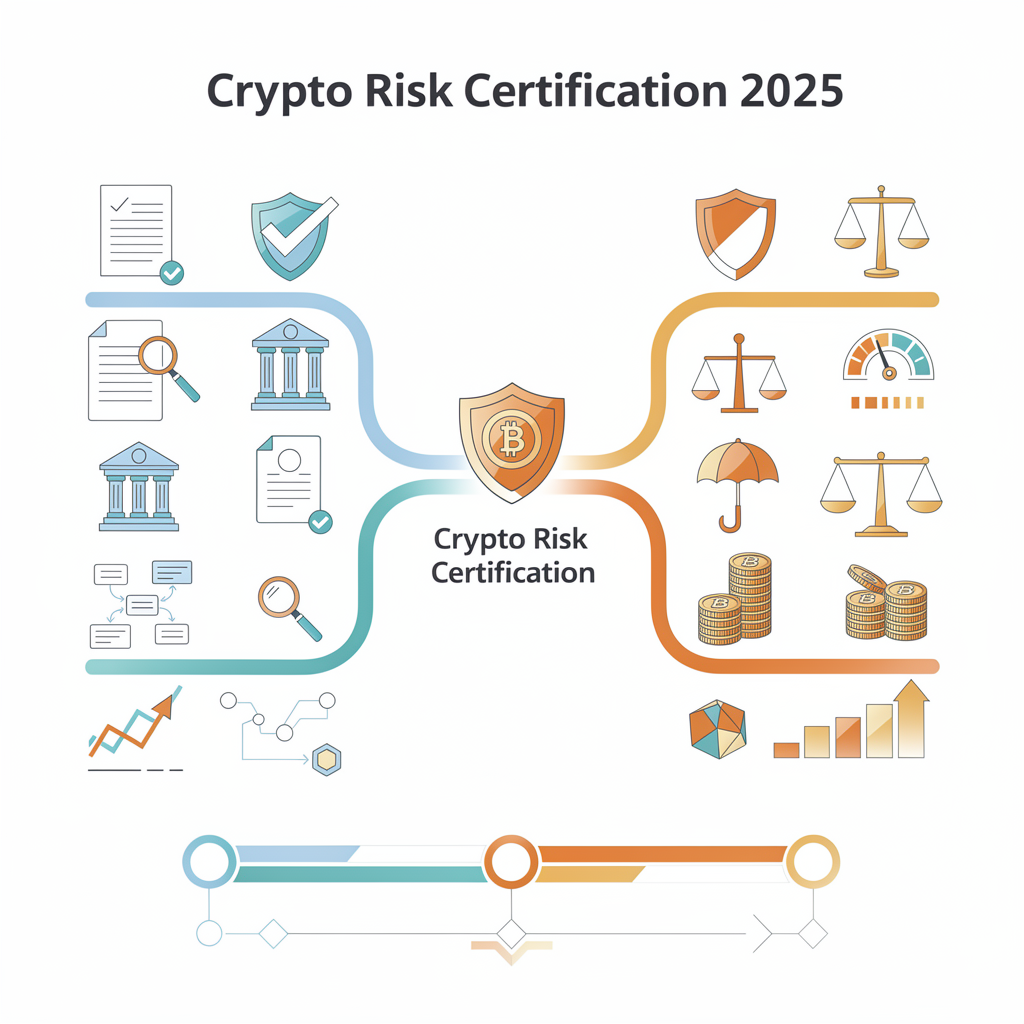
What this landscape means for your crypto-risk career
The credential ecosystem for crypto risk is no longer a pile of one-off courses; it’s becoming a portable, modular ladder that travels with you across firms and geographies. In 2025, a badge you earn can speak just as loudly as a traditional certificate, helping you narrate a coherent story about your approach to risk across on-chain and off-chain contexts. The real shift is not just more programs, but learning becoming a career narrative you can carry—from Foundations to Advanced tracks, with visible evidence of your growing mastery.
This matters because your credibility now hinges on consistency, relevance, and verifiability. Aligning with FATF guidance and regional rules isn’t a niche perk; it’s the backbone of durable risk thinking as crypto markets evolve. And as DeFi lending and on-chain underwriting mature, the ability to translate governance signals, disclosures, and regulatory expectations into concrete risk actions becomes the value you bring to any team. In short, your next credential should be part of a broader toolkit, not a solitary trophy.
Two practical paths you can start now
Path A — Crypto Compliance & Risk (traditional finance or crypto-firm focus)
1) Foundations of Crypto Risk (DACS Foundations) to anchor yourself in crypto-specific controls and FATF-aligned frameworks. Completion earns a Credly badge. (Program page: https://www.acfcs.org/digital-assets-compliance-specialization?utm_source=openai)
2) Build crypto due diligence skills with CDD-CRY to deepen crypto-specific diligence capabilities. (Course: https://americancbm.org/courses/cdd-for-cryptocurrency-cdd-cry/)
3) Master crypto risk management and controls through Crypto Risk Management modules (ACFCS) or FCA’s Crypto Risk Management content to connect risk identification with governance and audit practices. (Links: https://www.acfcs.org/crypto-risk-management?utm_source=openai, https://financialcrimeacademy.org/course/certificate-in-risk-management-and-audit-for-crypto-businesses/)
4) Validate your journey with a portable badge (CCRS or DACS), so your certification travels with you. (Credly badges: https://www.credly.com/org/ciphertrace/badge/certified-cryptocurrency-risk-specialist-ccrs, https://www.acfcs.org/digital-assets-compliance-specialization?utm_source=openai)
Path B — DeFi underwriting & on-chain risk literacy
1) Start with DACS Foundations to build cross-cutting compliance and risk language applicable to on-chain and off-chain contexts. (https://www.acfcs.org/digital-assets-compliance-specialization?utm_source=openai)
2) Add crypto due diligence through CDD-CRY to develop crypto-specific diligence skills. (https://americancbm.org/courses/cdd-for-cryptocurrency-cdd-cry/)
3) Layer in a dedicated risk/underwriting track focused on on-chain and DeFi contexts (ACFCS Crypto Risk Management or related modules). (https://www.acfcs.org/crypto-risk-management?utm_source=openai)
4) Earn a portable badge and showcase your DeFi risk thinking (CCRS or DACS badge). (https://www.credly.com/org/ciphertrace/badge/certified-cryptocurrency-risk-specialist-ccrs, https://www.acfcs.org/digital-assets-compliance-specialization?utm_source=openai)
Closing reflection and next step
As you scan the market, ask yourself: if you had to design your own 12-month learning plan, what combination of regulation, risk, and DeFi modules would you weave to tell a coherent story about your readiness? What would your badge say about your approach to risk in a changing crypto world?
The best credential may be the evolving toolkit you assemble, not a single certificate. If you’re ready to test the waters, start by naming three modules you want to complete by the end of Q2 and share your plan with a colleague or mentor—the conversation itself is a powerful first act.
If you want, I can tailor this into a publish-ready blog post with a comparison table and a custom learning path for your target role. I can also craft a concrete two-path plan customized for a centralized crypto lender vs. a DeFi liquidity provider and link a side-by-side program comparison with price ranges, duration, and badge details.
References and useful anchors (for your exploration):
– Digital Assets Compliance Specialization (DACS) — Foundations, with Credly badge on completion. https://www.acfcs.org/digital-assets-compliance-specialization?utm_source=openai
– CCRS badge and verification via Credly. https://www.credly.com/org/ciphertrace/badge/certified-cryptocurrency-risk-specialist-ccrs
– FATF alignment and regulatory emphasis in curricula. https://www.acfcs.org/digital-assets-compliance-specialization?utm_source=openai
– DeFi on-chain risk and governance signals (academic context). https://arxiv.org/abs/2512.11976
– CDD-CRY module (crypto due diligence). https://americancbm.org/courses/cdd-for-cryptocurrency-cdd-cry/
– FCA Crypto Risk Management content. https://financialcrimeacademy.org/course/certificate-in-risk-management-and-audit-for-crypto-businesses/
– Crypto risk management resources (ACFCS). https://www.acfcs.org/crypto-risk-management?utm_source=openai
– Elliptic Certify (crypto education). https://www.elliptic.co/learn/virtual-classrooms