When Your Home Travels with You – The Insurance Full-Time RVers Actually Need

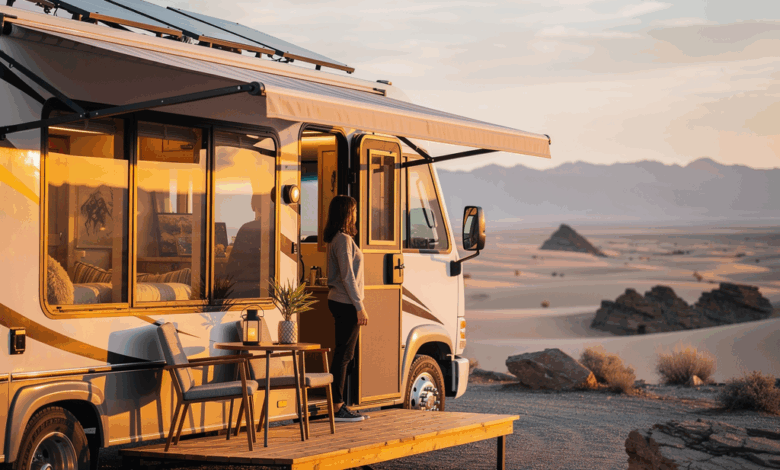
What happens when your house on wheels becomes your permanent home—and your insurance is the safety net that keeps it from becoming a disaster?
I’ve met full-time RVers who learned this lesson the hard way: you can own a fantastic, travel-ready home, but if your insurance treats it like a vacation vehicle rather than a residence, a simple mishap becomes a months-long financial drag. In the past few years, insurers have started talking in terms of “full-time use” and endowing RV policies with homeowner-like protections. Progressively, the market is moving away from a one-size-fits-all approach and toward endorsements that recognize how often people actually live inside their rigs. Roamly and other specialists now market “Full-Time Use” packages that include liability, contents, loss assessment, and emergency lodging—protections that feel more like a home policy than a typical RV plan. Those shifts aren’t abstract: they change what you’re protected for, and how quickly you can recover if something goes wrong.

Yet with that shift comes new questions: What exactly should I insure beyond the basics? Do I really need replacement-cost on my personal effects if I’m living in the RV full-time? How do cross-border trips into Mexico influence my coverage? And most practically, how do I compare policies without getting lost in a forest of jargon and acronyms?
The Realities of Full-Time RV Living
Living in a vehicle changes the risk landscape in tangible ways. When the RV serves as a residence, the lines between auto policy protections and homeowners protections blur. You’re not just concerned with damage to the vehicle itself; you’re thinking about contents inside the RV, who’s liable if someone is injured on your site, and what happens if your RV is parked for months in a single location. Insurers have started addressing this by labeling and bundling coverages as “full-time” features—things like full-time liability, loss assessment, and emergency lodging coverage that kicks in when your home-away-from-home is temporarily unable to be lived in.
From a practical standpoint, this shift matters. If you’re in a park that charges fees for shared spaces, loss assessment coverage can cover those unexpected line items. If you’re paid in full for a trip, emergency lodging can help you keep moving without burning through savings. And if you store your RV for part of the year, some policies offer storage options that let you pause or adjust coverage without dropping essential protections.
What Full-Time RV Insurance Covers (and Why It Matters)
- Liability protections tailored for a residence on wheels: bodily injury and property damage for guests, park staff, and neighboring sites, plus a broader sense of responsibility when your home is the RV. This is often labeled as full-time liability.
- Contents coverage with replacement-cost options: much more valuable when your home contains a lifetime of belongings, tools, and gear that would be costly to replace if a loss occurs.
- Medical payments: coverage for guests who might be injured around the RV, which becomes more relevant when you frequently host friends or family at a site.
- Loss assessment: coverage for HOA or RV park charges for shared spaces that you might amass due to a covered loss.
- Emergency lodging: if the RV is uninhabitable, this pays for lodging and meals while you’re displaced and away from your usual base of operations.
- Roof protection and specialized add-ons: certain policies add-ons for roof protection or pest damage, which can matter for long-term residence.
- Cross-border and Mexico coverage: for those who roam southward, Mexico coverage can be essential to meet local requirements and ensure continuity of protection.
- Optional replacements and first-dollar coverage: some carriers offer actual replacement cost for the RV itself or first-dollar coverage for personal effects, which can be a game changer for high-value rigs.
Progressive, GEICO, Nationwide, and others have started offering these extended protections as part of dedicated full-time or use-endorsed policies. The result is more options to tailor protection to your actual life on the road, not just a vehicle you drive.
How to Compare Policies Without Feeling Overwhelmed
- Start with usage: is your RV truly a full-time residence or primarily a travel vehicle? If you live in it for six months or more, aim for a full-time endorsement or a policy designed for home-on-wheels living.
- Decide on replacement-cost vs actual cash value (ACV): replacement-cost for RVs and contents can be a big advantage when you rely on the RV as your home. It’s worth weighing the premium difference against the potential payout.
- Look for homeowner-like protections: ensure the policy includes liability, medical payments, and loss-assessment in a way that mirrors home coverage when your RV sits on a site for extended periods.
- Consider storage and pause options: some insurers let you pause or adjust coverages during long storage periods without sacrificing essential protections.
- Check cross-border requirements: if you travel into Mexico, verify that your coverage travels with you or obtain Mexico-specific coverage where needed.
- Exploit legitimate discounts: bundling with auto or homeowners/renters, paying upfront, and maintaining a clean driving record can yield meaningful savings.
- Use multiple quotes for breadth: compare Progressive, GEICO, Nationwide, State Farm, and specialist platforms like Roamly to see which carrier best matches your RV type, usage, and budget.
A practical takeaway: the more your policy reflects your actual life on the road, the more you’ll feel secure—and the more you’ll know you’re not paying for protections you don’t need, or missing protections you should have.
Practical Next Steps
If you’re ready to start, sketch out your current living pattern: where you park most of the year, how many guests you host, and how long a typical downtime or travel period lasts. Then list the coverages you’d expect to rely on most when your RV doubles as a home. Use this as a baseline to compare quotes—not the other way around. Look for explicitly labeled full-time coverage or endorsements, the option for replacement-cost on contents, and the availability of emergency lodging and loss assessment features. If you’re curious about Mexico travel, map out your cross-border routes and confirm the coverage extent for those trips.
A Final Thought
If your home on wheels is truly your everyday life, does standard RV coverage still tell the whole story, or is it time to design protection that behaves like a home policy on wheels? How will you balance the peace of mind you gain with the realities of cost and complexity on the road? The answer isn’t a single policy—it’s a flexible, living plan that grows with your travels.
What happens when your house on wheels becomes your permanent address? A practical, human-centered guide to RV insurance for full-time living
I’ve met couples who traded a fixed mailbox for a mailbox on a dashboard, and a simple truth kept reappearing: when your home travels with you, so do new kinds of questions about protection. If your RV is more than a vehicle—it’s your residence—how do you insure it so that the guardrails match the life you actually lead on the road? The answers aren’t just about premiums or coverage codes; they’re about designing protection that behaves like a home policy on wheels, not a discount-rack version of a vacation plan.
What follows is less a checklist of “what to buy” and more a map of how the landscape has shifted in 2025, and how you can shape a policy that fits your life inside the RV as much as your life on the road.
Should your RV insurance treat a home like a home?
Yes—and no. The market has begun calling out a new use case: full-time RV living. Insurers increasingly describe endorsements and packages that add homeowner-like protections to the usual auto-style coverage. Progressive, for example, frames full-time RV insurance as adding home‑like protections when the RV becomes a primary residence—things like full-time liability and loss assessment, plus emergency lodging if you’re displaced. Roamly and other specialists market “Full-Time Use” packages that bundle liability, contents, loss assessment, and emergency lodging, aiming to reflect how much time you actually spend inside the rig. This shift matters because it changes what you’re protected for—and how quickly you can recover when something goes wrong. Progressive; Roamly
What does “full-time RV insurance” cover, and why it matters when you live in your rig?
The core idea is to treat the RV as a home in some areas and as a vehicle in others. The most relevant protections for full-time living map onto that dual reality:
- Liability protections tailored for a residence on wheels: bodily injury and property damage for guests, park staff, and neighboring sites, with an emphasis on the broader responsibilities that come with living in a RV park or campground. This is often labeled as full-time liability. [Progressive]
- Contents coverage with replacement-cost options: you’re not insuring a few suitcases; you’re protecting a home’s worth of belongings, tools, and gear, which makes replacement-cost options especially compelling for full-time living. [GEICO, Progressive]
- Medical payments: coverage for guests who might be injured around the RV, which becomes more practical when you’re hosting friends or family at sites. [GEICO]
- Loss assessment:coverage for HOA or RV-park charges for shared spaces, roofs, or common areas that you could be billed for after a covered loss. [Progressive]
- Emergency lodging: if the RV is uninhabitable after a covered loss, this provision helps cover lodging and meals while you’re displaced. This is particularly valuable when you’re far from a fixed home base. [Progressive]
- Roof protection and specialized add-ons: some policies offer tailored protections like Roof Protection Plus or Pest Damage Protection, reflecting the realities of weekend-to-weekend use and long-term dwellings. [Progressive]
- Optional replacement-cost and scheduled personal effects: many carriers now offer replacement-cost coverage for personal effects and, in some cases, primary or first-dollar coverage for personal belongings. [Nationwide, Progressive]
- Cross-border and Mexico coverage: for many full-timers, travel means parks and routes that cross state lines—and sometimes into Mexico. Insurance options that explicitly cover these journeys are increasingly important. [CNBC, Good Sam]
How to compare these policies without getting lost in jargon
The core tension isn’t the vocabulary of insurance; it’s matching protection to your actual life. Here’s how to approach it with a clear head:
- Start with your usage: if you live in the RV for six months or more, look for a policy or endorsement that treats the RV as a residence in that context. When the policy aligns with your reality, the protection feels more practical. [Progressive]
- Weigh replacement-cost vs actual cash value (ACV): replacement-cost coverage for the RV and for contents can be transformative when your home-on-wheels is your daily life. The premium difference may be worthwhile in a full-time setup. [Nationwide, GEICO, Progressive]
- Seek homeowner-like protections: ensure the policy includes liability, medical payments, and loss-assessment in a way that mirrors a home policy you’d carry if you lived in a house. This is especially important when you park long enough to generate adjacent-structure questions. [Progressive]
- Storage and pause options: some carriers let you pause or adjust coverages during long storage periods, which can yield meaningful savings without dropping essential protections. [Roamly]
- Mexico/cross-border coverage: map your routes and confirm you have coverage where you travel; if not, consider Mexico-specific options or Mexico-friendly riders. [CNBC]
- Use legitimate discounts: bundling RV coverage with auto or home/renters, paying in full, maintaining a clean driving record, and other carriers’ loyalty programs can materially reduce costs. [Nationwide]
- Gather quotes from multiple sources: Progressive, GEICO, Nationwide, State Farm, and specialist platforms like Roamly each bring different strengths depending on your RV type and usage. [Progressive, Roamly]
A practical map of coverages, with real-world relevance
To ground this in the lived experience of full-time RVers, here’s a compact view of what you’ll likely encounter. The ranges below are illustrative: actual prices vary by RV type (travel trailer vs motorhome), value, location, and selected deductibles.
- Liability (bodily injury and property damage) – core protection for when your site becomes a neighbor’s concern. Essential when the RV acts as a residence. Typical annual implications vary; higher limits offer better protection if you’re living in your RV full-time. [Progressive]
- Collision and Comprehensive (for the RV itself) – protects the vehicle from physical damage, important when your home-on-wheels is your daily driver and living space. [GEICO, Progressive]
- Contents (personal property) – replacement-cost options are increasingly common and appealing for full-time living, given the amount and value of belongings inside. [GEICO, Nationwide, Progressive]
- Medical payments – coverage for guests injured around the RV; often modest but practically useful in social sites. [GEICO]
- Loss assessment – covers HOA or park-imposed fees tied to a covered loss affecting shared spaces. [Progressive]
- Emergency lodging – funds for lodging and meals if your RV is uninhabitable. Especially valuable when you’re far from a stable base. [Progressive]
- Roof protection and pest damage protections – add-ons that respond to the realities of long-term dwelling and weather risk, frequently highlighted by Progressive. [Progressive]
- Cross-border/Mexico coverage – critical for many full-timers who roam into Mexico; some carriers explicitly include or offer this. [CNBC, Good Sam]
- Replacement-cost for RV and scheduled personal effects – higher upfront cost, but a strong safety net for a home-on-wheels with substantial personal assets inside. [Nationwide, Progressive]
A quick, practical comparison matrix (Illustrative; confirm specifics with quotes)
| Coverage category | What it typically covers in a full-time-use policy | Why it matters for full-time RV living | Typical annual premium range (illustrative) | Carriers/notes |
|---|---|---|---|---|
| Liability (bodily injury and property damage) | Expanded liability limits, sometimes labeled as full-time liability | Protects you when your home moves and you host guests at parks | $300–$1,000+ per year for basic; higher with limits | Progressive, Roamly, others |
| Collision & Comprehensive (RV) | Physical damage to the RV; optional higher deductibles | Your home-on-wheels sustains the same risk as a house on the road | $300–$1,500+ depending on RV value | GEICO, Progressive, state-based carriers |
| Contents (personal property) | Replacement-cost options; contents inside the RV | When you live in it full-time, replacements become costly | $100–$500+ per year (premium based on value) | GEICO, Nationwide, Progressive |
| Medical payments | Guest injuries around the RV | Practical for social sites; small but real coverage | $0–$100+ | GEICO, others |
| Loss assessment | Fees charged by parks/HOAs after a loss | Protects you from unexpected shared-cost charges | $25–$200 | Progressive, others |
| Emergency lodging | Lodging/meals if RV is unusable | Keeps you moving when you’re far from home | $50–$300+ | Progressive, others |
| Roof protection / Pest protection | Add-ons for roofs, pest-related damage | Long-term RV dwellers care about condition and maintenance | Varies | Progressive, others |
| Cross-border / Mexico | Coverage that travels with you or Mexico-specific options | Critical for trips into Mexico | Varies; sometimes add-on | Good Sam, broker channels |
| Replacement-cost for RV / Personal effects | First-dollar or replacement-cost options for RV and belongings | Maximize payout when total loss occurs | Higher premium; strong protection | Nationwide, Progressive |
Case study: a year in the life of a full-time RVer
Case study (anonymous): A couple spends six to eight months on the road each year in a mid-range motorhome. They used to renew a standard RV policy that treated the unit like a traveling trailer, with modest liability and limited contents protection. After a few seasons of hosting friends at parks and keeping a home-like set of belongings in the RV, they shifted to a full-time-use endorsement that included: full-time liability, loss assessment, emergency lodging, and contents replacement-cost. The result wasn’t simply a higher premium; it was a policy that began to reflect their daily life. When a minor roof leak became a big windstorm claim, they relied on emergency lodging to relocate to a nearby RV park, and loss assessment helped cover shared repair costs at the park. The upgrade also included accent protections like pest coverage, which proved valuable in one desert site. The moral is not to chase the cheapest policy, but to align protection with your lived reality on the road.
What about cross-border and Mexico travel? It’s not a hypothetical. For many, it’s a meaningful part of the journey. Some full-time plans advertise Mexico coverage or cross-border options, and others require a separate rider. If you’re planning to roam into Mexico, map your routes and confirm coverage travels with you or secure Mexico-specific coverage where needed. [CNBC; Good Sam]
Three quick, actionable steps you can take today
1) Clarify your life on the road: Are you living in the RV six months or more per year? If yes, prioritize full-time-use endorsements or policies designed for home-on-wheels living.
2) Decide on replacement-cost vs ACV: Evaluate the value of your RV and contents; replacement-cost coverage can be a game-changer for full-time living but comes at a higher price.
3) Build a quotes shortlist and ask the right questions: Inquire about full-time liability, loss assessment, emergency lodging, roof/pest add-ons, and cross-border coverage. Request clarity on whether coverage travels to Mexico and what the process is for adding those protections.
A final thought to carry forward
If your home on wheels is truly your everyday life, does standard RV coverage tell the whole story, or is it time to design protection that behaves like a home policy on wheels? The best answer isn’t a single policy; it’s a living plan that grows with your travels and acknowledges the realities of life on the road. What would you adjust in your current plan to turn it into a more faithful guardian of your on-the-road home?
If you’d like, I can turn this into a downloadable blog guide with a clean comparison matrix (coverages, typical costs, and discounts by carrier) plus a quick, reusable checklist your readers can print and bring to quotes. The goal is to make insurance feel less like a maze and more like a map that helps your wheels stay freely roaming—and securely protected.
Key takeaways for the curious reader
- Full-time RV living demands homeowner-like protections in many cases, and the market now offers endorsements and packages that reflect this reality. [Progressive; Roamly]
- Core needs include liability, contents replacement-cost, medical payments, loss assessment, and emergency lodging, with optional add-ons that fit your climate, RV type, and travel style. [Progressive; GEICO; Nationwide]
- Cross-border considerations, especially Mexico coverage, are no longer obscure; plan ahead if you intend to roam beyond U.S. borders. [CNBC; Good Sam]
- Costs vary widely; the right approach is to compare multiple quotes, seek full-time use endorsements, and prioritize coverage that lines up with your lived experience rather than a generic RV policy. [NerdWallet; Progressive]
Notes on sources (for natural incorporation in your writing): Recent analyses and carrier pages emphasize that full-time use is becoming a standard feature in RV policies, with endorsements and add-ons that mirror homeowner protections. Look for terms like “full-time liability,” “loss assessment,” and “emergency lodging” as signals you’re moving toward home-on-wheels protection. Carrier examples include Progressive, GEICO, Nationwide, and Roamly; cross-border coverage remains an important differentiator among providers, with Mexico-focused options appearing on many platforms. [Progressive; Roamly; Nationwide; GEICO; CNBC; NerdWallet]

When your home truly travels with you, insurance stops being a backdrop to your adventures and becomes a live, breathing shield you rely on every day. The shift toward full-time-use endorsements is not a gimmick of the policy world; it’s a recognition of how you actually live on the road. This conclusion isn’t about selling you a single product, but about shaping protection that mirrors your life in motion.
Key takeaways and implications
- Full-time-use protections reflect lived reality: liability, contents, loss assessment, and emergency lodging are not extras—they’re the backbone of a home-on-wheels policy.
- Your RV is both residence and vehicle. Look for homeowner-like protections that translate to the road, so a claim doesn’t hinge on which side of the border you’re on.
- Replacement-cost on belongings matters more when your “home” is also your daily gear and toolbox. It can dramatically change recovery speed after a loss.
- Cross-border coverage (especially Mexico) is increasingly essential for many full-timers, not a niche add-on. Plan routes and confirm coverage travels with you.
- Storage pauses and flexible coverage options can save money without pulling the rug out from under you during downtime.
- Compare multiple sources (Progressive, GEICO, Nationwide, Roamly, and others). Each carrier brings different strengths depending on your RV type and how you actually use it.
Action Plans
1) Clarify your on-the-road reality: confirm whether you live in the RV six months or more per year. If yes, prioritize a full-time-use endorsement or a policy designed for home-on-wheels living.
2) Decide on replacement-cost vs ACV: inventory your RV and contents; if you rely on the RV as your home, replacement-cost coverage can be a game changer. Weigh the premium against potential payout.
3) Build a quotes shortlist with targeted questions: for every quote, verify full-time liability, loss assessment, emergency lodging, roof/pest add-ons, and cross-border coverage. Ask specifically: does coverage travel to Mexico if I roam south?
4) Use a practical checklist when evaluating policies: demand clear language on what’s covered, limits, deductibles, and how claims are handled when you’re parked long-term.
Closing message
The best protection isn’t a one-size-fits-all policy; it’s a living plan that grows with your travels. As the road evolves and insurers refine their offerings, your coverage should evolve too—not just to guard your assets, but to preserve the freedom to roam. If your home on wheels is your everyday life, what adjustments would transform your current policy into a true home-on-wheels guardian? Start with a simple, purposeful step today: compare a few quotes focused on full-time-use endorsements and replace-cost options, and let your own road-story guide the choice.
If you’d like, I can help turn this into a concise, printable quotes checklist you can carry to your next conversation with an agent. The map is there; it’s up to you to plot the next leg of your journey with confidence.
Key takeaway reminder: full-time RV living deserves homeowner-like protections, tailored to the realities of life on the road. The future of coverage is flexibility, clarity, and real-world relevance—begin shaping yours now.