What if your checkout could settle in seconds—and cost almost nothing? A practical path to Lightning Network payments for small businesses


Last week I watched a barista take a sale that would have been a minor headache on a busy afternoon, and the moment the customer tapped the screen, the receipt popped up in a blink. It wasn’t magic—just a tiny transaction whispering through the Lightning Network, settling almost instantly with a fee close to zero. If you run a small business, that moment is what many merchants are hoping to scale: faster payments, fewer headaches, happier customers. But where do you start, and which path makes sense for your storefront or online shop?
The friction you’re feeling isn’t only about technology. It’s about choosing an approach that fits your operations, your risk tolerance, and your customers’ expectations. Today there are two practical paths that many merchants are seriously considering as they move from traditional card rails toward Lightning-enabled payments: one that slides into your existing card ecosystem with minimal added hardware, and another that puts you in the driver’s seat of the payment rails with more control and long-term flexibility. Both have real-world momentum, and both are evolving fast enough to feel actionable rather than speculative.


This article sketches two approachable routes and highlights the practical steps you can take to test them without building a payments lab in your back room. You’ll see how major players are shaping the landscape, what liquidity means in practice, and how multi-asset rails on Lightning could matter for cross-border or vendor payments. By the end, you should have a clear starting point, a small pilot plan, and a sense of the trade-offs involved—so you can decide whether to try a quick swap into Lightning or to build a more customized integration.
Two practical adoption routes to consider
Route A — Square with Lightning: fast, hardware-friendly adoption
– What it offers: If you already use Square for card payments, you can begin exploring Lightning as an add-on to your existing workflow. The goal is to enable near-instant settlement with low fees while keeping the familiar Square POS experience for your team and customers. Real-world pilots like Compass Coffee demonstrate that retailers can experiment with BTC payments in a real storefront, a signal that mainstream adoption is moving from “proof of concept” to everyday use. The rollout has been announced with a target of broader availability in 2026, pending regulatory considerations, which means you can plan a staged, risk-managed pilot this year. (Source note: Square’s May 2025 press communications and coverage of Compass Coffee pilot).
– Why it helps small businesses: Minimal new infrastructure, predictable cash flow, and a clear path to customer-facing crypto payments without asking your staff to learn a new backend. If your aim is speed-to-market and you want a familiar checkout flow, this route is especially attractive.
– What to test first: a low-value BTC sale with Lightning, observe the user experience at the counter, compare fees and settlement timing to existing card transactions, and gather customer feedback.
Route B — BTCPay Server with Breez/LSPS: control, flexibility, and deep integration
– What it offers: A self-hosted or hybrid option that lets you own more of the rails. BTCPay Server has built-in Lightning support in its dashboards, invoicing, and refunds workflow (LNURL-withdraw). The Breez plugin adds non-custodial Lightning with automated liquidity features, reducing the day-to-day complexity of managing channels. For e-commerce, BTCPay now integrates with Shopify via plugins, broadening the reach beyond point-of-sale devices. Inbound liquidity tools (LSPS-1) help you grow acceptance without building out every channel yourself.
– Why it helps small businesses: You gain more direct control over payment experience, settlements, and liquidity strategies. This path is compelling if you’re comfortable with a bit more setup in exchange for long-range flexibility, data visibility, and tighter integration with your online store. Real-world progress includes BTCPay updates in 1.6.0, 2.1.0, and 2.2.0, which expand dashboards, refunds, e-commerce plugins, and liquidity options. (Sources: BTCPay Server blog updates and Breez documentation.)
– What to test first: run a Lightning-enabled invoice on BTCPay, perform a small refund flow via LNURL-withdraw, and experiment with Breez’ liquidity automation to understand how inbound liquidity behaves as you scale. If you run Shopify, probe the V2 integrations to gauge the impact on your order flow.
Practical considerations that matter in the real world
Liquidity is often the practical bottleneck for new Lightning adopters. Inbound channels require capital elsewhere in the network, and you don’t want to turn a marketing moment into an ongoing liquidity headache. The tools emerging in the BTCPay ecosystem—LSPS-1 for multi-provider inbound liquidity, Breez for non-custodial liquidity management, and a broader set of Lightning services—are specifically designed to reduce this friction. (Notes: LSPS-1 plugin, Breez integration; ongoing Lightning Network developments from BTCPay and Lightning Labs.)
Beyond BTC: multi-asset rails and the stability question
Lightning isn’t only about BTC anymore. Taproot Assets v0.6 introduces multi-asset capability, including stablecoins on Lightning rails, which can help merchants who deal with cross-border customers or who want price stability at checkout. The practical upshot is a broader toolkit for routing value on Lightning, not just BTC. This is still early, but it’s a trend to watch as you plan for year-over-year growth. (Source notes: Taproot Assets v0.6 announcements and related Lightning Labs discussions.)
What you can start doing this week
- Decide your adoption path: Is speed-to-market with your existing hardware more important, or do you prefer owning the rails and deeper integration? If you’re unsure, start with a small Square pilot to validate customer experience and internal ops without a large upfront investment. If you want more control, start a BTCPay-based test store or a test Shopify integration and run parallel experiments.
- Plan for liquidity in advance: Talk to inbound liquidity providers or explore Breez-based volatility-tolerant setups to avoid bottlenecks as you scale.
- Align with customer experience goals: Map out what a Lightning checkout looks like for your customers and staff. What information will you surface on receipts? How will refunds feel from the customer’s perspective? Test those flows in a controlled pilot.
- Measure and iterate: Track any difference in average transaction time, fees, and user satisfaction compared with your current payment methods. Use those metrics to decide whether to expand, pivot, or pause the pilot.
Why this matters for your business—and where this could lead
What’s unfolding now is not a single feature upgrade; it’s a shift in how value moves through the point of sale. The Square move signals that mainstream merchants are serious about Lightning at scale, while BTCPay’s enhancements show that the “do-it-yourself” route continues to mature alongside managed options. For small businesses, the path you choose can shape working capital timelines, cross-border settlement decisions, and the customer experience in the same breath.
If you’re waiting for a perfect moment before trying something new, consider this: the moment you pilot Lightning is the moment you test not just a payment method, but a new relationship with your customers, and a new cadence for how you manage revenue. What’s holding you back from running a tiny, controlled lightning pilot in the next 30 days? What would you need to make that pilot painless for staff and exciting for customers?
Sources and real-world context you might want to explore as you plan your first steps include: Square’s rollout communications and Compass Coffee pilot for real-world usage; BTCPay Server updates (1.6.0, 2.1.0, 2.2.0) with Lightning enhancements and Shopify V2 integration; BreezLightning documentation and LSPS-1 liquidity solution details; and Lightning Labs’ work on Taproot Assets and multi-asset rails. These references show how the ecosystem is evolving from an experimental niche into practical options for everyday commerce.
The big takeaway for now is simple: you can start small, learn quickly, and let the data guide your longer-term decision. The question isn’t whether Lightning will matter for your business—it’s how you’ll let it shape your customers’ experience and your cash flows in the months ahead.
Should Lightning Redefine How Small Businesses Accept Payments?
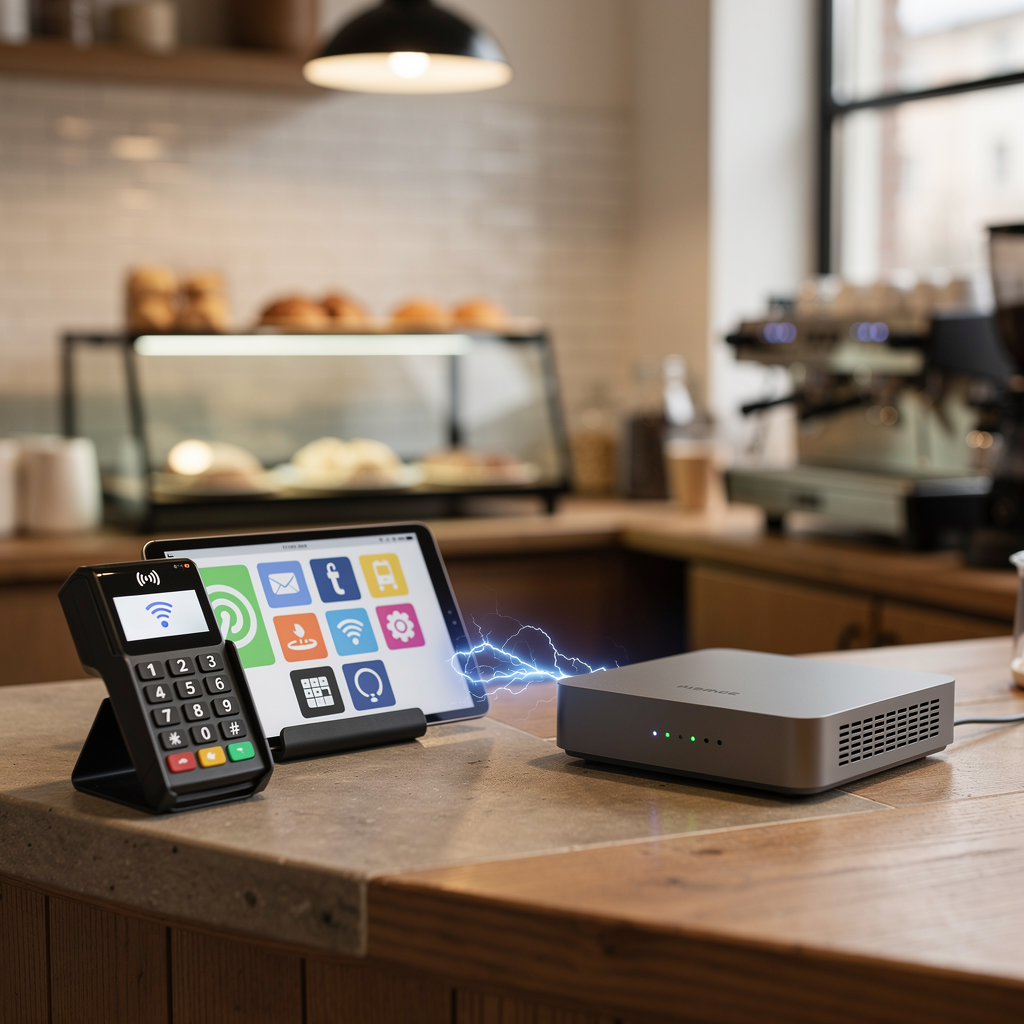
Last week I watched a barista ring up a sale, a customer tapped the screen, and in an instant the receipt appeared—not via a bank transfer or a card network, but through a tiny whisper of the Lightning Network. It wasn’t magic; it was a guided trickle of value moving faster than a thought and cheaper than a coffee refill. In that moment, a door opened: what if your storefront could settle in seconds, with less friction, and with a payment flow that your staff barely notices? That scene has more staying power than any whiteboard diagram I’ve sketched about Bitcoin Lightning Network adoption for small businesses.
What follows isn’t a manifesto promising instant riches or a one-size-fits-all blueprint. It’s an exploration of two practical paths that merchants are actually testing right now. One slides into your existing card ecosystem with almost no new hardware; the other hands you more control over the rails, at the cost of a bit more setup and monitoring. Both are moving fast, both are being refined in real time, and both are starting to show up in the kind of everyday retail settings you recognize—from coffee shops to small online stores.
If you’re a merchant weighing the switch, here’s a way to think about it: you’re not choosing between BTC and fiat alone; you’re choosing the pace at which your customers and your cash flow meet a new rhythm of settlement. And you’re choosing how much of the rails you want to own, and how much you want to rely on specialists to keep the pipes clean. The core question is this: what kind of Lightning fit your operation best, and how can you test it with minimal risk?
Two practical routes to consider
Route A — Square with Lightning: fast, hardware-friendly adoption
- What it offers: If you already rely on Square for card payments, you can begin experimenting with Bitcoin payments through Lightning within your existing checkout flow. This approach emphasizes speed-to-market and a familiar hardware/software environment for staff. Real-world pilots like Compass Coffee demonstrate that retailers can start accepting BTC payments at the register with near-instant settlement and low fees, using Square’s infrastructure. The publicly stated target is broader rollout in 2026, subject to regulatory considerations, which makes it attractive for staged pilots rather than a full rip-and-replace. (Source: Square press materials and coverage of Compass Coffee pilot.)
- Why it helps small businesses: Minimal new infrastructure, predictable cash flow timelines, and a customer experience that resembles what your customers already know. If your aim is to validate demand and put crypto payments in front of shoppers without disrupting ops, this route is compelling.
- What to test first: A low-value BTC sale at the counter or online, compare Lightning-based settlement against card settlements, and gather staff and customer feedback on the checkout flow. Track the time-to-settlement, transparency of receipts, and any confusion around price display or refunds.
- Realistic expectations: This path minimizes internal changes but prioritizes a smooth user experience. It’s a practical starting point for many small businesses seeking a low-friction entry into Bitcoin Lightning adoption for small businesses.
Route B — BTCPay Server with Breez/LSPS: control, flexibility, and deep integration
- What it offers: A do-it-yourself or hybrid approach that puts you closer to the rails. BTCPay Server already ships with Lightning support embedded in the dashboard, invoicing, and refunds workflow (LNURL-withdraw). The Breez plugin adds non-custodial Lightning with automated liquidity features, reducing the day-to-day complexity of managing channels. For online stores, BTCPay now offers Shopify V2 integration, broadening reach beyond point-of-sale devices. Inbound liquidity tooling (LSPS-1) helps you scale acceptance without building every channel yourself.
- Why it helps small businesses: You gain tighter control over payment experiences, settlements, and liquidity strategies. This route suits shops that want deeper data visibility, more customized receipts and refund flows, and a future-proof path that can grow with their online presence. It’s particularly appealing if you expect to scale, want to own more of the rails, and are comfortable coordinating with liquidity providers.
- What to test first: Run a Lightning-enabled invoice on BTCPay, execute a small refund via LNURL-withdraw, and experiment with Breez’ liquidity automation to observe inbound liquidity behavior during ramp-up. If you have Shopify, test the BTCPay Shopify V2 plugin in a staging environment and review how it affects order flow and reconciliation.
- Realistic expectations: This route may require more initial setup and ongoing maintenance, but it offers a richer data trail, better customization options, and a path toward broader multi-channel sales (POS, e-store, and marketplaces).
Practical realities that matter in the real world
- Liquidity is the practical bottleneck. Inbound channels require capital elsewhere on the network, and you don’t want to turn a marketing moment into a liquidity headache. The BTCPay ecosystem is increasingly addressing this with LSPS-1 (multi-provider inbound liquidity) and Breez for non-custodial liquidity management. These tools are designed to let you scale Lightning acceptance without micromanaging every channel. (References: LSPS-1 plugin and Breez integration in BTCPay docs and blogs.)
- Multi-asset rails broaden the toolkit. Taproot Assets v0.6 introduces stablecoins and other assets on Lightning, enabling mixed BTC/stablecoin acceptance and potentially simplifying cross-border settlements. This isn’t a switch-flip moment yet, but it’s a trend to watch if you have customers or suppliers across borders. (Source: Lightning Labs/Taproot Assets announcements and related posts.)
- Real-world pilots matter. The Compass Coffee demonstration within a Square-based workflow is a tangible signal that mainstream merchants are testing this in real settings, not just in lab environments. It’s one thing to read about Lightning and another to see a cashier-friendly transaction complete in seconds with a low fee. (Source: Compass Coffee pilot coverage and Square communications.)
- Security and node management are evolving. If you run your own Lightning node or rely on BTCPay’s ecosystem, you’ll encounter options like RTL or other wallet integrations for day-to-day control. LND/LSP tooling is advancing to simplify management and liquidity provisioning, but it remains a factor in planning and staffing. (Source: BTCPay documentation and community tooling notes.)
Plan for liquidity and customer experience this week
- Decide your adoption path as a concrete choice today: Route A to validate a quick, hardware-friendly pilot within a few weeks; Route B to build a deeper, longer-term integration that aligns with your online storefront and data needs.
- Plan for liquidity in advance: Reach out to inbound liquidity providers or explore Breez-based setups to avoid bottlenecks as you scale. If you expect high-volume promotions, pre-arrange liquidity commitments and define SLAs with your liquidity partner.
- Align with customer experience goals: Map the end-to-end checkout experience with Lightning. What will receipts show? How will refunds feel to customers? Draft a simple customer-facing guide that your staff can share at the register.
- Measure and iterate: Track transaction times, fees, customer satisfaction, and staff ease of use. Use this data to decide whether to expand, re-route, or pause the pilot.
Why this matters for your business—and where it could lead
What we’re watching isn’t a single feature upgrade; it’s a shift in how value moves at the point of sale. The Square push signals mainstream momentum for Lightning at scale, while BTCPay’s evolving feature set demonstrates that the DIY and hybrid paths are maturing in tandem. For small businesses, your choice of route will influence working capital timelines, cross-border settlement strategies, and the day-to-day customer experience—all at once.
If you’re waiting for a perfect moment to try something new, consider this: piloting Lightning isn’t only testing a payment method. It’s testing how you relate to your customers, how quickly you reconcile revenue, and how you react to a rapidly changing payments ecosystem. What would you need to test a tiny, controlled Lightning pilot in the next 30 days? What would make that pilot painless for staff and exciting for customers?
Practical starting points you can actually try now
- Route 1: Quick test with Square. Take a small BTC-in-Lightning sale at the counter or online, and compare the customer experience, fee economics, and settlement speed to your existing card transactions. Use Compass Coffee as a real-world reference point to explain the pilot to your team and customers. If you’re already in the Square ecosystem, this is the most turnkey path toward Bitcoin Lightning Network adoption for small businesses. (Source: Square press materials and Compass Coffee pilot.)
- Route 2: BTCPay Server test store or Shopify integration. Set up a BTCPay-powered checkout for a limited product line or a staging store. Run a Lightning invoice, perform a refund via LNURL-withdraw, and evaluate how Breez or LSPS-1 affects inbound liquidity. This route is the best fit if you want deeper control and a plan for long-term expansion across multiple channels. (Sources: BTCPay Server 1.6.0/2.1.0/2.2.0 updates; Breez documentation; Shopify V2 integration notes.)
A closing thought to carry forward
What if the next time you look up from your screen, you see a line of customers choosing your Lightning-enabled checkout because it feels faster, easier, and more transparent than before? That moment could be more than a transaction—it could be the cue that your business is quietly adapting to a new pace of commerce. The question isn’t whether Lightning will matter, but how you’ll let it shape your customer relationships and your cash flow over the next year. Are you ready to run a tiny, controlled Lightning pilot in the next month, and what would you need to make it seamless for your team and delightful for customers?
Notes and context you might find useful
- Core topic: Bitcoin Lightning Network adoption for small businesses
- The discussion reflects practical adoption paths being piloted in 2024–2025, including Square’s Lightning-enabled payments and BTCPay Server’s evolving Lightning features and liquidity tooling.
- Relevant technologies and terms cited or implied here include: Lightning Network, LNURL-withdraw, LSPS-1 inbound liquidity, Breez plugin, BTCPay Server, Shopify V2 integration, Taproot Assets v0.6, and stablecoins on Lightning rails.
- Real-world signals to watch: Compass Coffee pilot, Square’s onboarding efforts, BTCPay’s roadmap updates, and Litecoin/LN events in the broader Lightning ecosystem.
If you’d like, I can tailor this to your specific store type (in-person POS, online checkout, or both), outline a 4-week pilot plan with concrete milestones, and draft a customer-facing FAQ that explains Lightning in plain terms.
Sources and real-world context you might want to explore as you plan your first steps include: Square’s rollout communications and Compass Coffee pilot for real-world usage; BTCPay Server updates (1.6.0, 2.1.0, 2.2.0) with Lightning enhancements and Shopify V2 integration; Breez Lightning documentation and LSPS-1 liquidity solution details; and Lightning Labs’ work on Taproot Assets and multi-asset rails. These references show how the ecosystem is evolving from an experimental niche into practical options for everyday commerce.
— The big takeaway for now is simple: start small, learn quickly, and let the data guide your longer-term decision. The moment you pilot Lightning is a moment you test not just a payment method, but a broader relationship with your customers and a new cadence for how you manage revenue.
Key Summary and Implications
Bitcoin Lightning Network adoption for small businesses is moving from niche experiments to practical, paced pilots in everyday commerce. The two concrete routes—one that plugs into familiar card ecosystems with minimal hardware changes, and another that puts you closer to the rails with deeper integration—offer viable, real-world paths. The takeaway isn’t a single perfect solution, but a pattern: start small, learn fast, and let the data guide expansion. Looking ahead, the emergence of multi-asset rails and enhanced liquidity tooling could unlock cross-border and multi-vendor efficiency without sacrificing control or velocity. In short, Lightning is becoming a practical growth lever for cash flow, customer experience, and operational resilience—if you choose to test it with intention.
From a broader view, this shift invites merchants to reframe payments as a strategic instrument rather than a back-office function. It’s not just about payment speed; it’s about how Lightning reshapes working capital, pricing clarity at checkout, and the way you connect with customers in real time. The deeper implication is clear: early, thoughtful experimentation can yield actionable insights that inform broader, future-facing commerce strategies.
Action Plans
Route 1 Quick, hardware-light pilot with Square
- Pick a low-value BTC sale (in-store or online) and run it through your existing Square workflow to compare user experience, fees, and settlement timing against card payments.
- Define a crisp pilot window (2–4 weeks) and a staff-friendly receipt design and refunds flow to surface at checkout.
- Collect qualitative feedback from customers and quantify impact on speed, friction, and satisfaction.
Route 2 Deeper integration with BTCPay Server, Breez/LSPS, and Shopify
- Set up a BTCPay-powered checkout (and Shopify V2 if you’re online) to run Lightning invoices, plus LNURL-withdraw for refunds.
- Experiment with Breez for non-custodial liquidity and LSPS-1 to simplify inbound liquidity management as you grow.
- Run a parallel test store or product line to monitor reconciliation, data visibility, and cross-channel consistency (POS, online, and refunds).
Liquidity and customer experience planning
- Proactively secure inbound liquidity commitments or configure Breez/LSPs to avoid bottlenecks during promotions.
- Map the end-to-end customer experience: how prices display, how receipts look, and how refunds feel from the customer’s perspective.
- Create a one-page staff guide and a simple customer FAQ to accelerate adoption and reduce friction.
Measurement and governance
- Track: transaction time, fees, conversion at checkout, customer satisfaction, and staff ease of use.
- Define go/no-go criteria for expansion based on data, not sentiment.
- Schedule a monthly review to decide whether to scale, pivot, or pause.
Closing Message
What you test in the next 30 days isn’t just a new payment method—it’s a way to reframe how your store handles revenue, customer relationships, and momentum. The two routes give you a choice between speed and control, and both are becoming increasingly viable as the ecosystem matures. The question isn’t whether Lightning will matter, but how you’ll let it shape your storefront’s pace and your customers’ checkout experience.
If you’re ready, start with a tiny, controlled pilot. Gather data, listen to customers, and let the results steer the path you take next. The future of payments for small business isn’t a leap—it’s a series of deliberate, informed steps that you can begin today.