Bitcoin for Enterprise Treasuries – Is Your Reserve Strategy Ready for a Digital Future?


What if a single decision could reshape how your treasury navigates inflation, volatility, and global uncertainty? I once watched a CFO chair a quarterly review with a tiny, almost underwhelming question on the screen: what if we could hold a slice of our idle cash in a digital asset that travels with the pace of markets, not the pace of bureaucracies? The room paused. Not because it was a grand revelation, but because it was suddenly possible to imagine a reserve that wasn’t bound by a single fiat narrative. That moment didn’t decide anything, but it did set off a ripple: what would a Bitcoin-based reserve require from governance, policy, and day-to-day treasury practice?
If you’re a CFO or treasury leader, you know what comes next: the problem isn’t “should we?” but “how would we actually do it in a way that protects liquidity, complies with policy, and remains controllable in a governance framework?” This article walks you through that journey—not as a fantasy, but as a practical, enterprise-ready approach that starts with the real constraints most treasuries face.


From the outset, the core tension is clear. Bitcoin promises an asymmetric opportunity: potential downside protection against traditional cash erosion in inflationary contexts, paired with upside volatility and operational risk. Your job is to design a reserve strategy that captures upside while keeping the lights on for day-to-day liquidity, investor-grade controls, and regulatory comfort. This piece won’t pretend to remove all risk, but it will sketch a cohesive framework you can test, adapt, and scale.
Scope this as a practical inquiry rather than a manifesto. We’ll touch on governance architecture, policy design, risk controls, and liquidity planning. We’ll think aloud—sharing questions we should ask, concerns we should test, and scenarios we should rehearse—so you can see a path from concept to governance-ready implementation. And we’ll do it with a bias toward action: what you can begin validating in the coming weeks, not in the abstract future.
What you’ll gain from this article: a high-level blueprint for integrating Bitcoin into a corporate reserve, a governance and policy checklist tailored for mid-to-large enterprises, and a framing that helps finance, risk, and compliance teams align on a shared objective. If that alignment sounds novel, you’re not alone—many organizations are only just starting to translate strategic intent into a reproducible, auditable process.
Is it all feasible? Yes—if we design with clarity, keep a steady eye on liquidity, and build governance that survives boardroom heat. The question isn’t whether Bitcoin belongs in enterprise treasuries; it’s how your organization chooses to balance the promises with the protections that keep the business resilient.
From this point, we’ll sketch a governance-ready framework at a high level, surface the key policy choices, and illuminate what an enterprise should test before committing capital. This is the moment to acknowledge both opportunity and risk, and to walk forward with a plan that can be tracked, tested, and refined.
Value proposition and next steps
– You’ll encounter a practical, non-ornamental framework that helps translate Bitcoin interest into a documented reserve policy, governance model, and risk controls.
– You’ll see how to balance liquidity requirements with exposure to a digital asset, so operations and planning stay cohesive.
– You’ll receive cues for stakeholder alignment, auditability, and governance that withstand scrutiny from boards and regulators.
Ultimately, this article invites you to engage in a collaborative thought experiment: what if your treasury could embrace a digital layer without surrendering its risk posture, governance integrity, or operational discipline? How would your organization define success, and what would a first, credible pilot look like?
But let’s pause for a moment of reflection: as we sketch this landscape, what gaps in your current framework would become most visible if Bitcoin enters your reserve strategy? Are we prepared to answer those questions with policy, people, and process, or will they remain unresolved tensions in a slide deck? If you’ve felt that tension before, you’re in the right room. The journey from curiosity to capability starts here—and now, with questions that keep us honest and active readers, not passive observers.
A practical starting point framing the core decision
We’ll move beyond generic debates about “if” and “why” and toward concrete questions that shape policy and practice. What liquidity horizon does your organization require for routine operations? What governance controls are non-negotiable for your board? How will you measure risk exposure and compliance across jurisdictions? How will you ensure that any Bitcoin holdings are integrated with existing treasury systems, reporting, and tax considerations? These questions aren’t obstinate hurdles; they’re the first steps in translating a concept into a durable, auditable program.
If you’re wondering where to begin, think in three layers: policy and governance, risk and controls, and operating integration. Each layer should be designed to align with your enterprise’s risk appetite, regulatory environment, and strategic goals. The framework presented here is intentionally light on prescriptive steps, heavy on guiding questions, and strong on the connective tissue that turns a concept into a controllable program.
Finally, the takeaway is not a guaranteed outcome, but a disciplined, testable plan. It’s a starting point for dialogue, iteration, and real-world validation—because in the end, a treasury that experiments with confidence is a treasury that grows more resilient over time.
Wouldn’t it be worth finding out how a thoughtfully designed Bitcoin reserve could coexist with your existing risk framework, audit requirements, and liquidity targets? If you’re ready to explore, this article will be your companion through the questions that matter—and the conversations that follow.
Should Bitcoin Be a Corporate Reserve? A Journey Through an Enterprise Treasury
What if a slice of idle cash could travel with the pace of markets rather than the tempo of policy cycles? I once watched a CFO pose a tiny, almost offhand question during a quarterly review: what if we held some of our idle cash as a digital asset that moves as quickly as the market, not as slowly as regulation? The room went quiet not because the idea was audacious, but because it suddenly felt plausible. A reserve that isn’t tethered to a single fiat narrative — that was the moment the conversation shifted from whether to how. And if you’re in finance, you’ll recognize the shift: the problem isn’t dreaming big, it’s designing a path that keeps liquidity intact, policies intact, and governance resilient.
The journey I want to take with you isn’t a manifesto about bitcoin as an answer to inflation. It’s a practical, enterprise-ready exploration of what a Bitcoin-based reserve could require from governance, policy, and day-to-day treasury practice. Think of it as a collaborative thought experiment: a blueprint you can test, adapt, and scale without surrendering control over risk, compliance, or reporting.
A practical imperative, not a grand thesis
If you’re a CFO or a treasury leader, you know the tension well. Bitcoin promises an asymmetric opportunity — a potential hedge against cash erosion in inflationary environments, paired with upside volatility and operational risk. Your task is to design a reserve that captures upside while keeping the lights on for liquidity, with auditability that satisfies boards and regulators. This piece won’t pretend to remove every risk; it aims to present a cohesive framework you can trial in a controlled, governance-ready way.
What you’ll find here is a pragmatic path: governance architecture, policy design, risk controls, and liquidity planning — all discussed in a way that surfaces questions we should test, concerns we should validate, and scenarios we should rehearse. The emphasis is on action you can begin validating in the coming weeks, not in some distant future.
Why now, and what to measure
Bitcoin in enterprise treasuries sits at an intersection: the allure of a digital layer on top of traditional cash flows and the friction of centralized custody, tax, and regulatory complexity. The enterprise lens focuses on four anchors:
- Liquidity: can we meet day-to-day cash needs while holding a useful portion of reserves in a digital asset?
- Governance: do we have robust controls, clear decision rights, and auditable trails?
- Compliance: how do we align with jurisdictional rules, tax reporting, and financial reporting frameworks?
- Operational discipline: how do we integrate with existing treasury systems, ERP, banking rails, and treasury management platforms?
As you read, ask yourself: What liquidity horizon does our business require for routine operations? Which governance controls are non-negotiable for our board? How would we measure risk exposure and regulatory compliance across jurisdictions? How will we slot holdings into our existing treasury architecture without fragility?
A cohesive framework in four linked dimensions
The design challenge is not to build a perfect fortress overnight, but to weave four interdependent layers into a controllable program:
1) Policy and Governance
2) Risk Controls and Compliance
3) Operational Integration and Data & Reporting
4) Liquidity Planning and Portfolio Construction
1) Policy and Governance
A credible reserve policy starts with purpose, scope, and guardrails that survive the boardroom heat. Consider:
– Purpose and risk appetite: What is the treasury’s objective for Bitcoin exposure — preserve value, support hedging against inflation, or enabling strategic experimentation? Define limits and reallocations based on risk tolerance.
– Roles and authorities: Who can authorize purchases, rebalances, or sales? What are the multi-person controls (e.g., multi-signature approvals, custodian governance, independent risk oversight)?
– Custody and access: What custody model fits your risk posture (self-custody with hardware security modules, trusted custodian with insured coverage, or a hybrid)? How is access revoked quickly in case of personnel changes or policy breaches?
– Auditability: How will actions be recorded, logged, and tested in internal and external audits? What documentation is required for each decision point?
The policy should read as a living document — revisited quarterly or semi-annually, and adjusted in response to regulatory shifts, operational learnings, or changes in risk appetite. The goal is not rigidity but resilience: a governance skeleton that stays intact while the flesh of practice grows.
2) Risk Controls and Compliance
Used well, risk controls turn a bold idea into a disciplined program. What to consider:
– Counterparty risk: Who provides the service, what guarantees exist, and what happens in a custody failure scenario?
– Market risk: How do we quantify drawdown risk, correlation with other assets, and potential liquidity stress during crypto-market events?
– Regulatory and tax: Which jurisdictions affect reporting, transfer pricing, and tax treatment? How do we align with SOX-like controls and external audit expectations?
– Incident response: What is the playbook for suspected cyber incidents, fraud signals, or operational failures?
– Restorative controls: How quickly can we rebalance or unwind positions if liquidity targets are threatened?
Bridge the gap between policy and real-world operations by embedding risk checks into everyday treasury routines. Use scenario-based testing to stress-test liquidity, continuity, and regulatory reporting under various market conditions.
3) Operational Integration and Data & Reporting
No asset lives in isolation. Integration with your existing systems is essential:
– Data harmonization: How do we capture Bitcoin holdings alongside fiat cash in the cash accounting, consolidation, and tax reporting streams?
– Treasury tech alignment: How will wallets, private keys, custody solutions, and exchange interfaces plug into your ERP, TMS, and BI dashboards?
– Access controls and authentication: What authentication mechanisms govern wallet access, transaction signing, and reconciliation?
– Audit trails: Are all moves traceable to a policy-approved rationale, with time-stamped decisions and responsible owners named?
This layer ensures that your digital reserve becomes a seamless part of treasury operations rather than a siloed, opaque experiment. It also helps answer the board’s demand for visibility and straightforward reporting.
4) Liquidity Planning and Portfolio Construction
The heart of a reserve is liquidity — you must optimize for both safety and usefulness:
– Liquidity horizons: What timeframes do we need for cash to cover payroll, supplier payments, and debt service?
– Allocation and rebalancing discipline: How much of the reserve can be held in Bitcoin without compromising liquidity targets? What triggers rebalancing, cutoffs, or hedges?
– Contingency planning: Do we maintain a core fiat liquidity buffer in addition to any digital asset exposure? How do we protect against sudden liquidity droughts in crypto markets?
Concretely, you can begin with a conservative allocation (for example, a small, clearly auditable percentage of the reserve) and a defined rebalancing cadence. As controls prove their worth and market dynamics evolve, you can refine the mix and governance thresholds.
A practical path you can start this quarter
To translate this framework into action, consider a pilot that unfolds in three horizons: policy, controls, and operations. Here’s a way to structure it so you can begin validating in the near term:
- Week 1–4: Define the policy skeleton. Draft the reserve objective, appetite limits, and governance roles. Establish the custody model and access policy. Identify required controls and reporting lines.
- Week 4–8: Build risk and compliance mappings. Enumerate potential risks, design mitigations, and draft incident response playbooks. Begin mapping tax and regulatory reporting implications with your tax and legal teams.
- Week 8–12: Design the data and systems integration. Outline data feeds, reconciliation processes, and dashboard requirements. Conduct a small internal mock exercise to validate the end-to-end workflow from acquisition to reporting.
- Ongoing: Run a controlled pilot with a small exposure, using multi-signature custody or a trusted custodian, with quarterly reviews and independent risk oversight.
Tools you’ll likely need include: a documented reserve policy, a custody arrangement with defined access controls, a risk framework tailored to digital assets, and reporting pipelines that align with existing finance and audit requirements.
Practical considerations and potential paths
- Self-custody vs. custodianship: Self-custody can be cost-effective and private but increases operational risk. Custodians can provide insured, insured-in-transit, and regulatory-compliant controls, often at higher ongoing costs. A hybrid approach can offer balance.
- Insurance and coverage: Confirm what is insured, scopes of coverage, and remediation processes. Clarify exclusions and limits for crypto-specific risks.
- Tax treatment and accounting: Determine how Bitcoin holdings will be treated on the balance sheet, income statements, and tax filings. Align with local GAAP/IFRS requirements and reporting standards.
- Regulator engagement: Proactively engage with relevant regulators or auditors to align on control expectations and reporting formats.
A few practical questions to keep the dialogue alive
- What liquidity horizon does our organization require for routine operations, and how would we model that against a Bitcoin reserve?
- What governance controls are non-negotiable for our board, and how do we ensure they survive leadership changes or turnover?
- How will we measure risk exposure and regulatory compliance across jurisdictions in a practical, auditable way?
- How will Bitcoin holdings be integrated with existing treasury systems, reporting, and tax considerations without creating fragility in the close process?
- What early indicators would justify pausing or reversing a position, and who makes that call?
Real-world flavor a few plausible paths you could explore
- Path A — Conservative core with a guardrail: A small Bitcoin allocation held through a multi-signature cold storage solution, with a defined liquidity window (e.g., 30–60 days) and a policy-driven cap on exposure. Pros: clarity, auditability, and well-contained risk. Cons: limited upside participation and reliance on custodial controls.
- Path B — Custodian-led with insurer overlay: Use a trusted custodian for custody, insured against loss, with explicit access controls and quarterly risk reporting. Pros: operational simplicity and robust governance. Cons: potential counterparty dependence and cost.
- Path C — Controlled pilot of on-chain liquidity: A limited, carefully monitored on-chain strategy integrated with treasury systems, subject to strict controls and incident response drills. Pros: direct participation in digital markets and potential efficiency gains. Cons: higher regulatory and operational complexity.
Each path can be pursued as a staged experiment, with the policy and governance scaffolding already in place to capture learnings, validate controls, and scale responsibly.
A closing reflection — and a question to carry forward
This isn’t a demonstration of certainty; it’s a framework for disciplined exploration. If you’re reading this as a CFO, treasurer, or risk officer, you’re not asked to declare Bitcoin a treasury mandate today. You’re invited to test a model that could coexist with traditional liquidity management, provide a structured way to capture upside, and maintain the guardrails governance demands. The real question isn’t whether Bitcoin belongs in a corporate reserve; it’s how your organization defines success, what it’s willing to accept in terms of risk, and what it will test to move from curiosity to capability.
So I’ll leave you with a question that matters for the coming months: In designing a Bitcoin reserve, what single governance refinement would most significantly increase your confidence that the program can survive a volatile market and a rigorous audit — and how would you prove it to your board? Think about that: not the perfect solution, but the next practical step that makes the journey tangible.
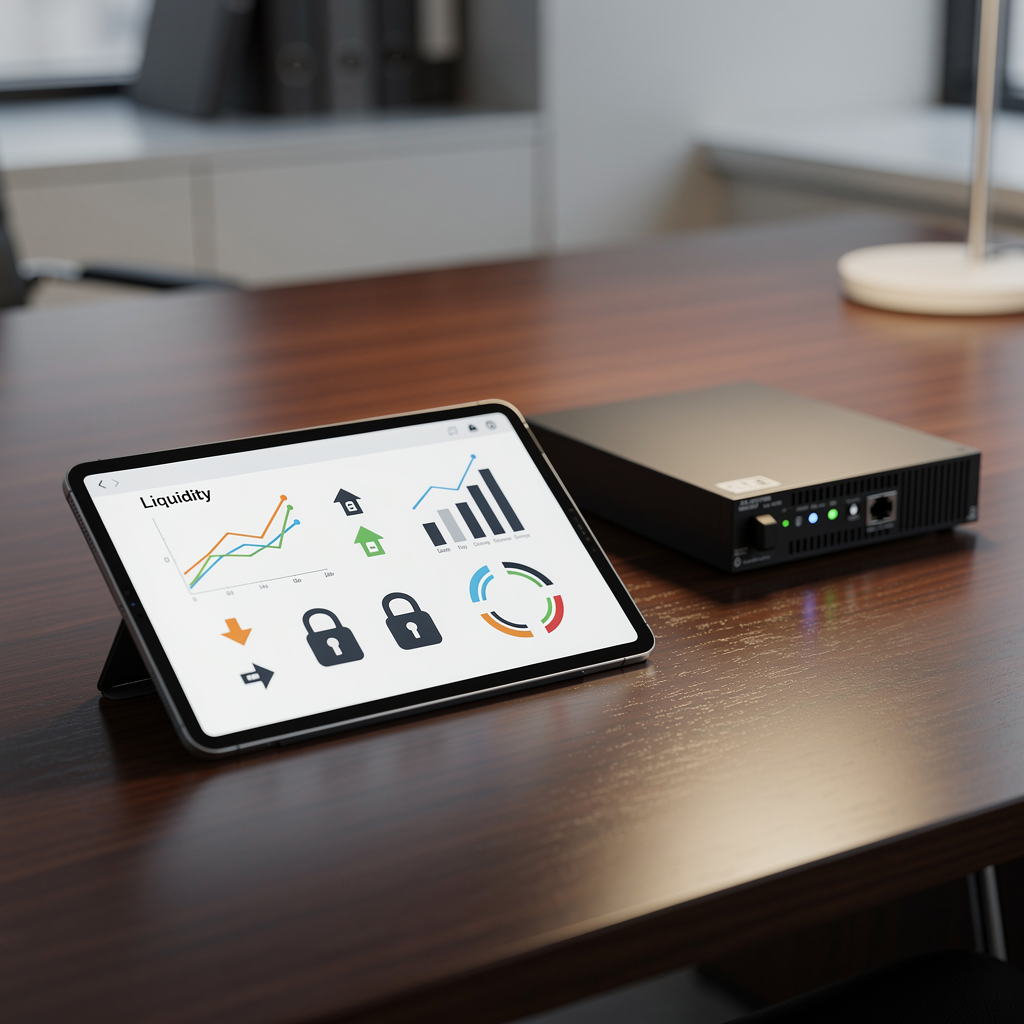
Key Summary and Implications
This piece offers a pragmatic blueprint for introducing Bitcoin into an enterprise treasury without sacrificing liquidity, control, or compliance. The core idea is not to prescribe a single destiny for your idle cash, but to weave Bitcoin into a disciplined reserve strategy built on four interlocking pillars: governance, risk and compliance, data and operations, and liquidity planning. The value lies in moving from conceptual curiosity to a testable program, with governance that holds up under board scrutiny and market stress alike. A practical takeaway is to start small, prove the governance scaffolding, and scale as controls mature and comfort grows.
Key insights that go beyond the surface discussion:
– A Bitcoin reserve should be designed as a living instrument within the broader liquidity framework, not as a replacement for traditional cash but as a controlled, auditable layer that complements it.
– Governance endurance is non-negotiable: multi-person controls, clear decision rights, and integrated audit trails are the backbone that makes a turbulent market survivable.
– Start with a conservative, well-structured pilot that tests policy, custody, and reconciliation end-to-end before scaling exposure or complexity.
– Integration with existing systems (ERP, TMS, tax and reporting) is essential; without data harmonization and visible trail, the program risks disjointed close cycles and regulatory scrutiny.
– The journey is iterative: continuous refinement of policy, controls, and operations in response to testing, new risks, and evolving regulations keeps the program resilient.
Action Plans
Week 1–2: Policy and Governance Skeleton
- Define the reserve objective, overall risk appetite, and non-negotiable governance controls (e.g., multi-signature approvals, independent risk oversight).
- Identify roles and authorities for purchases, rebalances, and sales.
- Decide custody model (self-custody with strong controls, trusted custodian, or hybrid) and outline quick-revoke procedures for personnel changes.
- Draft an auditable decision-log template to capture rationale, approvals, and evidence for every transaction.
Week 3–4: Risk and Compliance Mapping
- Enumerate counterparty, market, regulatory, tax, and operational risks; assign owners to each.
- Develop incident response playbooks for cyber events, fraud signals, and operational failures.
- Map tax reporting implications and align with accounting and SOX-like controls where applicable.
- Design testing scenarios (liquidity shocks, custodian failure, governance churn).
Week 5–6: Data, Systems, and Reporting Alignment
- Define data feeds and reconciliation processes to integrate Bitcoin holdings with fiat cash in dashboards and ERP.
- Establish access controls for wallets, custody interfaces, and transaction signing; design audit trails with time-stamped decisions.
- Draft a governance dashboard that shows exposure, liquidity coverage, and policy compliance in real time.
Week 7–12: Pilot Design and Execution
- Launch a controlled pilot with a clearly scoped exposure and a defined liquidity horizon (e.g., 30–60 days).
- Use a multi-signature or custodian-based custody arrangement with independent risk oversight.
- Monitor, document, and review outcomes; adjust policy, controls, and operations as needed.
Ongoing: Governance Cadence and Scale-Up
- Schedule quarterly governance reviews to refresh risk assessments and policy guardrails.
- Validate audit findings and reporting with internal and external assessors.
- Consider staged expansion (larger exposure, more jurisdictions, broader data integration) only after successful pilots and documented controls.
Closing Message
The question at the end of this journey isn’t whether Bitcoin belongs in enterprise treasuries, but how your organization can embed it with discipline, clarity, and resilience. You don’t have to gamble with liquidity or governance to explore potential upside; you can design a credible, auditable pathway that grows more robust over time. The real test is not a grand declaration, but a credible pilot that proves controls, demonstrates liquidity readiness, and earns board trust.
So I’ll leave you with a question to carry forward: what single governance refinement would most increase your confidence that the program could endure a volatile market and a rigorous audit—and how would you prove it to your board? Start with that step, and the journey from curiosity to capability becomes not just possible, but repeatable.
If this framing resonates, begin today with a policy skeleton and a governance plan you can share in your next leadership meeting. The momentum you build in these early weeks will shape whether your treasury simply observes market shifts or actively steers them.